The Gulf of Mexico is coming for New Orleans, and the global infrastructure sector is paying attention.
Roughly 125,000 years ago, the shoreline sat about 30 miles north of the city. Recent research predicts that rising seas could push the coast that far inland again, eventually leaving the Big Easy underwater. For now, the city’s defenses are holding, and engineers are racing to make them smarter—including one of the most critical assets, the 17th Street Canal pump station, which discharges stormwater during major storms.
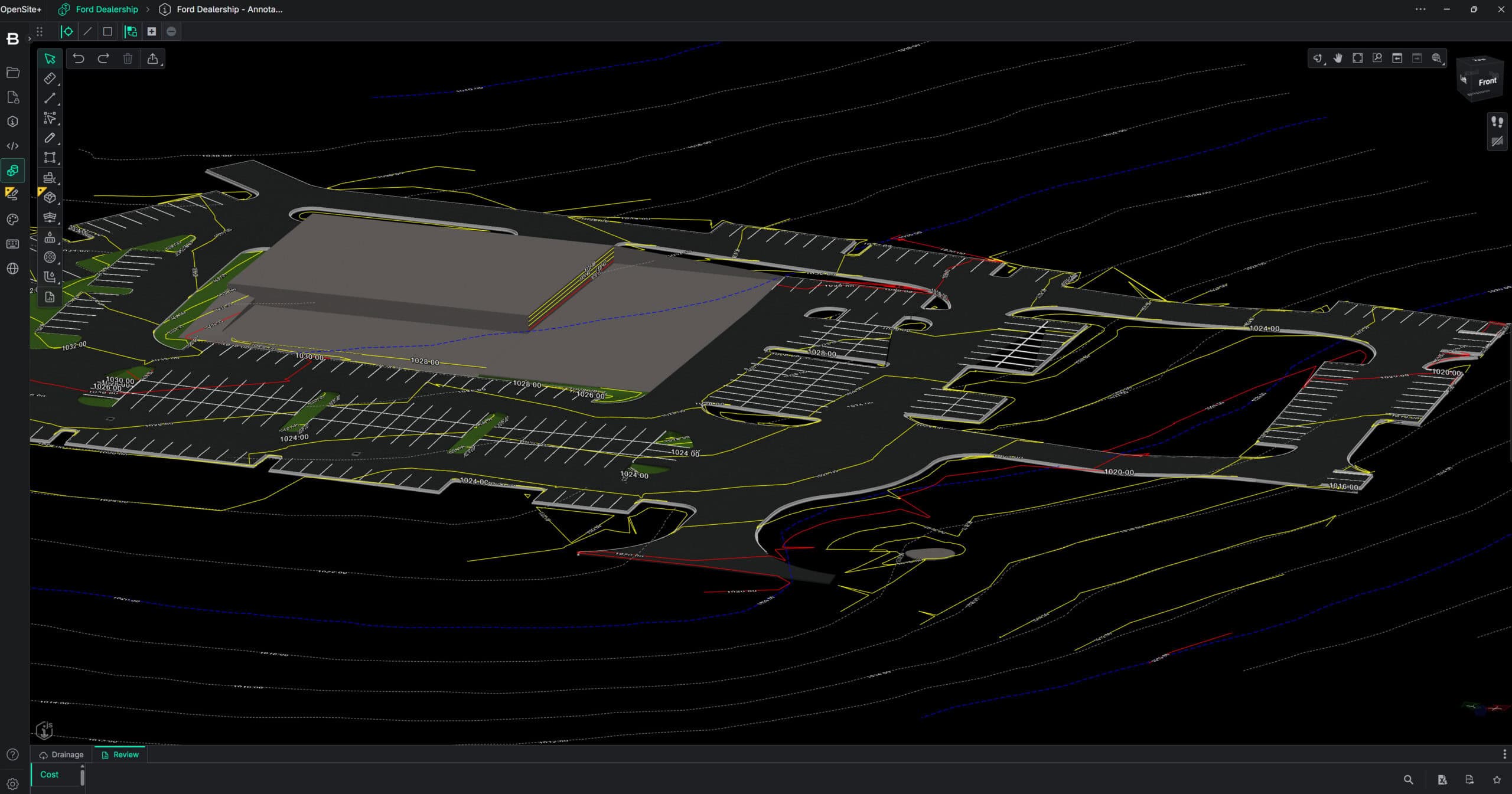
To make the station more reliable, resilient, and responsive, Louisiana engineering organization Forte & Tablada built a cloud-based, collaborative digital twin of the facility that gives engineers, asset managers, and emergency planners virtual insights before, during, and after storm events. The work is also expected to save 4,000 hours of engineering work.
The project is among a handful of case studies included in a new global report released to coincide with London Climate Action Week, which runs June 20-28. The work in New Orleans, along with other projects that used Bentley Systems software, are included as examples for others to follow.
The study, titled Beyond Reactive: How Digital Intelligence Is Enabling Infrastructure Resilience For A Climate-Disrupted World, was carried out by the technology and services research organization Verdantix and commissioned by Bentley Systems. The research draws on insights from 50 senior executives at large organizations across the energy, mining, transportation, and water sectors. The study found that while most infrastructure organizations recognize the urgent need for infrastructure resilience, their ability to act is hampered by squeezed finances and technical challenges such as fragmented data.
“The research highlights a fundamental operational challenge,” said Priyanka Bawa, principal analyst at Verdantix. “While most organizations have a resilience strategy in place, their digital systems are rarely integrated enough to execute it. When critical information remains siloed, infrastructure owners cannot accurately assess complex network vulnerabilities or demonstrate the clear return on investment necessary to secure future funding.”
Budgets and Fragmented Data are Barriers To Action
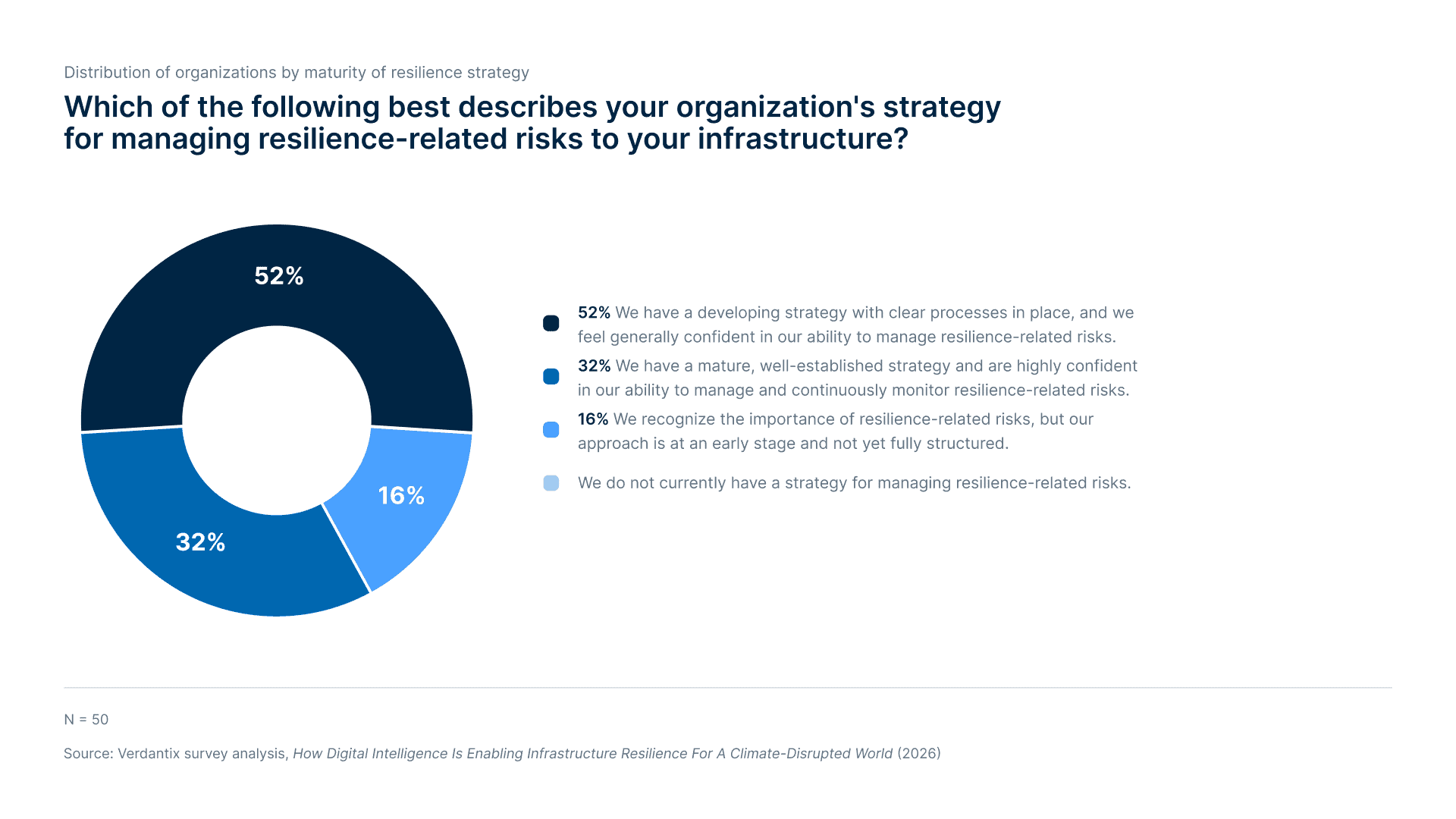
The study says resilience is no longer just a concept for most organizations. In fact, more than 80% of infrastructure organizations now say they have a resilience strategy in place.
Three-quarters of them rank climate as a significant risk to their infrastructure resilience, “unsurprising given the scale of the threat,” the report notes, with losses caused by global climate disasters now exceeding $732 billion a year.
Globally, infrastructure organizations manage a wide variety of climate risks. Nearly two-thirds are managing risks from storms and wind. For heat stress and wildfires, that figure drops to around one-half. For drought and coastal surge risks, it’s as low as 40%. (New York City is a leader in this space by building massive flood protection barriers around parts of Manhattan and Brooklyn to protect citizens and critical infrastructure.)
The report notes that this variation “may leave critical vulnerabilities unaddressed, particularly as climate patterns shift and risks that were previously less material become more acute.”
Recognizing that resilience matters is one thing, but acting on that awareness is another. The report cites several barriers for organizations. For example, just over half said tight budgets were their primary constraint. Another problem is that organizations struggle to quantify the operational and financial impacts of disruptions—it’s hard to make the case for resilience-related investment when you can’t put a proper price tag on it. “This creates a self-reinforcing cycle: limited measurement constrains investment, and limited investment restricts the ability to generate the data needed to demonstrate impact at scale,” the report notes.
Tom Smith, executive director of the American Society of Civil Engineers (ASCE), calls this the “hidden tax” being paid “in response to infrastructure that is non-performing.” Smith estimates this hidden tax costs each American family around $2,000 a year—and could increase to $2,700 “if we fail to continue the Infrastructure Investment and Jobs Act investments that we have today.” Put another way, Smith said every dollar proactively invested in a resilient bridge, road, or other infrastructure asset could save $13 in costs responding to an extreme weather event.
Connecting the Data
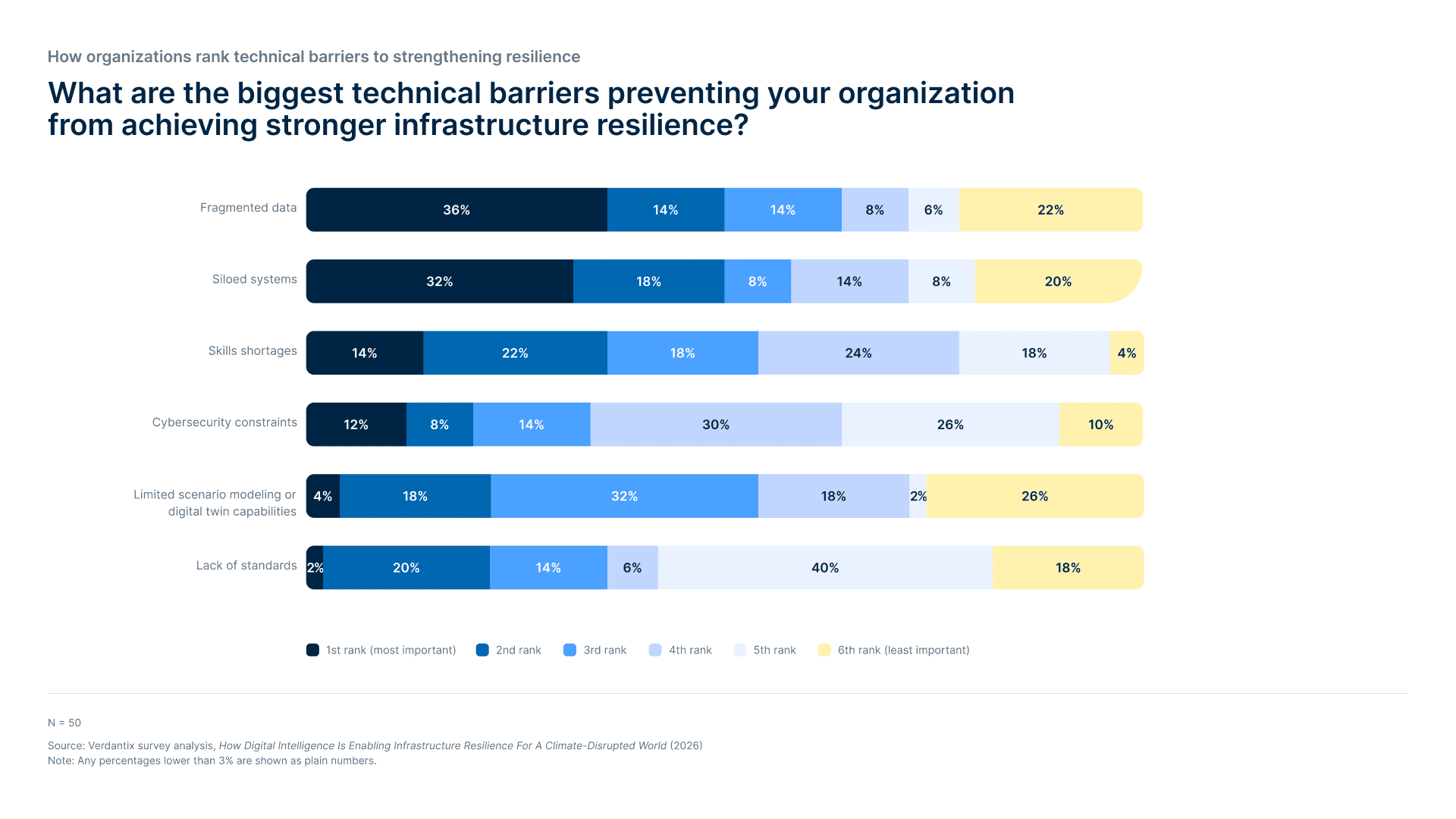
Technical challenges are another major constraint, with two-thirds of infrastructure organizations identifying fragmented data or siloed systems as their most significant technical barrier. “This fragmentation restricts organizations’ ability to connect key datasets,” the report notes, “limiting understanding of how risks interact across assets and networks, and undermining the potential to anticipate and respond effectively.”
To overcome these limitations, organizations are increasingly turning to digital technologies, according to the study. Those that do use the technologies overwhelmingly report benefits such as improved planning accuracy, or less redesign or rework.
That trend is likely to continue. More than 70% of infrastructure organizations expect to increase spending on digital twin platforms through 2027. And the adoption of AI-enabled capabilities for inspection, defect recognition, and asset health forecasting is accelerating. The report recommends that organizations establish digital twins as the foundation for resilience.
Collins Engineers, for example, partnered with the Minnesota Department of Transportation to automate bridge inspections with digital twins and AI. The approach cut on-site inspection time by at least 20% and saved more than $90,000 in labor costs during the inspection of the historic Robert Street Bridge, a century-old landmark that spans 1,429 feet across the Mississippi River. By sharing the precise 3D model with potential contractors, Collins expects to save MnDOT up to $15 million during the bridge’s rehabilitation and reduce construction materials by 10%.
Similarly, PowerChina Henan used digital twins to protect its power grid from severe weather. Facing recurring flood damage to critical 500-kilovolt substations, the utility consolidated terrain surveys, flood simulations, and real-time IoT sensors into a unified 3D early-warning platform. By breaking down these data silos, PowerChina Henan boosted inspection efficiency by over 60% and slashed flood-impact assessment costs by more than 30%.
“The current barrier is fragmentation,” said Chris Bradshaw, Bentley’s chief sustainability and education officer. “Open digital twins can address it by bringing separate data streams into a single, accessible environment. This integration is a key enabler that allows engineering teams to transition from reactive maintenance to more proactive, long-term resilience planning.”
FAQ:
It comes with a rather hefty “hidden tax.” ASCE executive director Tom Smith estimates that failing infrastructure costs each American family about $2,000 a year—a number that could jump to $2,700 without continued proactive investment. Conversely, every dollar spent upfront on resilient roads or bridges can save an impressive $13 in extreme weather response costs.
To fix a system plagued by 80-year-old pipes and tens of millions of dollars in lost water, DC Water worked with Bentley Systems to create a hydraulic model and digital twin of its 1,300-mile distribution network. Using near real-time sensor detection, the utility aims to prevent billions of gallons of water loss and cut carbon emissions by 50,000 metric tons—the equivalent of taking 10,000 cars off the road.
Yes, they are doubling down. To break down expensive data silos, a massive 72% of infrastructure firms plan to boost their spending on digital twin platforms over the next 24 months. From automating historic bridge inspections in Minnesota to protecting power grids in China from floods, teams are relying on these connected environments to transition from reactive repairs to proactive resilience planning.