Artificial intelligence is beginning to change the daily work of civil and structural engineers. But where do AI capabilities actually stand in the industry?
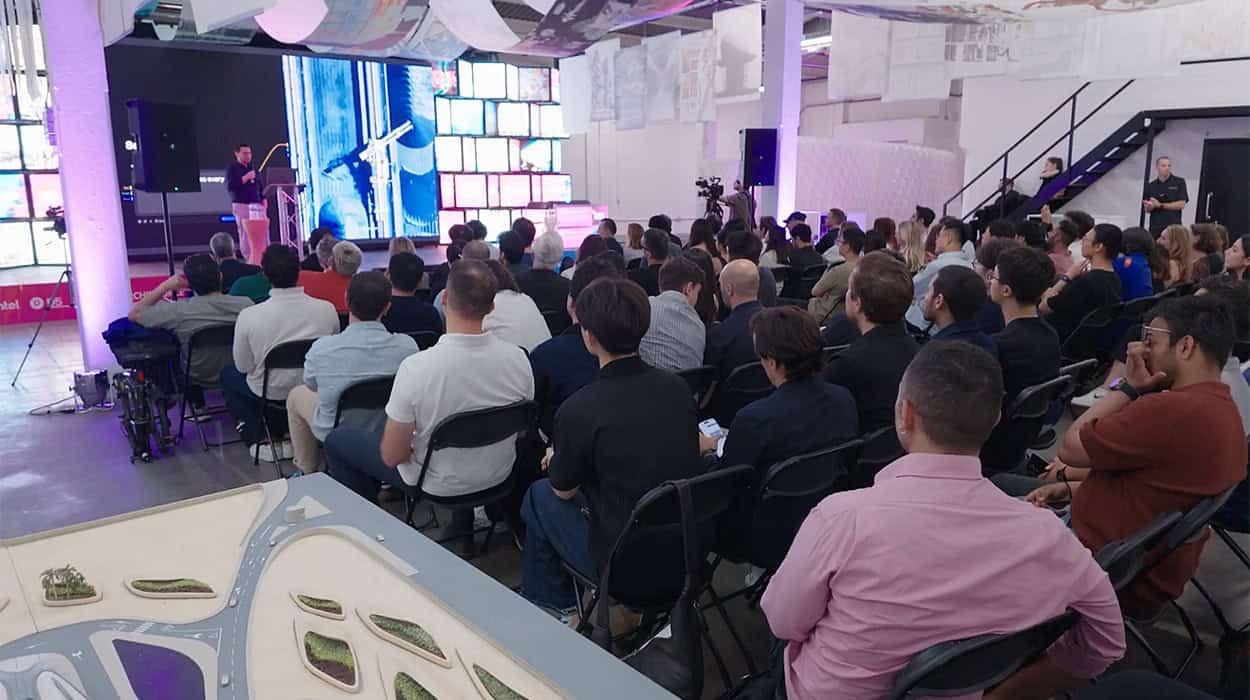
More than 1,000 engineers from around the world recently gathered for a Bentley Systems event to gauge the rapid advances AI is making in their sector. The session covered two distinct but connected ideas: how engineers who do not program can use AI tools to start automating their workflows, and how new Model Context Protocol (MCP) server technology could eventually make the coding step unnecessary altogether. (Bentley engineers, for example, have already successfully used AI agents to redesign a steel structure and cut its weight by 40%.)
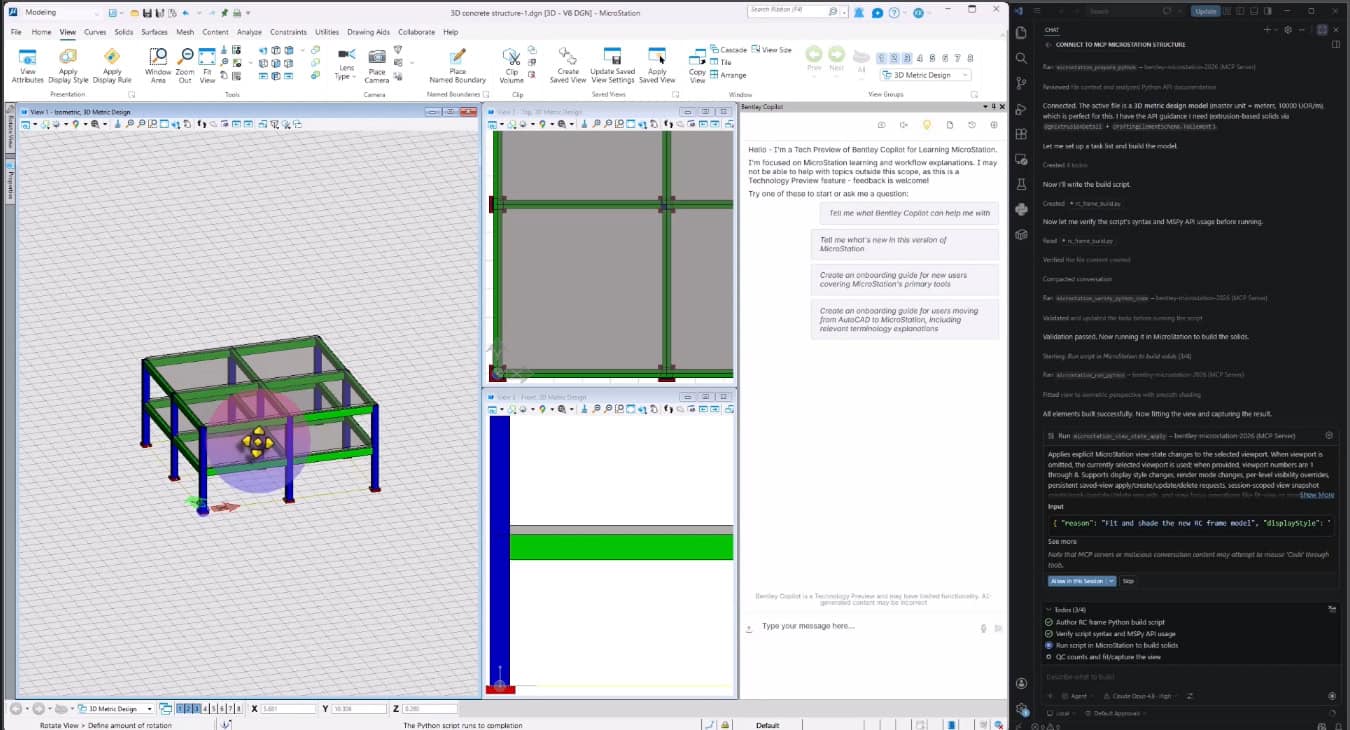
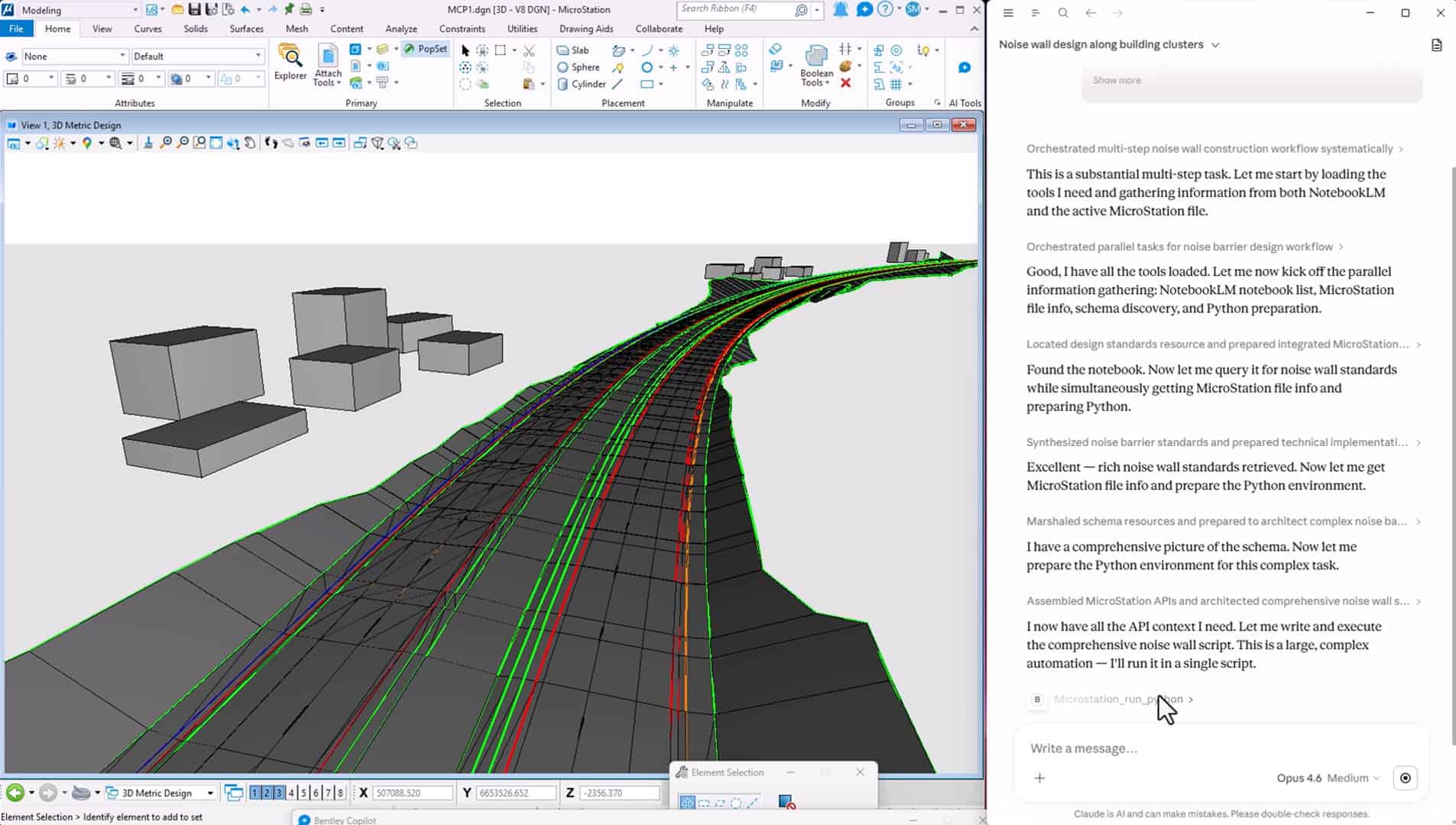
The hour-long session offered the clearest look yet at how AI is starting to shift the day-to-day work of civil and structural engineers, from Python and AI-enabled coding tools to MCP, which lets AI assistants like Claude or Copilot talk directly to engineering software. Think of MCP like a translator for AI agents: Instead of engineers spending hours clicking through menus to run calculations, they can type a plain English sentence—”optimize this steel frame”—and the AI agent does it automatically inside the STAAD software, in full compliance with the built-in engineering codes.
Bentley Chief Technology Officer Julien Moutte has been blunt about why this matters: The world needs more infrastructure than it has engineers to build it. AI agents, he argues, are an answer to that gap. By handling the repetitive, manual calculations, AI frees up engineers to focus on the decisions that better use their specialized skills and training. But there is a catch: AI that is only 90% accurate still leaves the engineer with 100% liability. That’s why the human must remain in the loop. “Would you drive across a bridge that is ‘hopefully’ designed right?” Moutte recently wrote for Bentley.
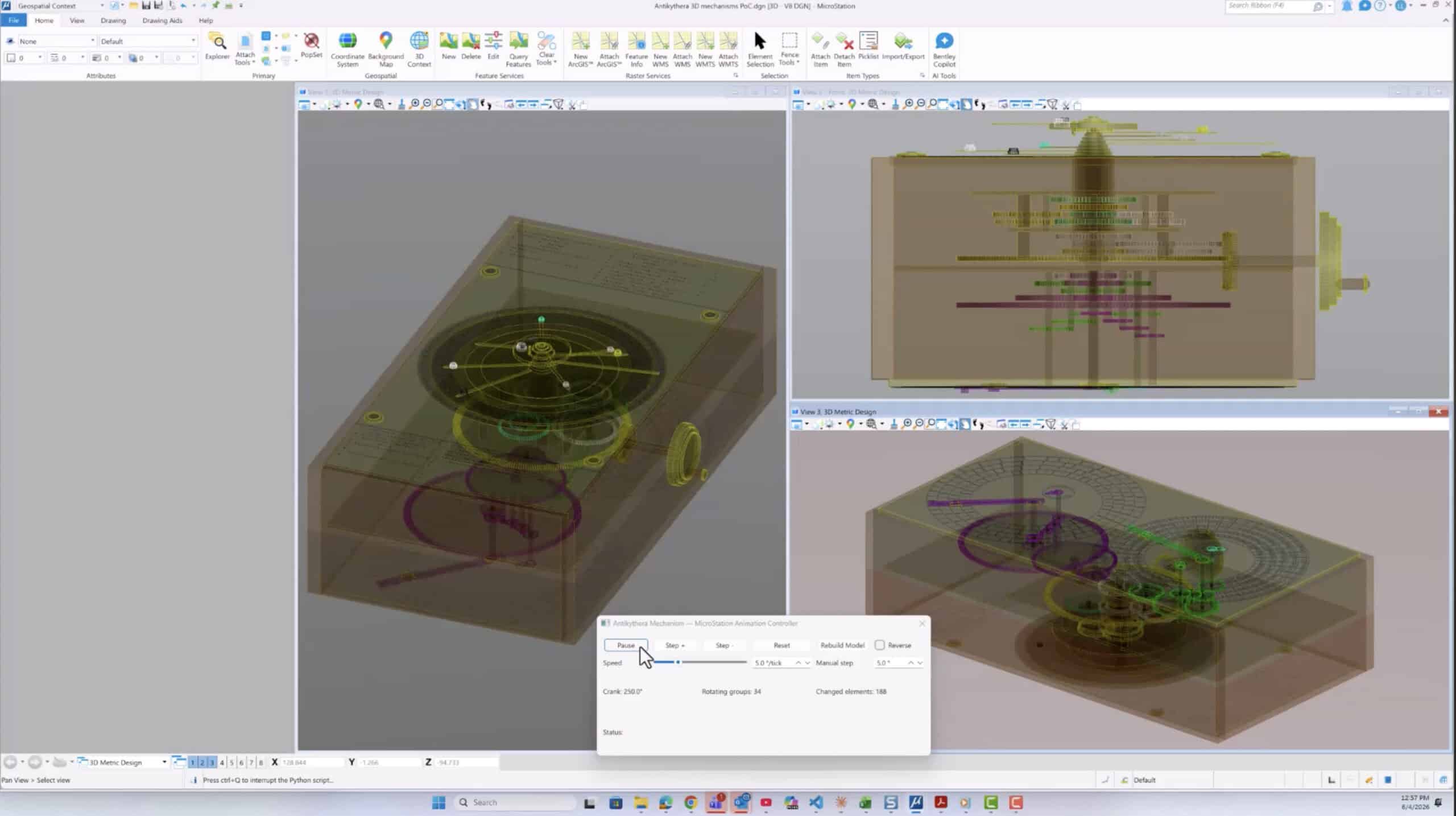
Timo Harboe Zollner, a Danish structural engineer with a massive following who teaches Python programming to fellow engineers, joined the webinar to give an honest, unvarnished picture of where things stand in the industry with AI. He is a relative newcomer to STAAD, yet Harboe Zollner showed how he used AI coding tools to write Python scripts that connected to the software, automatically pulled reaction forces from two versions of a structural model, and plotted the differences. He said that when done manually, the task takes “a really long time,” but with the right AI script, that timeframe can be reduced to just minutes.
Getting there with AI, though, wasn’t a five-minute miracle that many viral LinkedIn posts promise. “So six hours later, I was done debugging and actually getting it to work,” Harboe Zollner said. What does that means for trust? He warned that he would never use an AI-generated script on a real project without fully understanding every line. “If you know Python and you know STAAD, this can make you work 10 times faster,” he said. “But it can be really dangerous if you don’t know what you’re doing.”
For an industry routinely facing aggressive project deadlines, the automation promised by software APIs is a desperately needed lifeline. Yet a formidable barrier to entry remains: Civil engineers are trained to build physical infrastructure, not software architecture. As Harboe Zollner demonstrated, while tools like Claude can help engineers stitch together Python scripts to lower that threshold, they still demand a baseline of programming fluency and a rigorous review process.
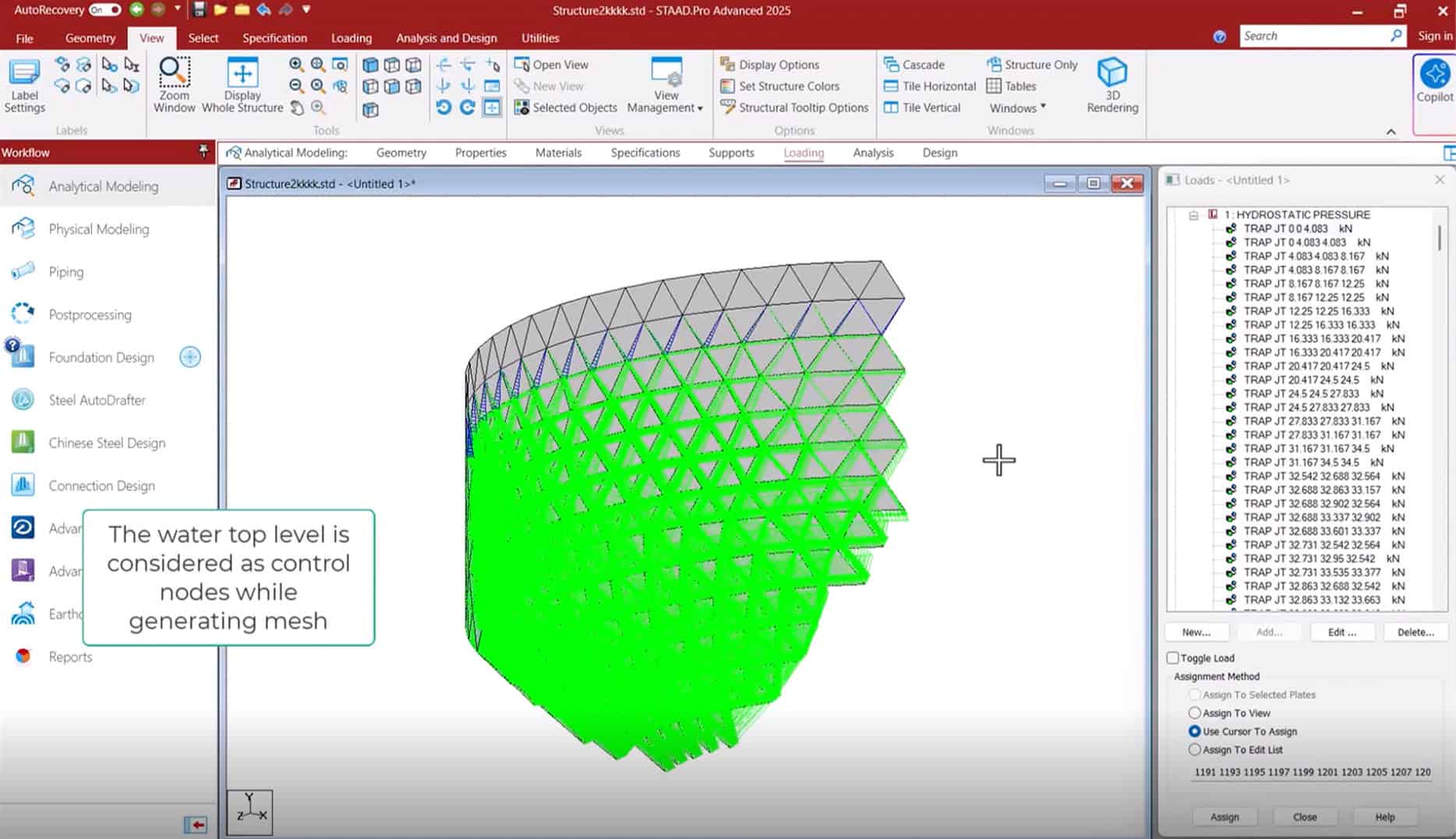
The second presenter, Biswatosh Purkayastha, is a solutions engineering manager at Bentley. First, he demonstrated using Python and a mathematical algorithm called Delaunay triangulation—a method that generates cleaner, more accurate geometric meshes—to build a tool that automatically models circular water tanks, a notoriously finicky task.
Then, he showed the Bentley MCP server in action.
Through MCP, Claude, the AI assistant, was able to connect directly to STAAD, optimizing a steel structure step-by-step and automatically checking each iteration against local building codes.
“After decades of continuous research and innovation, Bentley has made remarkable progress in AI, and [we’re] now providing the technological bridge toward the future of intelligent engineering workflows,” Purkayastha said. “Our approach is engineering first, meaning our AI is anchored in the real-world physics, structural logics, engineering context, delivering precise, trustworthy automation that you can rely on.”
The future shown by both presenters lies not in writing code faster, but in skipping the need to code altogether. Instead of scripting commands line-by-line, engineers will simply type what they need in plain English. The AI agent handles the execution, with all analysis and design carried out safely inside the validated software environment they already trust. This paradigm shift will transform the AI agent from a mere coding assistant into a digital engineering apprentice. Crucially, it liberates engineers from tedious modeling tasks and the steep learning curve of programming.
Ultimately, this time saving allows engineers to shift their focus to critical phases of the workflow that are often squeezed by tight schedules—such as deep quality reviews and rigorous design coordination across disciplines. Because these interdisciplinary friction points are historically the root causes of construction budget overruns and schedule delays, resolving them early is a massive win for project delivery.
Most importantly, it gets engineers back to the very reason they entered the profession: to design creative, elegant solutions to the world’s most complex infrastructure challenges.
The message is clear: AI agents are ready to work, but only when engineers lead the way. The AI handles repetitive, time-consuming tasks. The engineer handles judgment, safety, and ultimate design decisions.