Home / Insights and Inspirations Posts / Perspectives / Inside the Swiss Symposium Reimagining How We Design and Build

Inside the Swiss Symposium Reimagining How We Design and Build

From 3D-Printed Towers to AI Agents, ETH Zurich's Future of Construction Event Put the Next Decade of Infrastructure on Display

Kathleen Moore Profile Image

Kathleen Moore

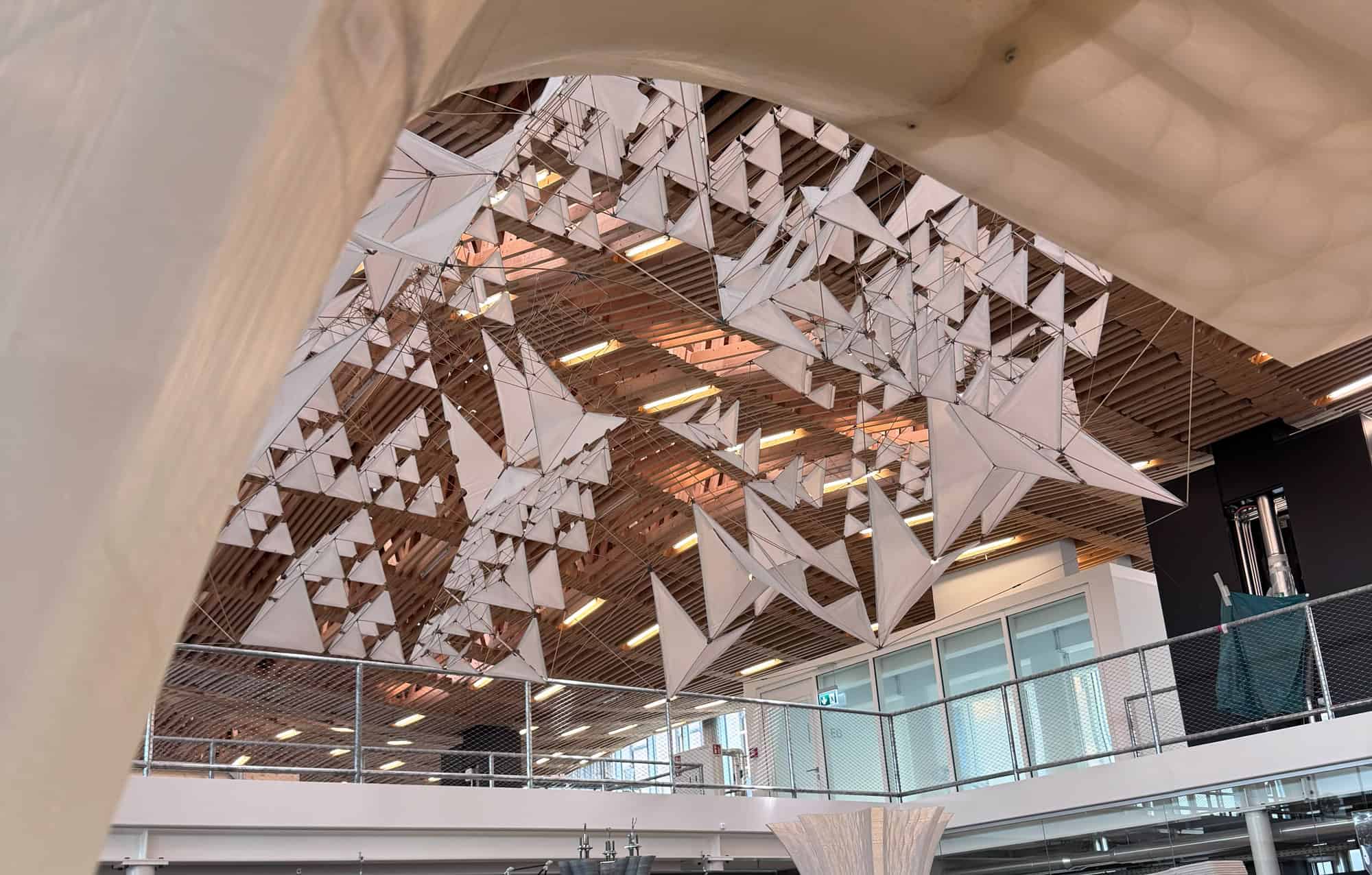
Geometric white origami-like sculptures hang from the ceiling in a modern building with wooden slats and glass-panel walls.
In May, the Future of Construction symposium took place at ETH Zurich, the storied Swiss science and technology university.

Share

In the Swiss Alpine village ofĀ Mulegns, a bone-white tower rises 30 meters from the valley floor. Skeletal in its design, Tor Alva is the tallest 3D-printed structure in the world—eachĀ componentĀ fabricated by robots in Zurich, then truckedĀ 175 kilometersĀ for assembly. It is a fitting symbol for a moment when digital tools are fundamentally changingĀ what’sĀ possible in the built world. And it made for a natural centerpiece at the Future of Construction symposium,Ā heldĀ lastĀ monthĀ at ETH Zurich—the storied Swiss science and technology university where many of those tools were invented.Ā 

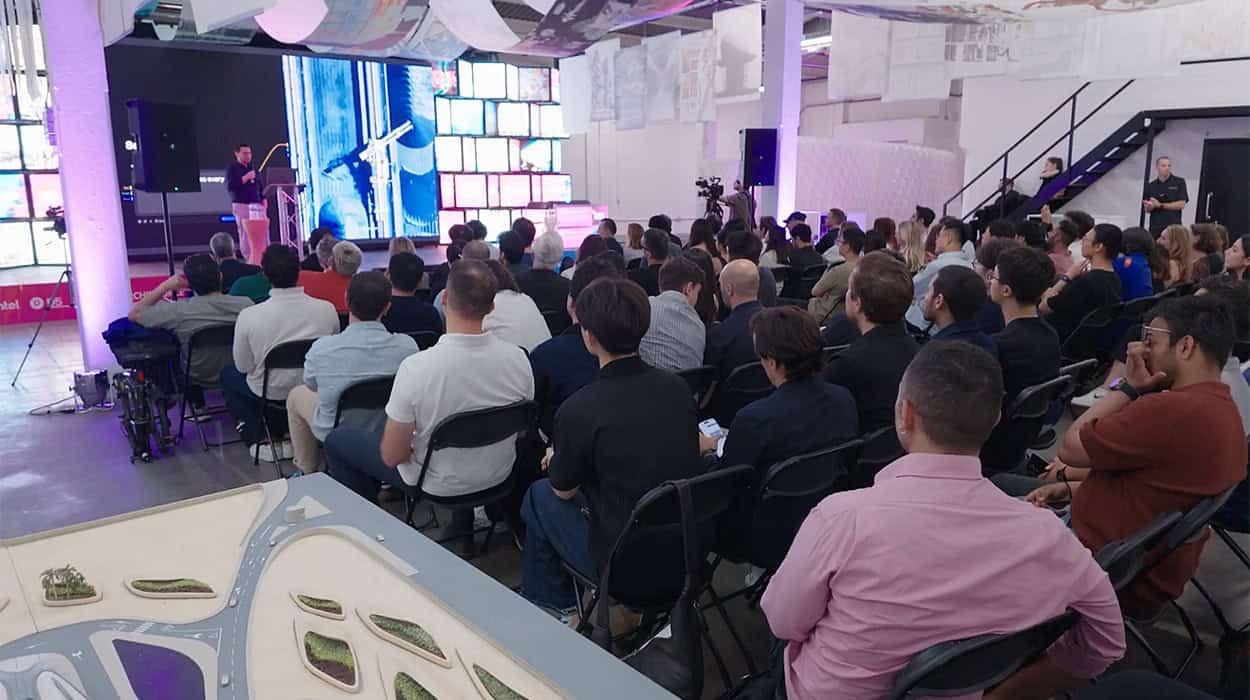
The symposiumĀ wasĀ sponsored this year by Bentley Systems,Ā the infrastructure engineering software company,Ā and put on by theĀ Center for Augmented Computational Design in Architecture, Engineering,Ā and ConstructionĀ atĀ theĀ Digital Fabrication LabĀ at ETH. The eventĀ brought together engineers, architects, academics, and technologists to explore how robotics,Ā artificial intelligence, and extended reality are reshaping the way we design and build. Attendees were treated to a bus tour to Tor Alva—a short trip into the mountains that doubled as a live demonstration of just how far digital fabrication has come.Ā 

The fit between Bentley and ETH is more than logistical. As the global company behind some of the industry’s most widely used engineering and digital twin tools, Bentley has a direct stake in the questions ETH researchers are trying to answer: How to design increasingly complex structures more efficiently? How to close the gap between a digital model and the physical world? And how to ensure that AI can access the data it needs?Ā 

From Gaudi to Gravis

View looking up at the ornate ceiling and columns inside the Sagrada FamĆ­lia basilica, showcasing how visionary design and build techniques create stunning stained glass windows and intricate architectural details.
Antoni Gaudí’s Sagrada FamĆ­lia cathedral in Barcelona.

The event was in part a retrospective,Ā taking stock of the advances since the 2014 launch of ETH’s NCCR Digital Fabrication research center. RenownedĀ New Zealand architect Mark Burry delivered one of the keynotes, tracing his decades-long work on Antoni GaudĆ­’s Sagrada FamĆ­lia cathedral in Barcelona. In the late 1980s, Burry and his team deployed computer-controlled milling machines to cut and carve stone into the complex geometric shapesĀ thatĀ GaudĆ­’s design demanded—one of the earliest uses of robotic tools in architecture. TheĀ externalĀ work on theĀ ļæ¼; the digital tools have come a long way since.; the digital tools have come a long way since.; the digital tools have come a long way since.Ā 

That arc—from early experiment to mainstream capability—was visible throughout the symposium. Zurich-based startup Gravis Robotics showcased its AI-powered autonomous bulldozers and earth-moving equipment. Greg Demchak, Bentley’s vice president of emerging technologies, had a ready analogy: “It’s like Waymo, but for construction vehicles.”Ā 

One keynote that clearly landed was from Menna El-Assady, head of ETH’s IVIA Lab, whose research maps the frontier of human-AI collaboration. The most productive territory, she argued, lies between what AI can fullyĀ automateĀ and what humans clearly do better—a middle ground where humansĀ and machines workĀ together.Ā “The human and the AI together come up with novel solutions that neither would maybe come up with independently,”Ā DemchakĀ says.Ā 

The Data Wall

That collaborative vision has a practical obstacle, and Demchak devoted his own session to it. He has a chart he keeps returning to—it looks like a saw blade. Every toothĀ representsĀ a project handover, from design to engineering to construction to operations. Every handover means data loss. “We all have this appetite to bring down silos,Ā but this industry is not vertically integrated like other industriesĀ such asĀ aerospace or automotive,” he told the audience. “I’ve beenĀ usingĀ howĀ neurons andĀ neurotransmittersĀ workĀ asĀ aĀ metaphorĀ to address this. What if the silo,Ā or gap,Ā is not the issue, but the lack of APIs that would enable information to have losslessĀ transmission?”Ā 

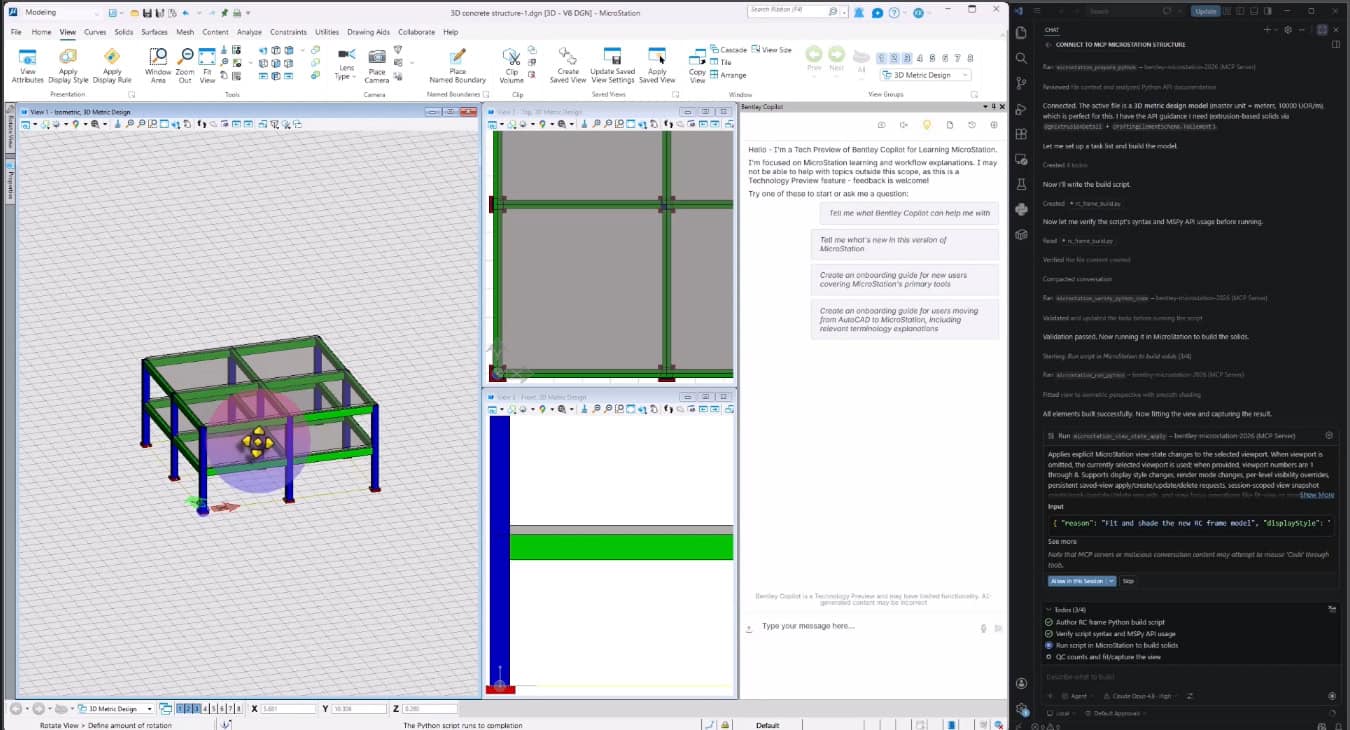
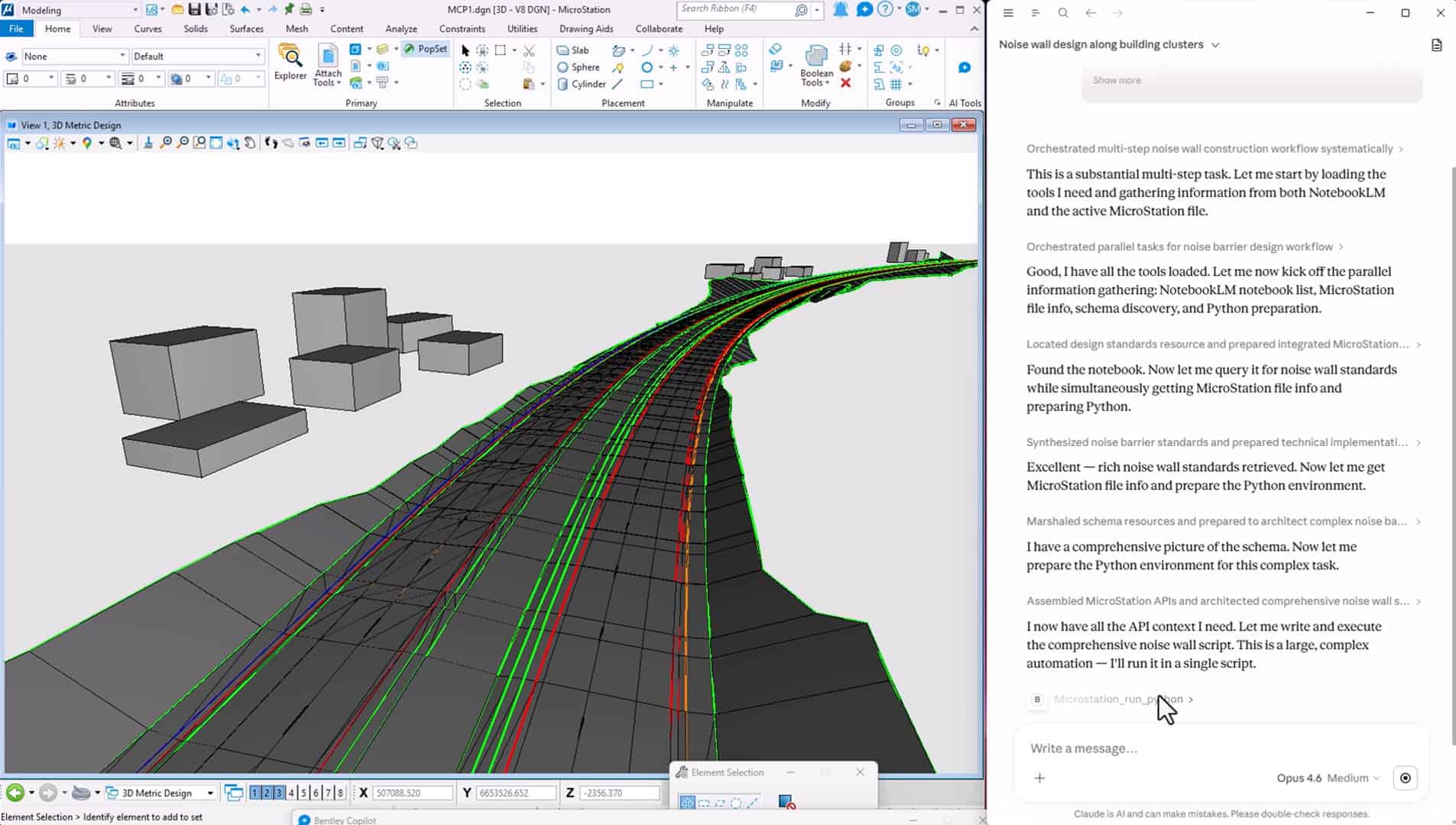
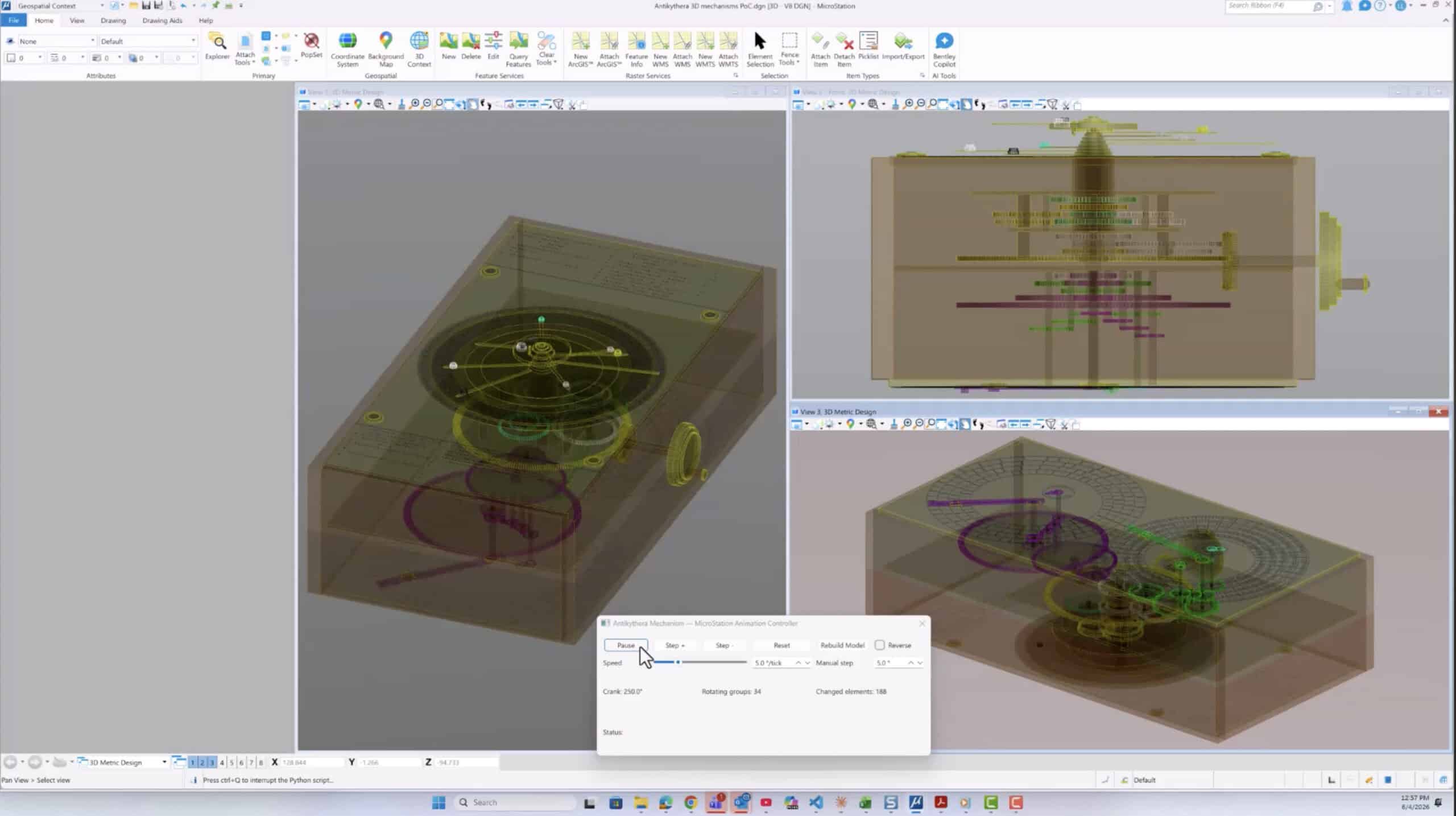
AI makes the problem more urgent. The productivity gainsĀ thatĀ the industry needs—synthesizing project history, catching design conflicts early, automating documentation—require AI agents that canĀ see the dataĀ they’reĀ workingĀ with. That means open systems and open standards. Demchak pointed to Model Context Protocols, an emerging open-source standard sometimes called the “USB-C of AI,” as the connective tissue that lets AI agents plug into the engineering software and databases where infrastructure dataĀ actuallyĀ lives. “Let’sĀ make data open and accessible,” heĀ said. “Let’s work to have all of our software operating with these open-source protocols in order to enable agentic workflows—this kind of co-design involving AI and humans.”Ā 

Beauty at Scale

Step back from the plumbing, and Demchak’s larger argument is almost romantic. Unlike the uniform prefabrication of the 20th century, today’s robotic and AI tools can produce elaborate,Ā finely detailedĀ structures at greater scale and lower cost.Ā Ā 

“If the cost of quality and complexity goes down because we use AI and robotics,” he says, “my hope is that engineers and architects—the builders of the future—feel empowered to reimagine our urban landscapes.” His shorthand: “We can bring beauty back into even the most boring of things.”Ā Ā 

Four people standing indoors in front of industrial equipment, three wearing matching "CONRAD devday 2026" shirts, smiling at the camera during the Swiss Symposium focused on design and build innovations.
Greg Demchak (left) and team at the COMPAS Dev Day event at ETH Zürich.

NXT Up

Demchak usedĀ theĀ ZurichĀ symposiumĀ to announce Bentley’s NXT Activate, a $3 million accelerator for startups building AI, digital twin, and data-driven solutions for the built environment. The 16-week program, launching in the fall, offers up to $200,000 in investment along with mentorship from industry veterans.Ā It’sĀ lookingĀ for ideas that push the frontier—combining reality capture with construction simulation, building AI interfaces on top of existing tools, or developing the next generation of robotic construction equipment.Ā 

“Robots are going to be huge,” Demchak says. “They’re going to operate through a combination of every type of AI model—computer vision, large language models, diffusionĀ models. The idea that we might help build the next generation of machines to build our roads and our buildings—I think that’s a good investment.”Ā Ā 

FAQ:

Tor Alva is a striking, bone-white tower that rises 30 meters in the Swiss Alpine village of Mulegns, making it the tallest 3D-printed structure in the world. Instead of traditional construction methods, each skeletal component was fabricated by robots in Zurich and then trucked 175 kilometers for assembly.

Model Context Protocols function as the “USB-C of AI,” serving as the open-source connective tissue that lets AI agents plug directly into engineering software and databases where infrastructure data lives. By making data open and accessible, these protocols enable agentic workflows, catching design conflicts early and allowing humans and AI to co-design effectively.

NXT Activate is a $3 million startup accelerator looking to fund the next generation of AI, digital twin, and data-driven solutions for the built environment. Launching in the fall, the 16-week program offers up to $200,000 in investment and mentorship for startups pushing the frontier of reality capture, construction simulation, and robotic equipment.

Relevant Tags

Subscribe to The Bentley Brief

Stay ahead of the curve with the latest infrastructure news and insights.