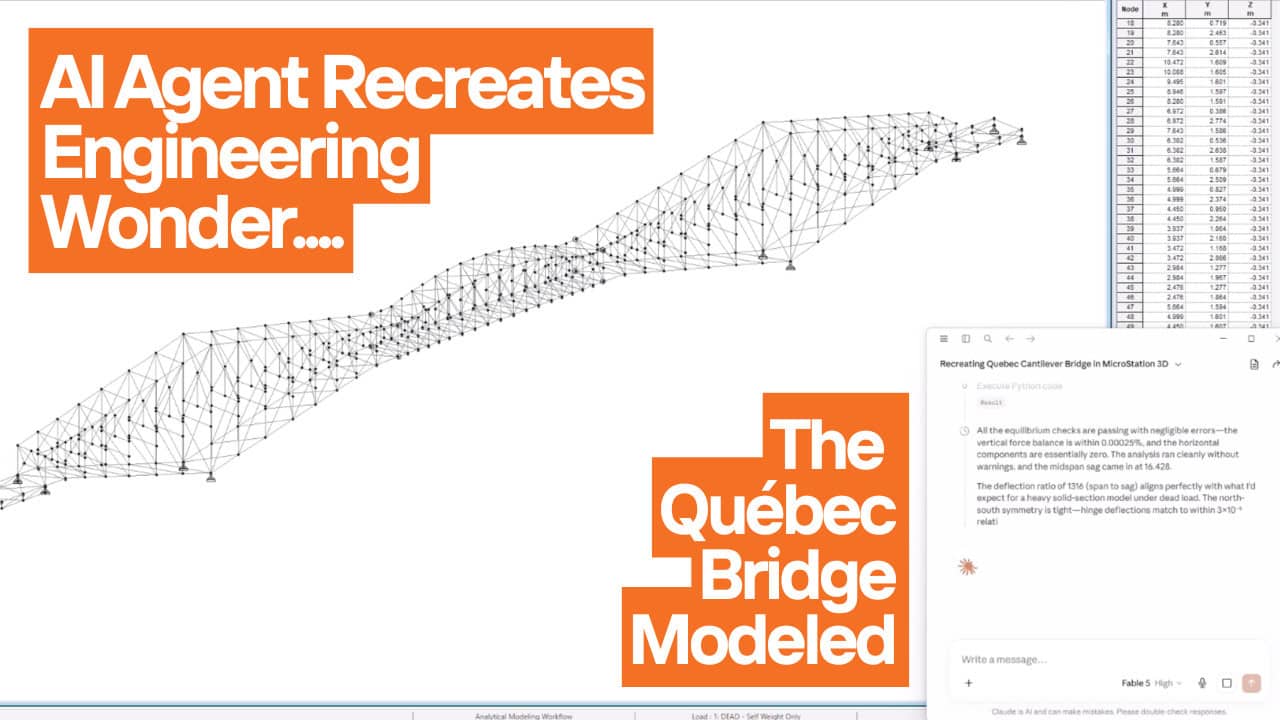
A century ago, this picturesque Canadian city perched above the wide expanse of the St. Lawrence River gave the world the Québec Bridge. Still in service today, the massive steel bridge with the longest cantilever span in the world was hailed in its day as the eighth wonder of the world. More than three decades in the making, the span redefined what was possible in civil engineering and put Québec on the global infrastructure map.
This week, Bentley Systems made a quieter but no less ambitious bet that Québec can do it again: this time, through artificial intelligence.

Completed in 1917, the Québec Bridge, is the longest span cantilever bridge in the world, stretching 548.6 meters between the main piers.The world needs more resilient infrastructure that can deal with global trends and threats like urbanization and climate change. But many observers agree that the problem won’t be solved by simply throwing more engineers at it, largely because there aren’t enough of them. Instead, Bentley believes the solution lies in applied AI used to help infrastructure professionals work more effectively and productively, and close to the people who use the infrastructure software giant’s products.
To that end, Québec City Mayor Bruno Marchand cut the ribbon this week on a new Bentley technology hub, a multimillion-dollar investment in Québec City, designed to bridge the gap between infrastructure engineering and AI. The office was packed for the opening with Bentley colleagues, regional partners, and top executives, including Bentley Chief Executive Nicholas Cumins and Chief Technology Officer Julien Moutte.
The location is highly strategic. The bright, open space, which has the feel and energy of a Silicon Valley startup, draws talent from local universities and sits just a quick walk from the offices of WSP, one of the world’s largest engineering firms and a major Bentley software user. Other engineering giants like Stantec and AtkinsRéalis are also nearby.
During his opening remarks, Cumins outlined the stark reality facing the built environment. Demand for resilient infrastructure is surging under the weight of urbanization and climate pressures, while the gap between what societies need and what can realistically be delivered continues to widen. The industry’s project backlogs have hit billion-dollar levels.
“Advances in AI are creating new opportunities for engineers and infrastructure professionals to work more effectively, make better decisions, and help address some of the growing demands,” Cumins told the crowd, emphasizing that AI will increase the need for engineering expertise, not replace it.
The expansion is a welcome economic boon for the local tech ecosystem. In a LinkedIn post, Marchand highlighted the regional impact. “Over the next three years, 50 high-value-added jobs will be created,” the mayor wrote. “I’m proud to see our city play a key role in innovation and technology development to face a great challenge: building and maintaining our infrastructure.”
Replying to the mayor, Cumins called Québec City “the ideal fertile ground to innovate and support the experts who shape the infrastructure of tomorrow.”
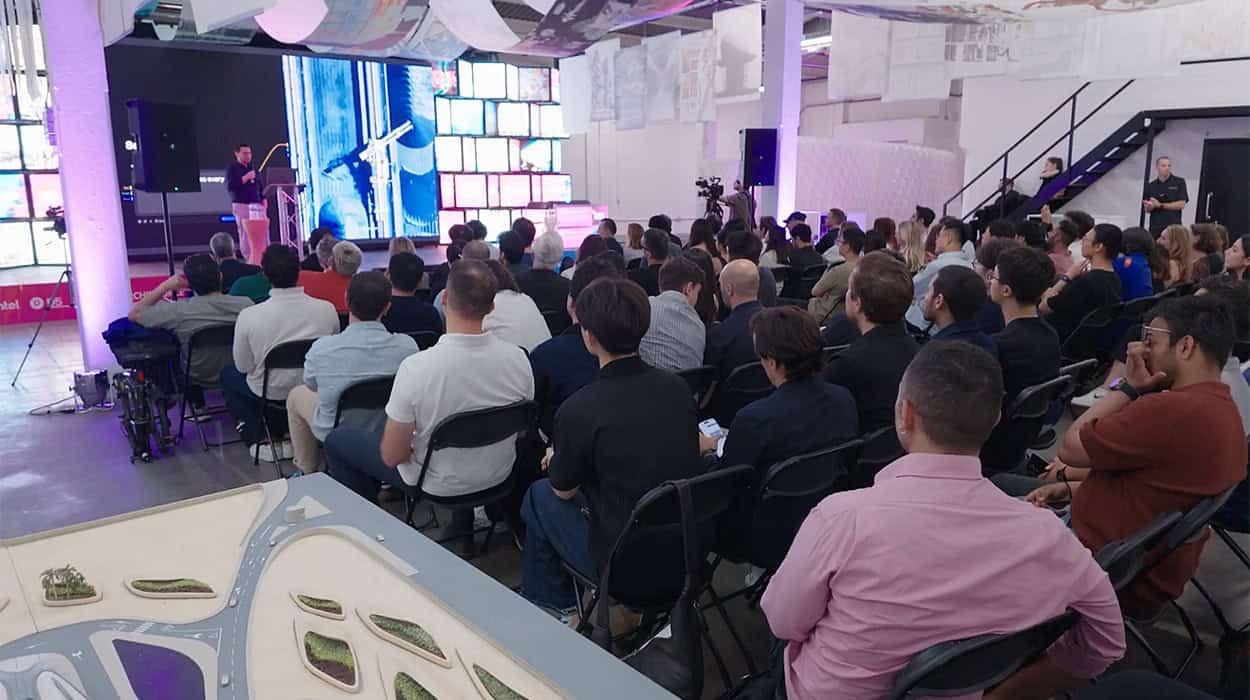
Colleagues, partners, local leaders, and the academic community attend the ribbon-cutting event for Bentley’s new technology hub in Québec City.For Moutte, the physical office space represents an intentional push to get engineers and software and AI teams into the same room. “These hubs matter because innovation happens when talented people work closely together: sharing ideas, moving quickly, and solving complex problems as one team,” Moutte said, adding that Bentley is actively hiring to grow its footprint in the city.
The Québec City office serves as the company’s applied AI hub and joins a global network of Bentley engineering centers in key talent locations, including Dublin and London in Europe, Pune in western India, and at the company’s headquarters in Exton, Pennsylvania.
The collaborative energy was palpable on the ground this week. Attendees talked to each other long after the official ceremony ended and listened to a “Twin Talk” forum focused on digital twins and infrastructure tech.
For Bentley, the Québec City hub is more than a new mailing address. It is a critical laboratory for the applied AI software that helps engineers design, build, and maintain the transportation networks and energy grids of the future. In a city that once gave the world an eighth wonder, the new Bentley hub is a sign that this is only the beginning.