
When Otto Lynch began his career as a transmission designer in the early 1990s, laying out the 500-kilovolt power loop around Washington, D.C., required a team of 30 engineers and six months of handwritten calculations.
Today, Lynch says he could do the same project in a day, on his own.
“That’s not a boast,” said Lynch, head of Power Line Systems (PLS), which is part of Bentley Systems. “It’s a measure of how dramatically the tools and technology have changed.”
The catch: That same line can still take years to build due to bottlenecks caused by permitting, which involves navigating a maze of agencies, hearings, and competing interests that hold a project in limbo.
Closing the gap between what’s possible to design and what’s possible to deliver is the core focus of Infrastructure Week 2026, which is taking place this week in Washington, D.C.
As director of infrastructure policy advancement at Bentley, Rory Linehan translates hard infrastructure problems into improved infrastructure performance on the ground, in partnership with industry associations, engineering firms, academia, and government.
In February, Bentley’s Infrastructure Policy Advancement team released a white paper titled “Built to Endure” with Duke University, Microsoft, and the American Society of Civil Engineers (ASCE). Bentley is now using its findings to help build an urban resilience digital twin of two innovative cities in North Carolina: Durham, home to Duke, and nearby Chapel Hill.
It’s the same kind of policy-to-pavement throughline that explains why Bentley participates in Infrastructure Week. The event is organized by United for Infrastructure, a coalition of some of the largest business, labor, policy, and local government organizations in the United States. The coalition launched Infrastructure Week during the first Trump administration to push for a major infrastructure bill, and the event gained momentum with the passage of the Bipartisan Infrastructure Law under President Biden. It has since become, as Linehan puts it, “a national lightning rod” for the country’s needed reforms and investments.
“Citing the latest ASCE report card, U.S. infrastructure has a C grade,” he says. “We face trillions in deferred maintenance and backlog that must be resolved before we can even begin to address the massive energy, water, and mobility requirements of a thriving 21st-century economy.”
 Technology help modernize antiquated systems and provide “source of truth” to maximize transparency across federal, state, and municipal agencies for infrastructure projects.
United for Infrastructure has framed its 2026 agenda as “Building a Stronger America.” The big idea is to use infrastructure as a lever for national security and economic competitiveness. That framing has four core priorities: maintaining robust federal investment in U.S. infrastructure systems; cutting through the permitting delays and bureaucratic red tape that slow projects and drive-up costs; securing a long-term solution to the Highway Trust Fund’s fiscal future; and investing in resilience and the skilled workforce that builds and maintains it all.
Permitting is where the math gets uncomfortable. Up to $250 billion in new infrastructure projects each year sits somewhere in the pipeline, and many projects take 5 to 10 years to clear before construction can even begin.
“In an era where we need a lot of new energy, a lot of new water, and where mobility needs are rapidly evolving, we need shovels in the ground—not projects in a pipeline,” Linehan says. “Permitting reform is about maintaining environmental safeguards, in fact enhancing them where we can, but streamlining federal and state policies so we can expedite those projects.”
Technology can undoubtedly help modernize antiquated systems and make sure they fit the delivery needs of 21st-century projects. Here are some examples:
- Software solutions utilizing artificial intelligence (AI) can take an environmental impact statement at submission and immediately tell the applicant whether it meets the relevant criteria. This identifies gaps before the file reaches a human reviewer and can save months of waiting.
- A unified data platform can harmonize the hundreds of federal, state, and municipal agencies that today each operate on their own software with different definitions and classifications.
- One key element is digital twins, the immersive 3D virtual models that hold a project’s information, including environmental data, brownfield-or-greenfield history, and design. The models can give every reviewer the same single source of truth and help accelerate permitting by “creating more transparency and allowing everybody to access it from the same spot,” Linehan explains.
The other big item on this year’s agenda is surface transportation reauthorization. Federal funding for the interstate highway system runs out at the end of September, and a new bill (or continuation of the current law) must be passed before then. The work is largely funded by the Highway Trust Fund, which has not been indexed for inflation since the early 1990s, so it does not have the purchasing power it used to. This means that whatever bill emerges, there will be less margin for waste, which gives digital infrastructure technologies an even more important role.
“Technology can help refine some of these investments, better understand where to place them, and improve the delivery of them,” Linehan says. “That’s a big piece for us.”
Bentley is a global maker of infrastructure engineering software that enables users to connect disparate data, build digital twins, and use AI to gain new insights and efficiencies. The company’s broader case, threaded through each of these conversations, is that reauthorizing transportation funds, navigating permitting, and safeguarding against climate change share a common core: overcoming complexity to deliver for communities. Digital tools, AI, and digital twins can help ambitious policies become a built reality.
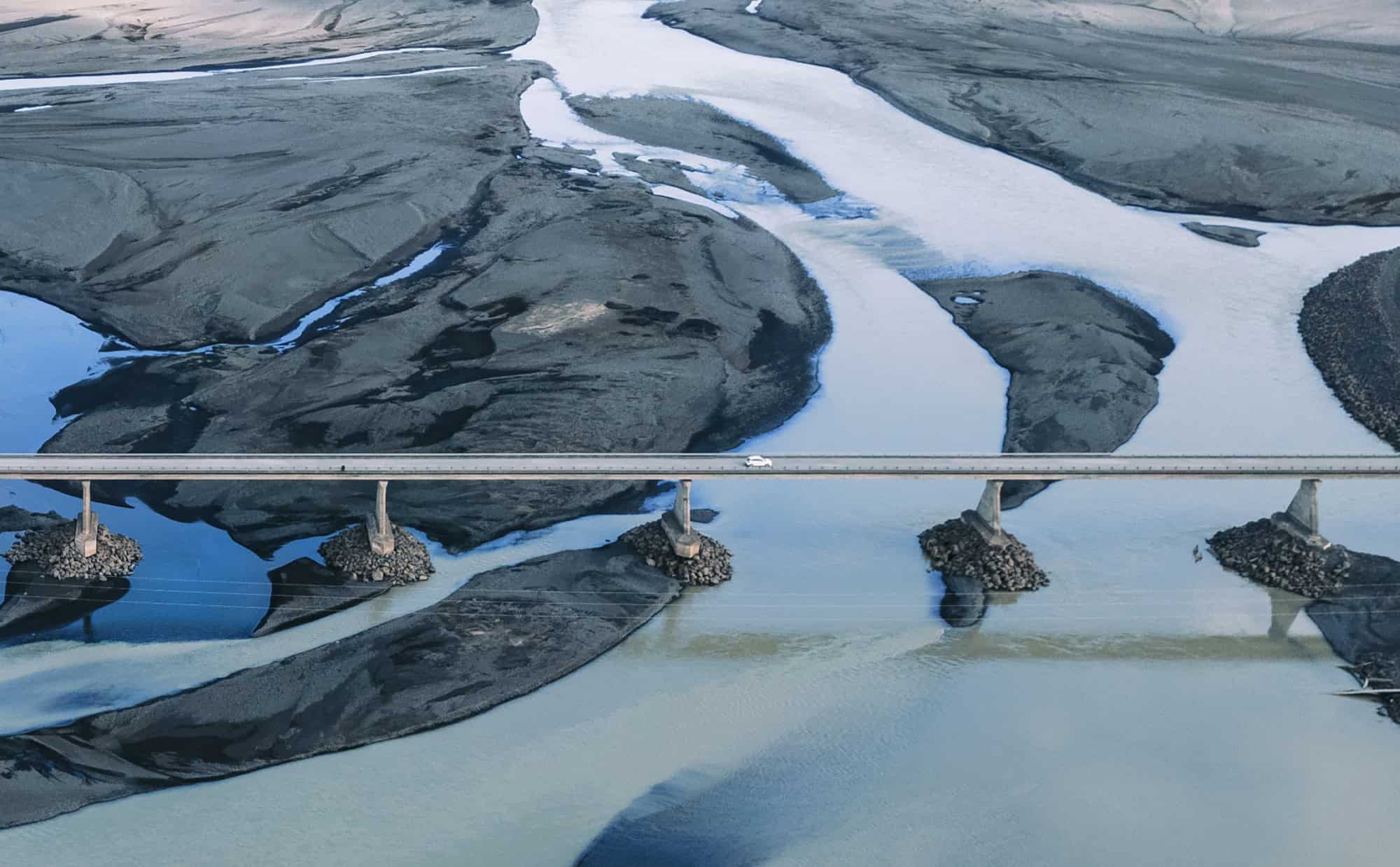
 3D models and connected data helped propel the I-95 Rappahannock River Crossing project in northern Virginia.