From space habitats to playable cities: LSU students push the boundaries of digital twin technology
How Bentley Systems is engineering a sustainable future for water and energy
Jana Miller, Senior Industry Marketing Manager
MIRDONA introduces an 'Acoustic Layer' to space architecture, utilizing sound as a spatial parameter to support astronaut cognitive health and psychological stability.
Share
Key takeaways
LSU students are showing how digital twin technology can solve real-world problems far beyond infrastructure, including cultural heritage, space habitat design, predictive healthcare, and urban planning.
Digital twins can make hidden museum collections more accessible by turning archived artifacts into immersive, interactive learning experiences.
Digital twin models could improve space architecture by helping researchers design safer, more human-centered habitats for astronauts.
Personalized digital twin and muscle simulation technology could help predict injuries, improve clinical decision-making, and support more precise healthcare.
Playable urban digital twins could make city planning more inclusive by helping residents test development ideas and better understand trade-offs.
Bentley-supported digital twin innovation is a cross-disciplinary tool for building more accessible, resilient, and human-centered systems.
At Bentley, we are constantly inspired by the innovative ways our technology is used to tackle the world’s challenges. Today, we are thrilled to spotlight a group of exceptional students from Louisiana State University (LSU) who attended the Digital Twin Symposium at their campus earlier this year, hosted by DigiTwin Global and sponsored by Bentley. These students are pushing the boundaries of what’s possible with digital twin technology. From the vastness of space to the intricacies of the human body, these students are pioneering new applications that promise to reshape our world. Together, these projects show how digital twin technology can support cultural heritage, space architecture, predictive healthcare, and more inclusive urban planning.
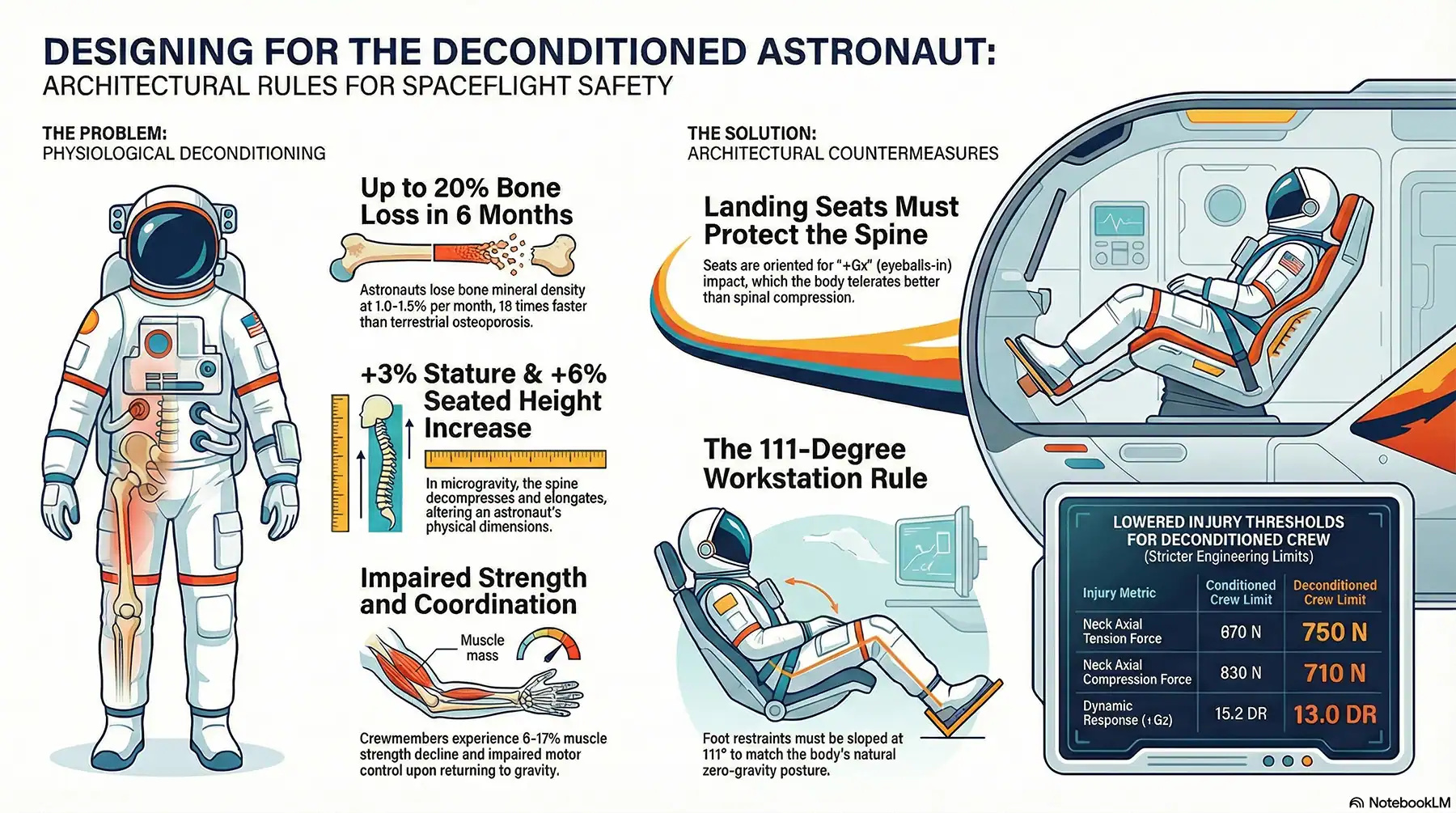
Susmita Biswas’ work focuses on
optimizing astronaut cognitive health and habitat safety in deep space.
Meredyth Yorek: Using digital twins to bring hidden history to life
Meredyth Yorek’s work addresses a fundamental problem in the world of cultural heritage: an estimated 97%–98% of museum artifacts remain in storage, inaccessible to the public. Her research project aims to bridge this gap by creating a digital twin of the LSU Museum of Art’s extensive ivory collection, which has been largely unseen by the public since the 1980s.
However, Meredyth's goal isn't simply to create a static digital archive. She is developing an immersive, interpretive experience that re-contextualizes these artifacts. Using Unreal Engine, she builds historically inspired virtual environments where users can interact with the objects. For example, the museum's collection of Japanese netsukes—intricately carved toggles used on kimono sashes—is presented within a virtual traditional Japanese interior. This allows users to understand not just the objects themselves, but also their cultural function and significance.
The project features two modes: "Explore," which enables free, first-person navigation of the virtual environment, and "Learn," which uses gamification to test how user-driven interaction impacts knowledge retention. By tackling challenges like high-fidelity 3D scanning of fragile objects and long-term data preservation, Meredyth’s work serves as a testbed for the entire digital twin field, demonstrating how these technologies can create dynamic, educational, and engaging experiences.
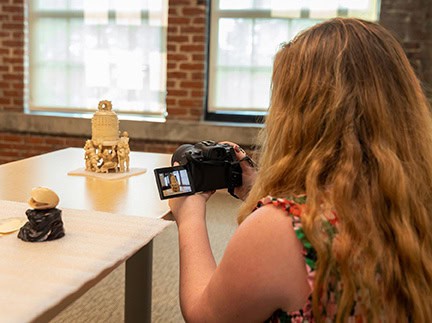
Yorek detailing a cultural artifact at the LSU Museum of Art. Photo courtesy Kevin Duffy.
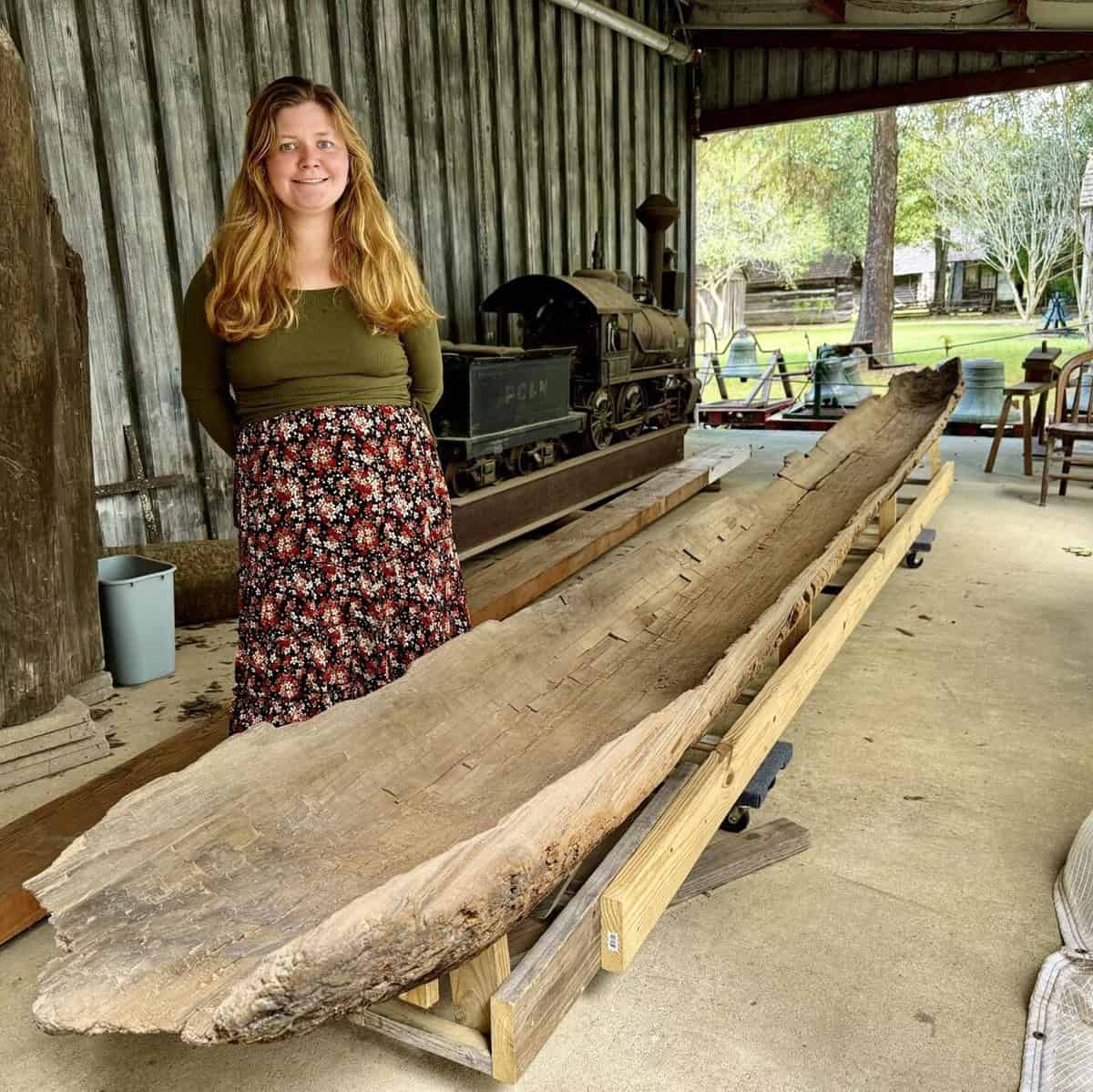
By creating a precise digital twin of a fragile, 1,000-year-old Indigenous dugout canoe at the LSU Rural Life Museum, Yorek's groundbreaking work is rescuing ancient history before it fades away forever. Photo courtesy The Advocate.
Susmita Biswas: Engineering habitats for the final frontier
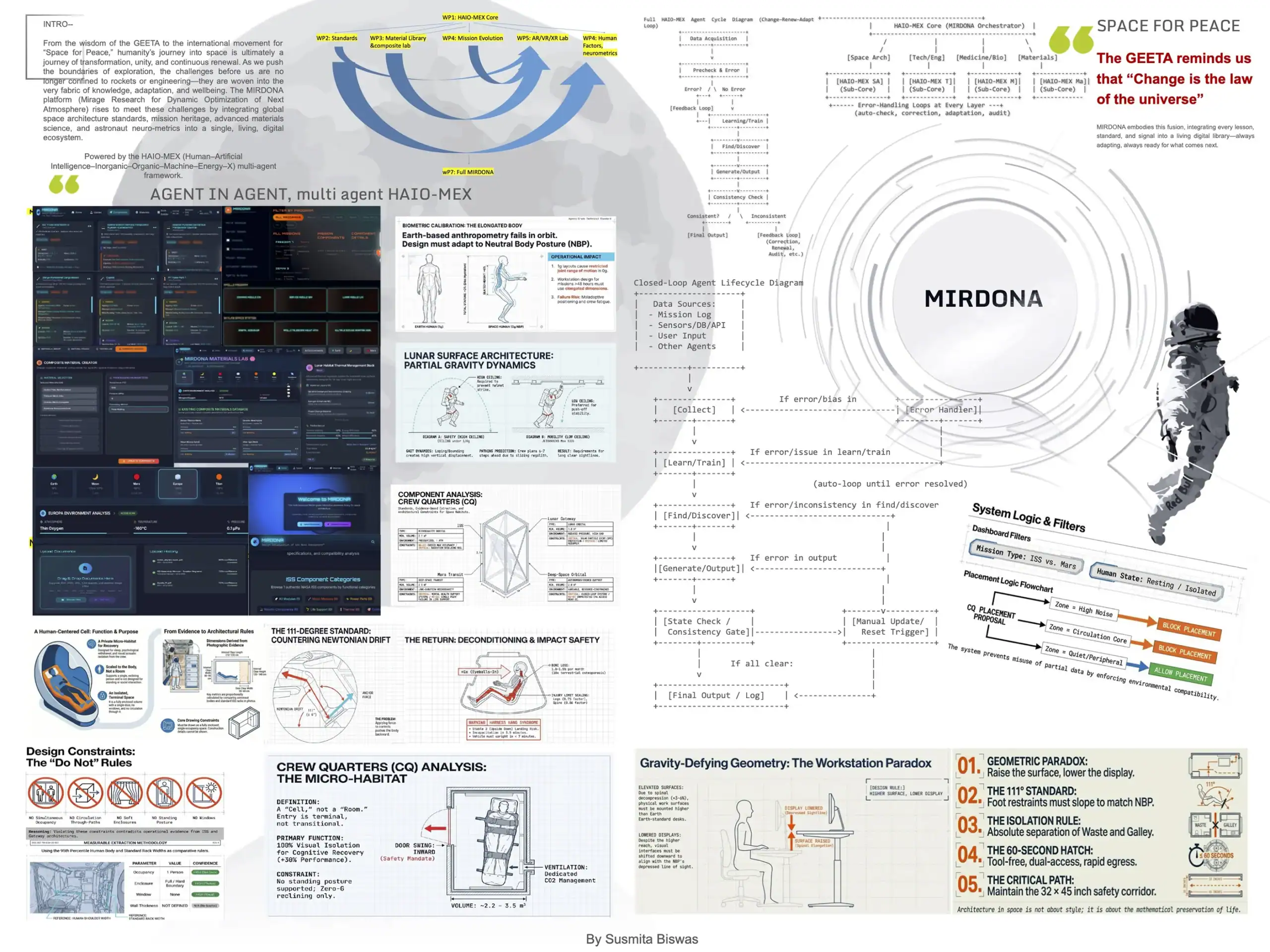
Susmita Biswas is a researcher at the intersection of space architecture and digital twin technology. Her work focuses on a critical challenge for the future of human space exploration: designing habitats that are safe, efficient, and human-centered. To do this, she is developing MIRDONA (Mirage Research for Dynamic Optimization of Next Atmosphere), a cutting-edge digital twin framework.
Unlike conventional BIM systems that create static models, MIRDONA operates as a dynamic, living simulation. It continuously integrates spatial geometry, environmental conditions (including thermal, atmospheric, and radiation levels), and human performance data into a single, high-fidelity ecosystem. This allows designers and engineers to test and validate every aspect of a habitat's safety and performance long before it is deployed in space.
MIRDONA’s core components include a multiagent AI system called HAIO-MEX to optimize human-environment interactions and, uniquely, an acoustic layer. Drawing on her 20 years of experience in music, Susmita is exploring sound as a spatial parameter within spacecraft, studying its impact on astronaut cognition, orientation, and psychological stability. Her work is laying the groundwork for the next generation of safe and habitable environments beyond Earth.
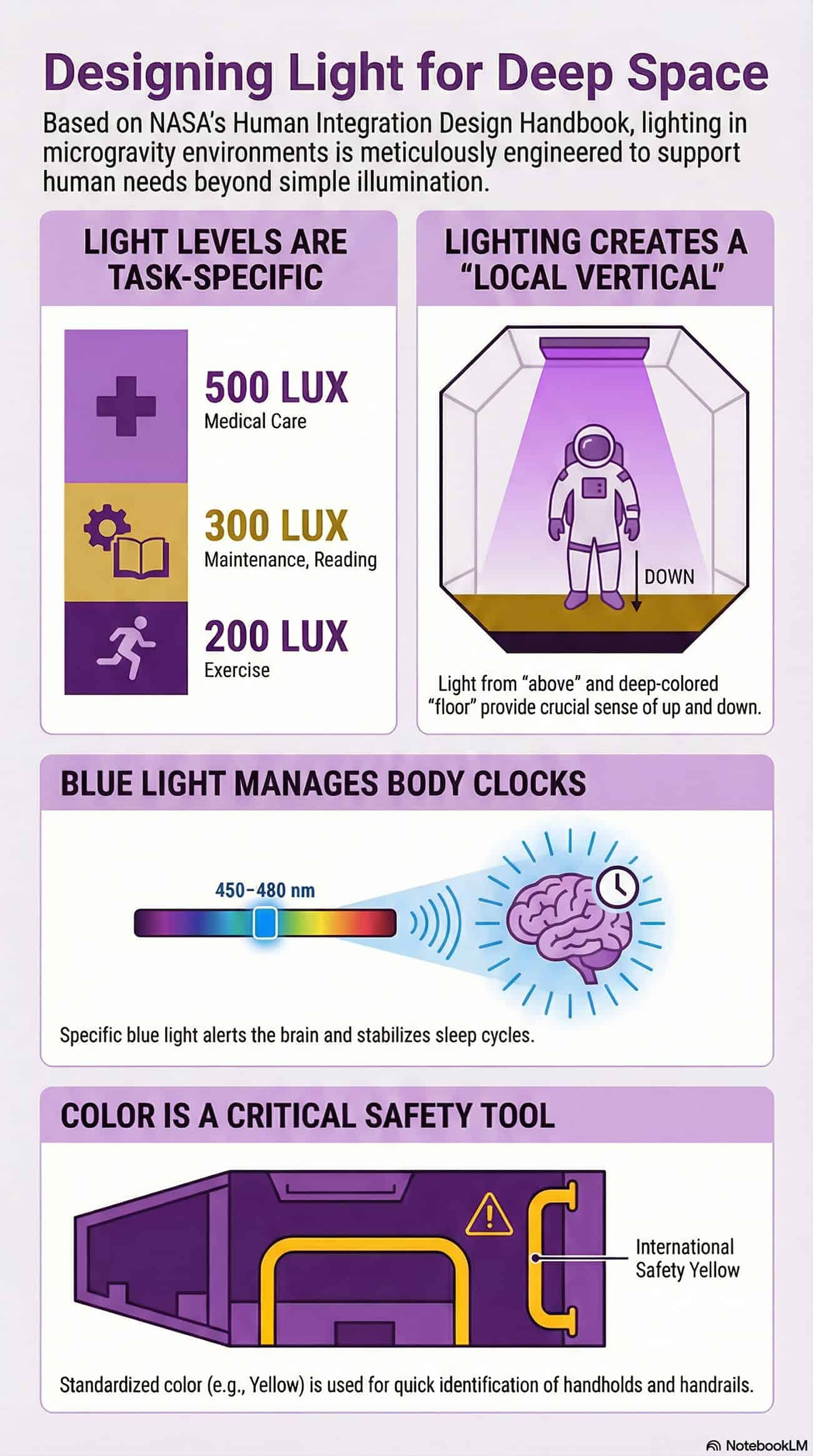
Biswas’ work includes how to design light for deep space.
Rebecca Hutto: Applying digital twin and visual effects technology to medicine
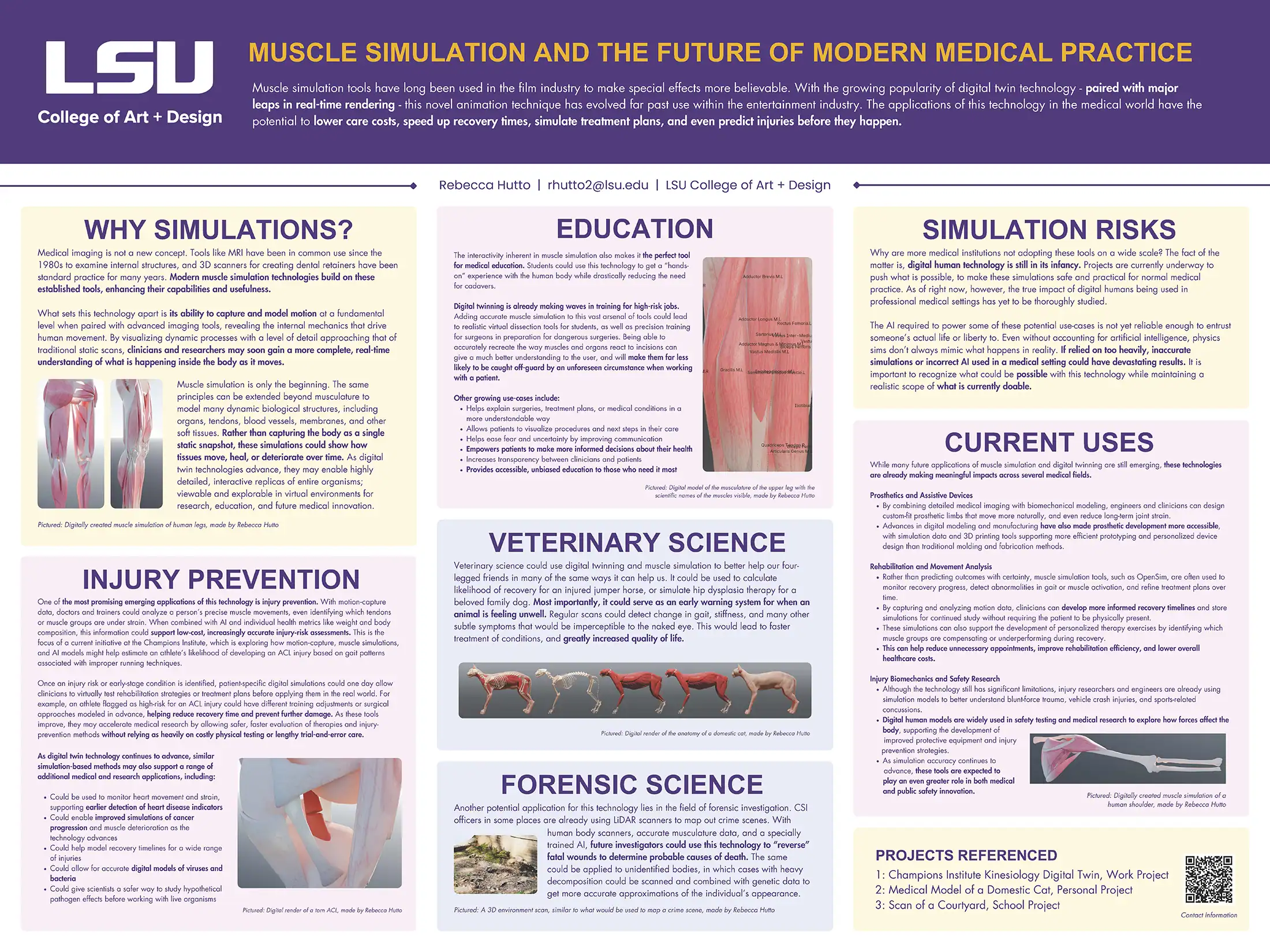
Rebecca Hutto’s research asks a powerful question: What if the muscle simulation technology used to create stunning visual effects in movies could be used to predict and prevent real-world injuries? An MFA student, Rebecca is at the forefront of applying these tools to medical practice and physical therapy.
Her primary project, in collaboration with the Champions Institute, involves building a fully personalized muscle visualization system. The goal is to create a repeatable pipeline that uses an individual's MRI scan data to generate a precise digital twin of their musculature. This model can then be used, with the help of an integrated AI, to analyze an individual's exact muscle movements, identify tendons or muscle groups under strain, and ultimately predict injury risk before it occurs.
For athletes, this could mean targeted training adjustments to prevent career-threatening injuries such as ACL tears. For clinicians, it would allow them to test surgical interventions digitally before ever making an incision. Rebecca’s research also explores broader applications, from providing medical students with hands-on experience in a virtual operating room to helping veterinarians diagnose animals. Her work sits at the intersection of art and science, poised to make healthcare more predictive, personalized, and effective.
Hutto focused on
preventing athletic and clinical injuries using advanced muscle simulations.
Claire Bonius: Making cities “playable” for an inclusive future
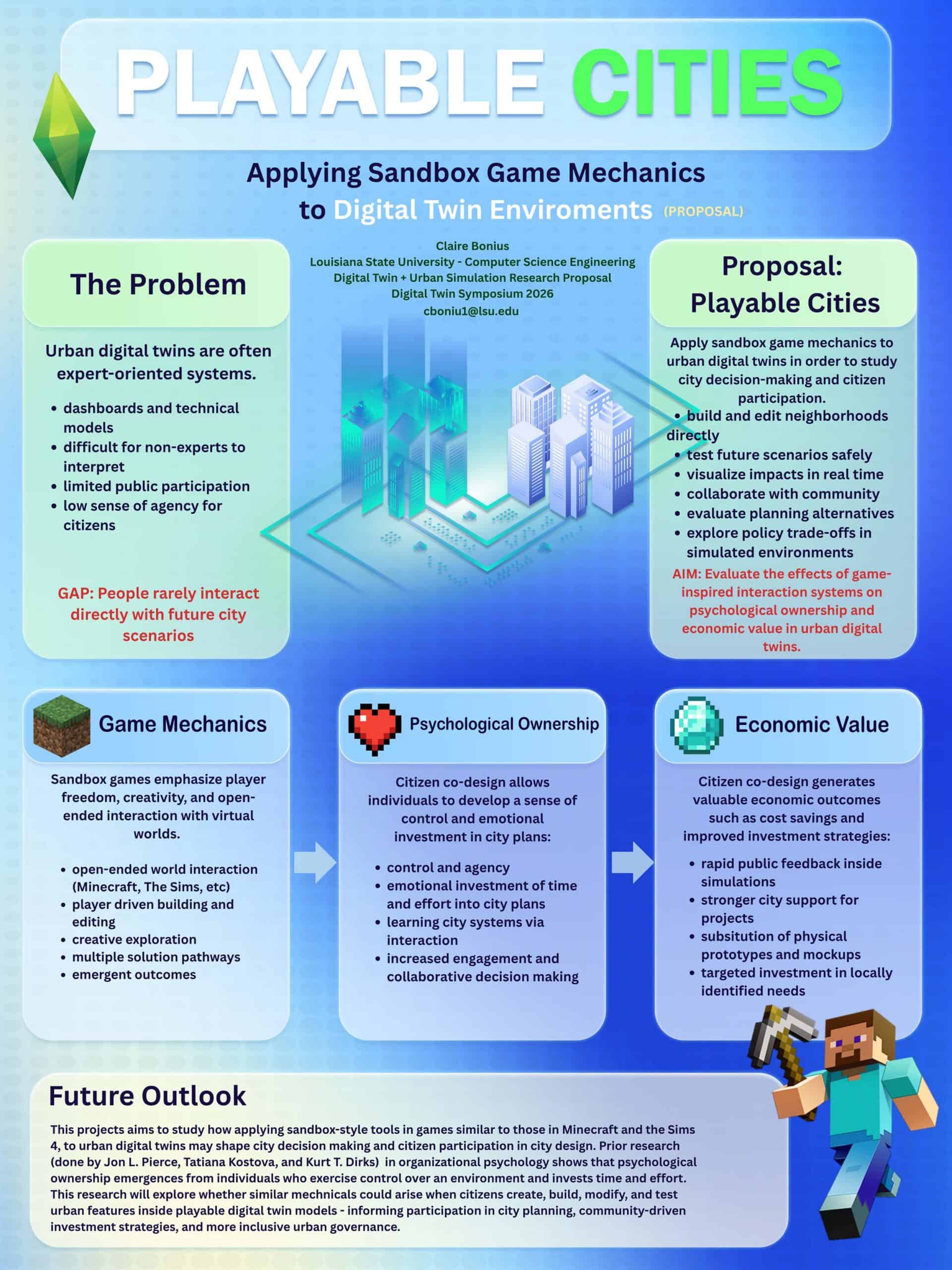
Urban digital twins are powerful tools for city planning, but their complexity often excludes the most important stakeholders: the citizens who live there. Claire Bonius, a computer science undergraduate, is addressing this gap with her “Playable Cities” research proposal, which aims to democratize urban planning by making it interactive and accessible to everyone.
Drawing inspiration from the creative freedom of sandbox video games like Minecraft and The Sims, Claire’s project applies game mechanics to urban digital twins. Instead of just observing a static model, users can directly interact with their city's virtual counterpart—building and editing neighborhoods, testing future development scenarios, and visualizing the trade-offs of different policies in real time.
A central focus of her research is the concept of “psychological ownership.” By giving people the tools to control and shape their virtual environment, the project investigates whether these abilities foster a greater sense of attachment, responsibility, and engagement with their real-world communities. Claire's work has the potential to transform city planning from a top-down process into a collaborative, community-driven effort, leading to more inclusive and informed decisions.
By gamifying urban planning, Claire's research fosters 'psychological ownership,' empowering citizens to actively co-create and test the future of their own neighborhoods.
Why these LSU digital twin projects matter
The groundbreaking work of these four LSU students vividly illustrates the limitless potential of digital twin technology when placed in the hands of visionary young minds. By expanding the application of Bentley’s technology far beyond traditional infrastructure and into the realms of cultural heritage, space exploration, predictive medicine, and community-driven urban planning, they are not just solving today’s complex challenges, they are actively designing a more accessible, resilient, and inclusive future.
DigiTwin Global awarded scholarships to each of the students for their outstanding projects presented at the Digital Twin Symposium.
Bentley is proud to support this next generation of innovators, and we look forward to seeing how their trailblazing research will continue to transform our world.
Related Bentley and LSU digital twin resources
Learn more about Bentley’s partnership with DigiTwin Global.
LSU students are showing how digital twin technology can solve real-world problems far beyond infrastructure, including cultural heritage, space habitat design, predictive healthcare, and urban planning.
Digital twins can make hidden museum collections more accessible by turning archived artifacts into immersive, interactive learning experiences.
Digital twin models could improve space architecture by helping researchers design safer, more human-centered habitats for astronauts.
Personalized digital twin and muscle simulation technology could help predict injuries, improve clinical decision-making, and support more precise healthcare.
Playable urban digital twins could make city planning more inclusive by helping residents test development ideas and better understand trade-offs.
Bentley-supported digital twin innovation is a cross-disciplinary tool for building more accessible, resilient, and human-centered systems.