Over the past years, I’ve been living in two parallel worlds
One defined by the pace of generative AI through formal study, constant experimentation, and the sensation of watching a field rewrite itself in real time. The other one is defined by the pace of infrastructure, where decisions made today still carry consequence in 2075, and where the word “precision” is contractual, not aspirational. That tension is exactly why AI in infrastructure needs a different conversation than AI in most other industries.
And if I’m honest, as a millennial who’s about to turn 39, there’s a particular kind of exhaustion that comes with that sensation. My generation grew up analog and became digital. We watched the internet go from a novelty to the nervous system of everything. I remember biking to Reghin, the small Transylvanian town next to my village to “sit on the internet.” We googled before googling was a verb. We held the first smartphones like they were artifacts from the future. We lived through a pandemic that compressed a decade of behavioral change into eighteen months. We adapted, each time, because that’s what you do. And now this. Each wave felt defining, and this one feels different in a way that’s harder to articulate, and I’m still working out if that feeling is wisdom or just fatigue. Probably both.
AI is advancing fast, but what really amazes me is how completely it changes character when it enters the infrastructure domain.
Why AI in infrastructure starts with demand
People debate whether AI will replace engineers, if it will compress timelines. Will it democratize design expertise or concentrate it further? These are real questions, and they’re rising from something more fundamental.
Infrastructure demand isn’t growing linearly. Climate resilience requirements, population pressure, and economic development are already stretching systems globally. Now, AI itself is adding a new layer of pressure that few people have fully considered.
Behind every data center lies physical infrastructure: energy grids burdened by unprecedented load, water systems for cooling, transportation networks serving facilities that didn’t exist five years ago. The digital expansion has quietly become a physical one, and the demand it places on infrastructure is entirely real. And the industry’s capacity to respond hasn’t scaled with that demand.
There aren’t enough engineers. Not enough delivery bandwidth. Not enough time in the project lifecycle. Some might call it a temporary dip, but I see it as a structural gap, and it’s the actual context in which AI is arriving. First, as a structural necessity, and increasingly as a competitive differentiator for firms that can support responsible AI adoption in infrastructure.
The real bottleneck is infrastructure design
AI is already adding tremendous value across the infrastructure lifecycle. Think about asset inspection, condition monitoring, and predictive maintenance. They are becoming more continuous, more precise, and less dependent on manual processes. What was once slow, episodic, and labor-intensive is increasingly automated and scalable. But that’s not where the industry is most constrained.
The real bottleneck sits earlier: in design.
Design is where trade-offs are made, where constraints interact, where the full complexity of a project gets resolved into something buildable. It’s the phase most resistant to acceleration because it demands judgment in addition to precise calculation. It’s also where the shortage of engineering capacity is felt most acutely, and where the gap between what needs to be built and what can be delivered is widening fastest.
This is where AI’s potential is greatest. And where its limitations are sharpest.
Why infrastructure AI requires engineering-grade accuracy
Most AI applications are built on an implicit contract: speed and scale in exchange for acceptable imperfection. The outputs are reviewed, refined, iterated on, and errors are part of the process. Infrastructure operates on a fundamentally different contract. A bridge cannot be “almost correct.” A tunnel cannot “mostly work.”
When AI generates outputs in this environment, it doesn’t just generate designs; it introduces liability into the workflow. Engineering is a discipline defined not only by creativity, but by accountability: a chain of review, certification, and professional responsibility that connects every decision to an individual who owns its consequences, sometimes decades later, and that chain doesn’t dissolve because a model suggested the answer.
This is a domain boundary, and there’s a related risk that doesn’t get discussed enough: it’s not only about AI producing flawed outputs; it’s also about what happens when AI solutions are deployed without the engineering-grade rigor, domain context, and validation workflows this domain demands. In a field where the margin for error is measured in public safety, the design integrity of the software matters as much as the judgment of the person using it.
How engineers and AI work together
A framing that I came across recently describes it well: automation as a replacement for expertise. In most industries, it’s at least plausible. In infrastructure, it fundamentally misreads how these systems work. What’s actually emerging is a more specific reconfiguration, starting from roles to workflow architecture.
The model taking shape looks something like this: a human at the front end, ensuring AI has the context it needs, framing the problem correctly, and applying domain knowledge to the prompt itself. AI operating in the middle, expanding the design space, running iterations, optimizing across variables at a scale no individual engineer could match. And a human at the back end, reviewing outputs, applying professional judgment, and ultimately certifying the result.
Engineering is a profession where someone must stand behind the work, not to just approve it, but own it. AI changes what happens between the beginning and the end. It doesn’t change who is responsible for what comes out. The path to accountable AI, therefore, requires that its outputs are validated within the same established, trusted engineering applications that professionals already use to stake their liability.
The future isn’t engineers replaced by AI. It’s engineers who use AI effectively, who understand how to direct it, interrogate it, and evaluate what it produces; with the goal of outperforming those who don’t, at scale and by a significant margin. This is a structural shift in how engineering value gets created.
OpenSite+ marks a turning point for civil engineering, serving as the first step in Bentley Systems’ broader transformation into the infrastructure AI company.
Why trust in AI depends on engineering expertise
When infrastructure owners, engineering firms, and project stakeholders talk about what they need from AI adoption, there’s one word that surfaces consistently: trust.
A conversation that I was recently invited to listen into surfaced a sharp distinction: trust in this context has two components. The first is familiar: can the technology be relied on? Who is accountable when AI contributes to a decision? How is risk allocated and managed? The second is the crucial element of data stewardship: trust requires the assurance that organizations retain explicit control over their proprietary data, dictating how, and if, it is used for AI training.
The second is more unsettling: does the human using the AI actually have the engineering expertise to evaluate what it produces? It’s not enough for the engineer to be present. The question is whether they have the domain depth to recognize when the output is wrong; to know what right looks like well enough to catch the cases where AI falls short.
That second question reframes the competency conversation entirely. It means that the risk isn’t only AI hallucination. It’s also qualified-looking outputs reviewed by under-equipped humans who lack the foundation to challenge them. In a domain where errors surface years later, and where the consequences are measured in public safety, that risk is not theoretical.
I believe that organizations that figure out how to build warranted confidence in the technology, in the workflows, and in the genuine capability of the people directing it, will define what responsible AI adoption looks like in this industry.
Why digital twins matter for infrastructure AI
There’s a quieter challenge sitting beneath all of this, as Julien Moutte, chief technology officer at Bentley Systems, put it recently: AI is only as capable as the data it can reason over. And that only works if the underlying data environment is open, connected, and governed in a way that preserves user control.
Infrastructure data has historically been fragmented, but the problem runs deeper than disconnection. For decades, valuable engineering knowledge has been effectively trapped inside files, inaccessible as structured data, invisible to any system trying to make sense of it at scale. The data exists. Getting to what’s actually in it is a different problem entirely.
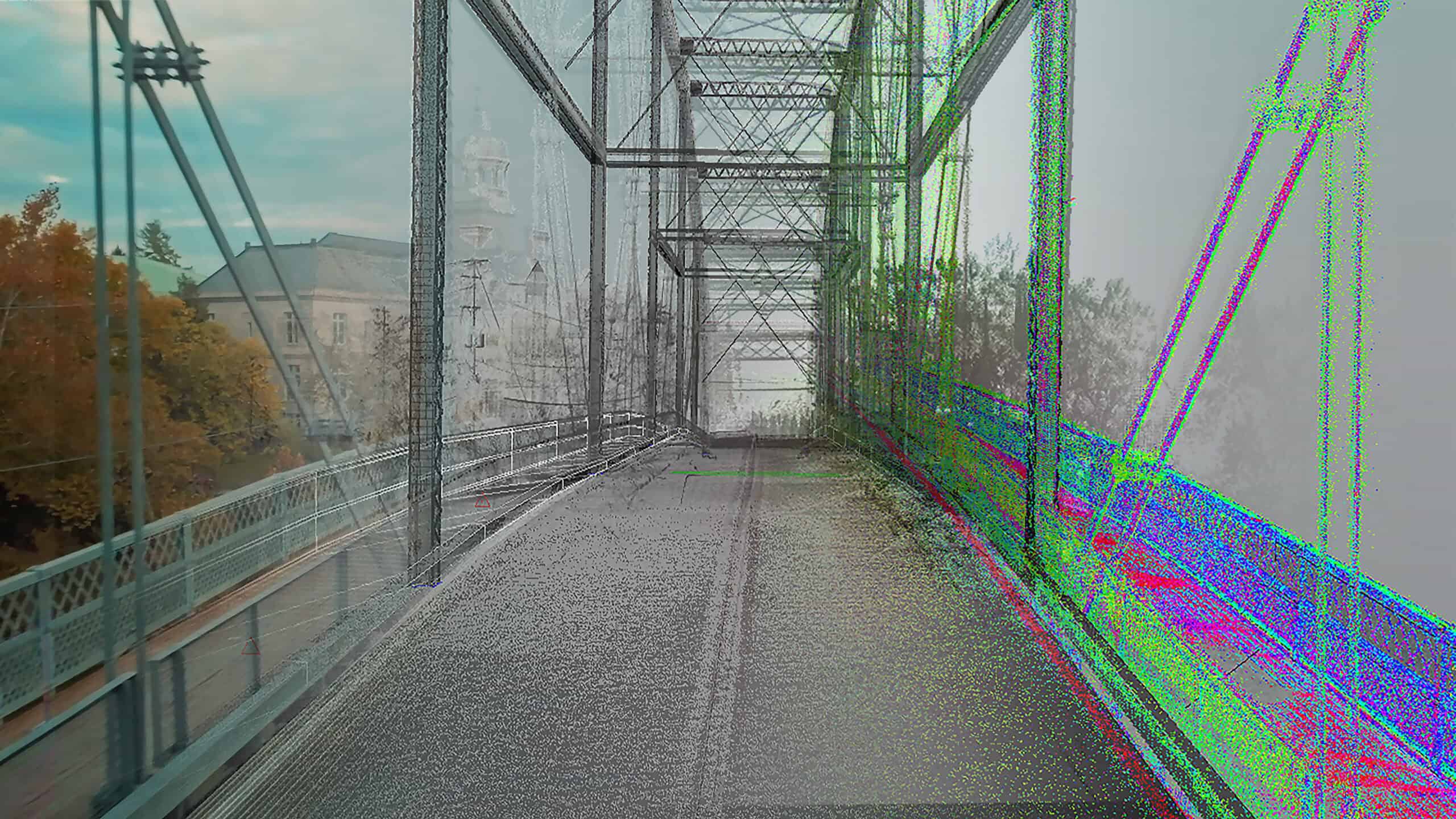
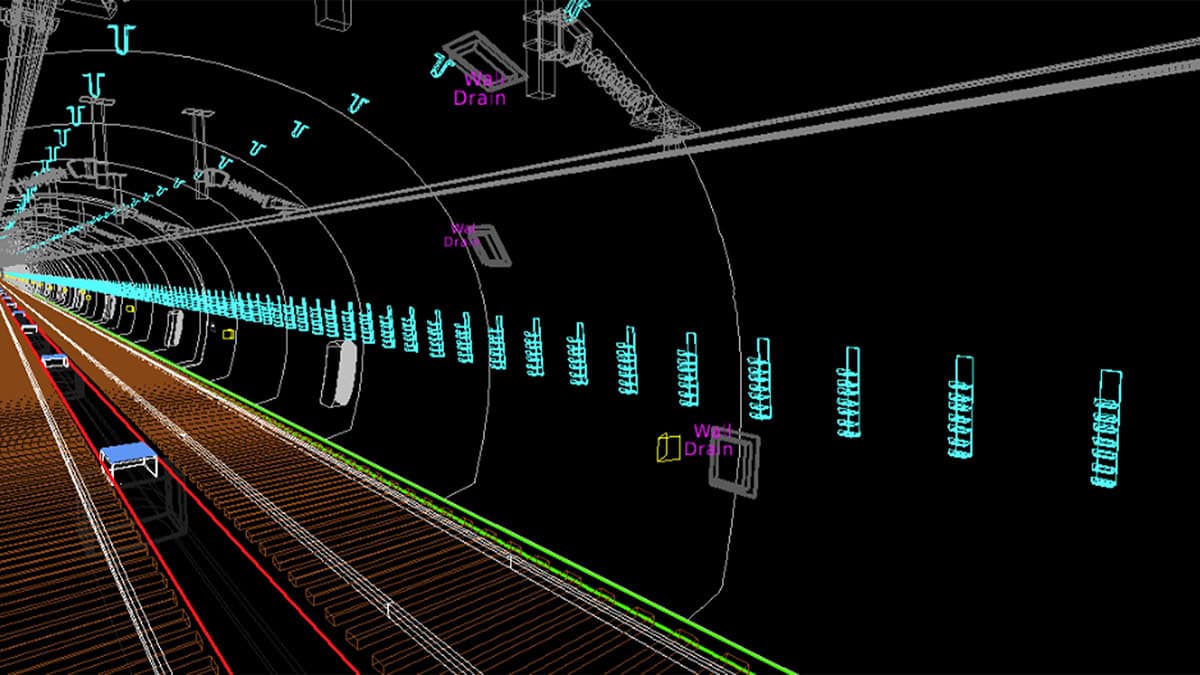
This is where digital twins become something more than visualization tools. A well-constructed digital twin doesn’t just render an asset; it surfaces the structured data that underlies it. In essence, the digital twin platform acts as a universal translator, mapping decades of disparate file formats into a single, AI-ready schema. It transforms the data into something that AI can actually reason over. If AI is the engine, coherent and connected data is the fuel. Digital twins are increasingly the infrastructure that makes the whole system possible.
The question that actually matters for AI in infrastructure
AI will be adopted in infrastructure. The trajectory is clear, and the opportunity is significant. But the interesting question is…how?
How do you integrate probabilistic systems into deterministic environments without eroding the precision those environments require? How do you scale productivity without diffusing accountability? How do you move faster without lowering the threshold for what counts as correct? And how do you ensure that the humans directing these systems have the expertise to know when they’re wrong?
These questions are actual engineering problems, in the broadest sense. Because in infrastructure, the margin for error is not a design parameter. And unlike almost every other domain where AI is taking hold, we don’t get to iterate in production.
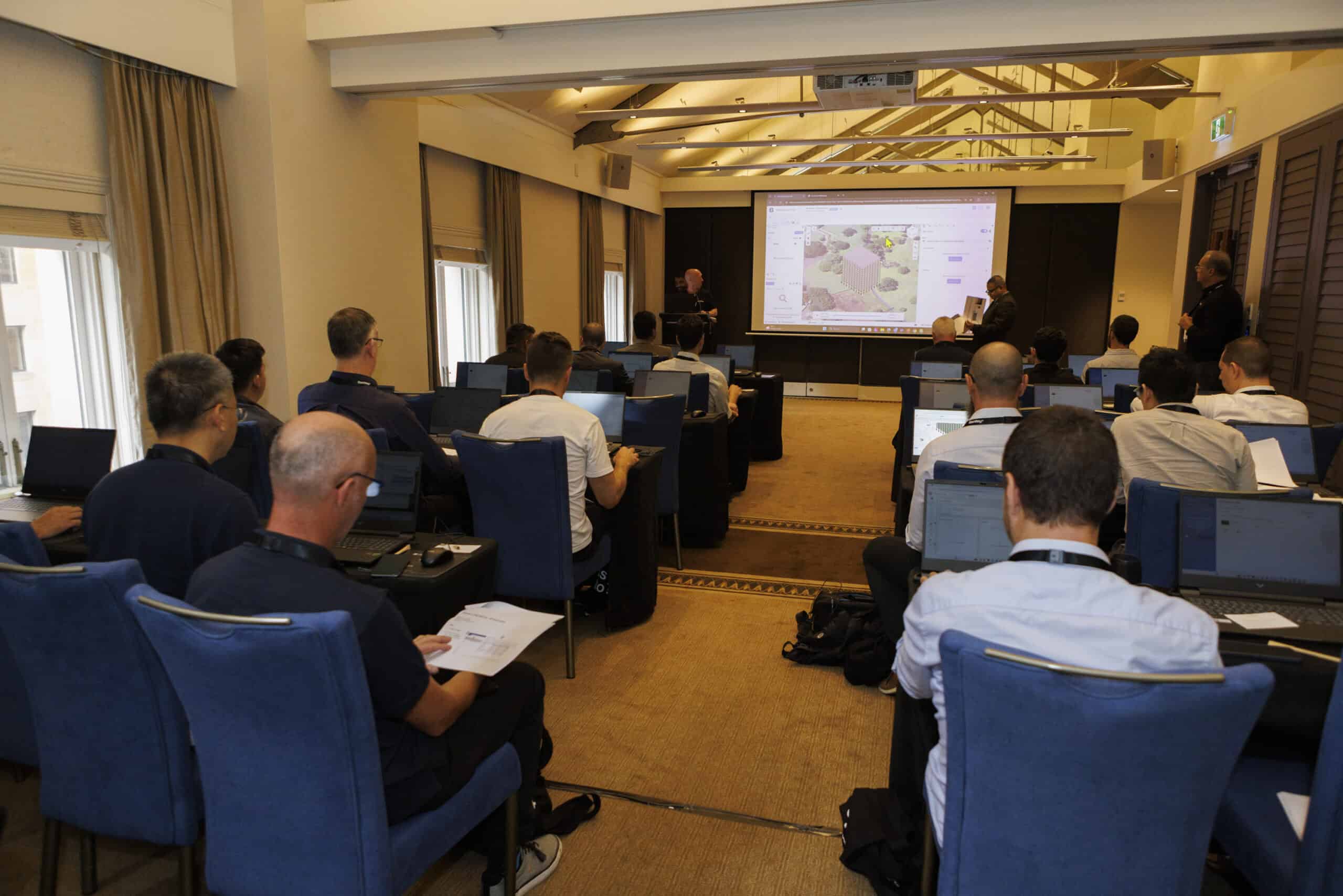
The next phase of AI in infrastructure will be shaped by the organizations willing to test real use cases, define responsible workflows, and connect AI innovation to engineering accountability. Bentley’s open co-innovation initiative invites infrastructure professionals to share AI use cases and help shape practical, trusted applications for the infrastructure industry.
Have an AI use case for infrastructure design, delivery, or operations? Join Bentley’s infrastructure AI co-innovation initiative to help shape trusted, practical AI applications for the infrastructure sector.