In 2032, Poland will open Port Polska, a single multimodal transit hub that neatly ties together a massive infrastructure package, including an airport that will ultimately handle 60 million passengers per year; roughly 500 kilometers of new high-speed rail linking Polandās major cities of Warsaw, ÅódÅŗ, PoznaÅ, and WrocÅaw; and a co-located cargo hub with direct connections to the country’s highway network. Mateusz Dziektarz, the program’s senior data and BIM administrator, said travelers will be able to reach major cities or cross the whole country in around three hours.
The numbers behind the undertaking are already staggering. Port Polska is running 83 projects in parallelā46 at the airport and 37 on the rail networkāfor a combined investment value of roughly ā¬30 billion. In three and a half years, the program has generated 7.7 million documents, accumulated nearly 40 terabytes of data, and put 5,700 engineers using infrastructure software on a single platform. “The backbone of the process in our case is ProjectWise,” Dziektarz said, referring to the Bentley Systems software that holds the data and knits the program together.
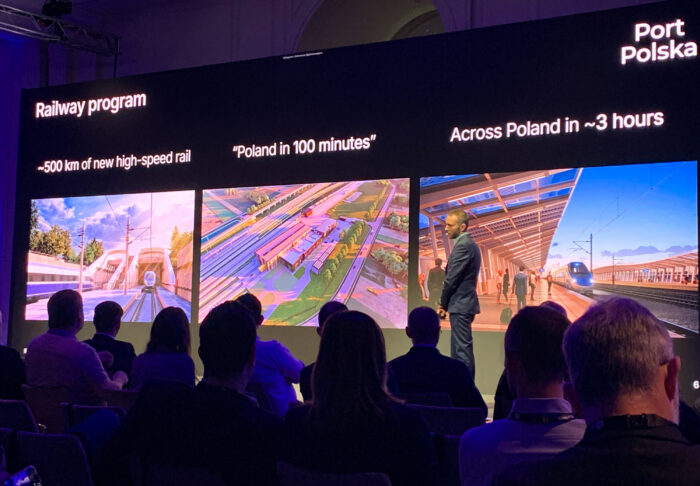
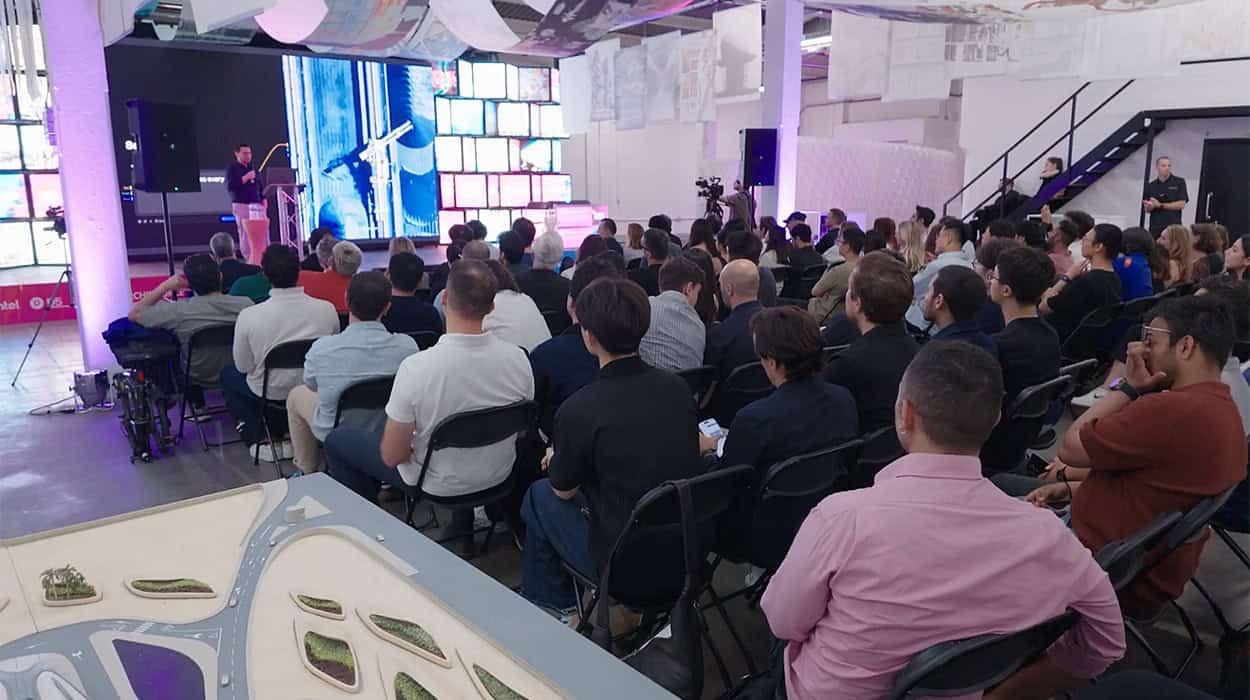
Illuminate 2026 Berlin attendees learned about PortPolska, Poland’s $30 billion multi-modal transit hub.Port Polska is the type of transformative infrastructure project that defined the conversations at Illuminate 2026 in Berlin, the third stop in Bentley’s annual conference series after Sydney and Mumbai. More than 250 infrastructure engineers, contractors, government officials, executives, investors, and software developers recently gathered at the Hotel Adlon Kempinski for three days of case studies and panels. A stoneās through from the Brandenburg Gate, one of Europeās most recognized pieces of infrastructure, every session and corridor chat kept returning to one idea: AI is rewriting how Europe, and the world, will plan, build, and operate its infrastructure, and connected data is the only way to feed it.
The timing of the event is also part of the story.
Setting the global backdrop for the event, Nathan Marsh, Bentleyās regional executive for Europe, the Middle East, and Africa, and a senior vice president, reinforced the context of the conference: $106 trillion is needed to fund infrastructure development, upgrades, and maintenance around the world to respond to the pressures of population growth, climate change, and aging assets. Experts predict that 70% of the worldās population will live in cities by 2050, and Marsh highlighted the pressures that this density and demand will place on the infrastructure sector. He said focusing on AI-powered outcomes, along with mastering the sub-surface and connected data workflows, will help everyone navigate these challenges and harness the opportunities.
Keynote speaker Claudia Feiner, an AI and digital twin strategy leader, noted that Germany established its ā¬500 billion infrastructure fund at a time when more than 55% of Germany’s bridges are more than 40 years old and another 4,500 need renovation by 2034. With Europeās deep economic and cultural integration, the financial stimulus is expected to ripple across the continent.
A Cure for "Future Amnesia"
The infrastructure sectorĀ so farĀ has not been an AI leader, and across the industry, AI adoption has been framed as a data problem. Most engineering knowledge sits in PDFs, spreadsheets,Ā and paper folders rather than in clean databases. Inspection reports, emails,Ā and decades of site logs are not organized in a wayĀ thatĀ machines can read. The commonĀ misconception is thatĀ until they are, AIĀ can’tĀ help.Ā Ā
FeinerĀ used her keynote to take that idea apart. Structured data, she said, is only needed to trainĀ a model. To use one, the messy stuff is fine.Ā
To makeĀ herĀ point,Ā FeinerĀ shared a story from a construction site sheĀ worked on years earlier. WhenĀ aĀ colleague asked her to fetch a specific inspection report, she tracked it down toĀ aĀ folder filedĀ awayĀ with bureaucratic precision.Ā But she was in for a surprise. Inside was a sandwich wrapper with a few numbers scribbled in pen. “I’m not kidding,” she said. “But nowadays,Ā I would take a picture of that protocol, and AI wouldĀ be able to refer all the information to a certain component on my infrastructure asset.āĀ
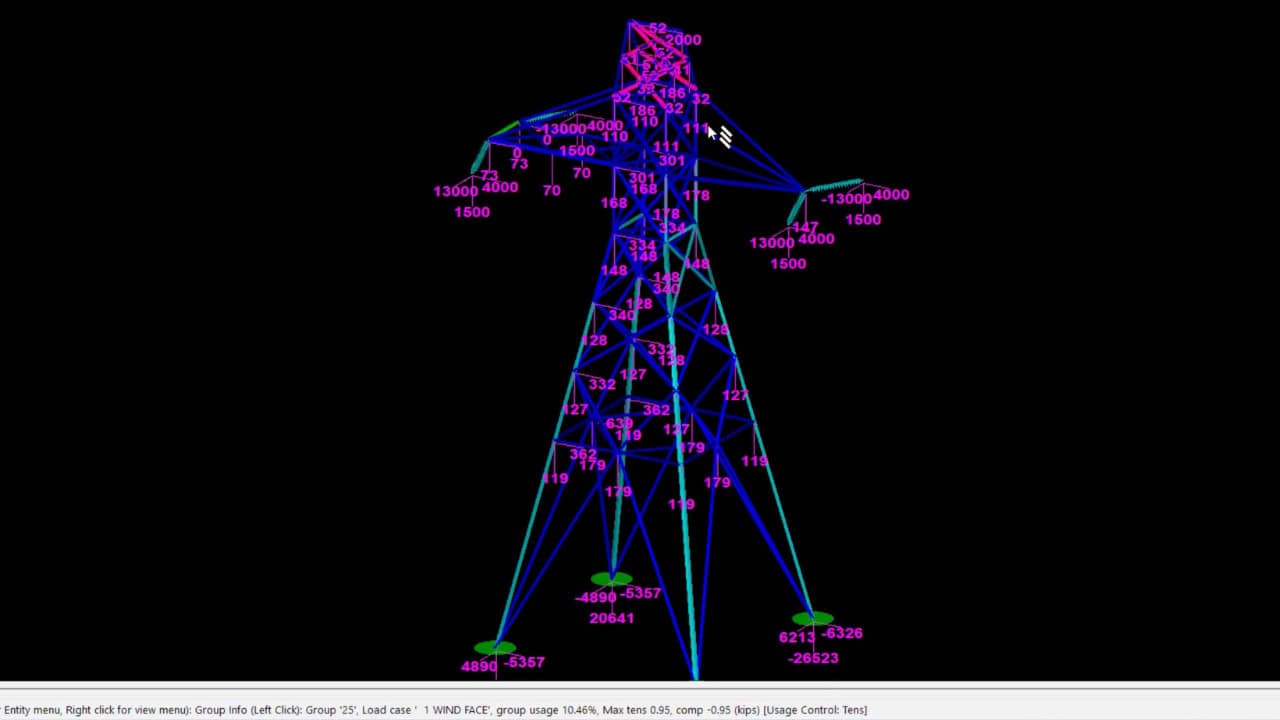
FeinerĀ stressedĀ that āyou can put all your unstructured dataāĀ inĀ a trained system, noting thatĀ large language models (LLMs)Ā can handle PDFs, ExcelĀ spreadsheets,Ā and much more, evenĀ pictures of sandwich wrappers.Ā This matters becauseĀ roughly 95%Ā of the informationĀ thatĀ an infrastructure asset produces over its lifetimeĀ isĀ “dark data”Ā that sits unused, she said.Ā “We are sitting on sheer gold,” she told theĀ packedĀ room.Ā
We need to process this data, but the harder problem, she warned, is psychological. Citing futurist Lisa Bodell’sĀ term,Ā FeinerĀ described “future amnesia” as “the present of inaction”āa state where leaders read the reports, attend the conferences, and then defer the decision to the next budget cycle. “What decision can you make now that moves your organization from observation to transformation?” sheĀ asked.Ā
A Coherent Argument
Greg Demchak, Bentley’s vice president of emerging technologies, took the argument from the strategic to the design level. Construction productivity has been flat for decades, he said, because the project supply chain is fragmented by design. Showing a graph that looked like the teeth of a saw, he illustrated how every handoff between designer, builder, and operator loses information. “Every time you export to something, you’re going to lose some precision in the geometry. You’re going to lose that intent, you’re going to lose context,” Demchak said.
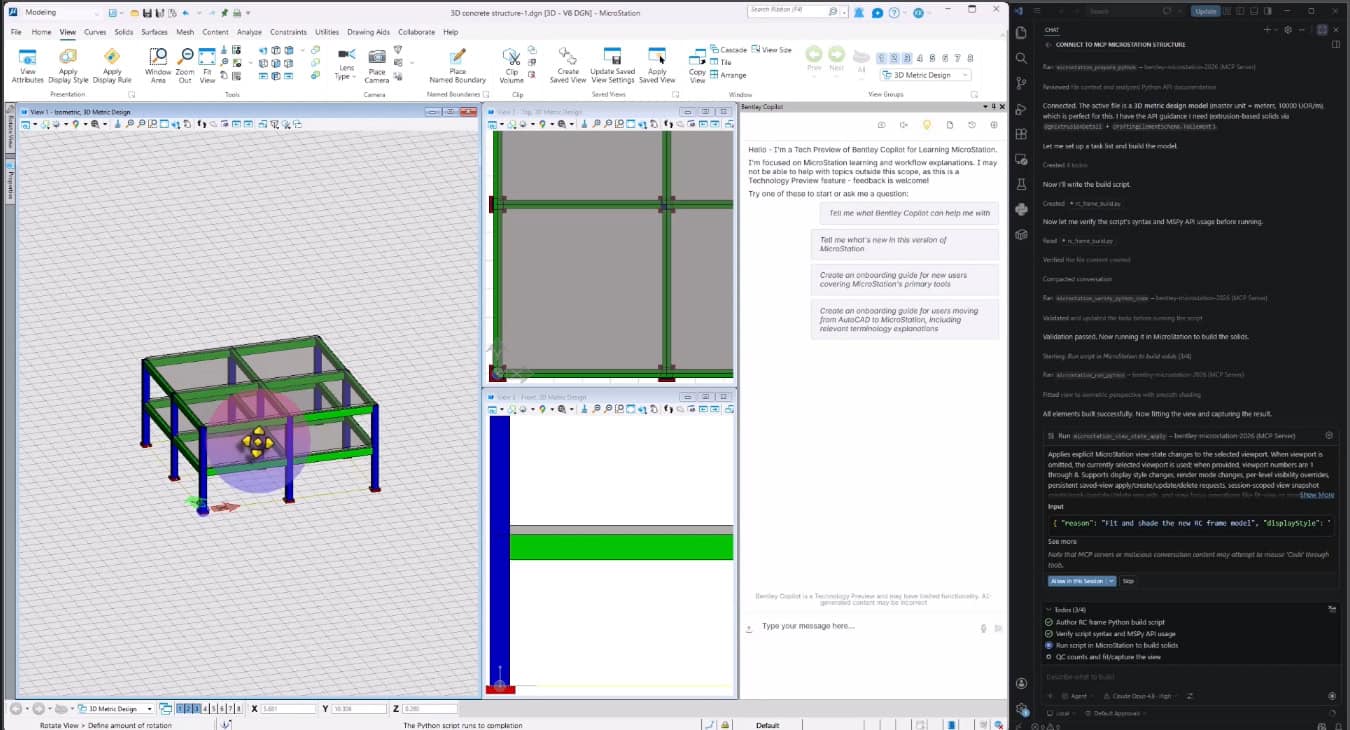
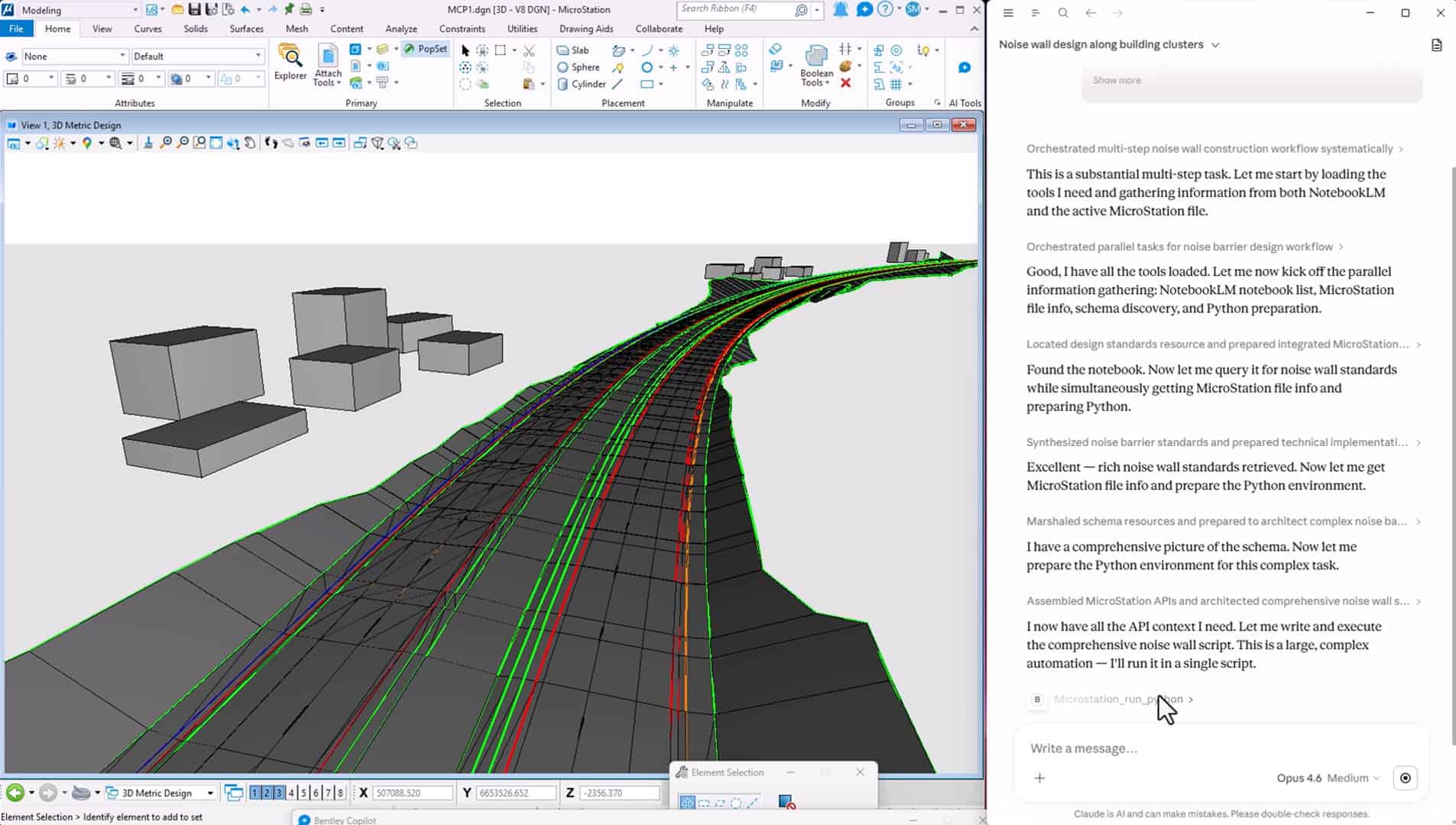
His proposed fix borrowed an analogy from biology. When neurons in the brain exchange information, they do not touch, he noted; signals cross the synaptic gap through chemical signaling. Software should work the same way, he argues, through Model Context Protocols, an open standard that lets AI agents connect to files and projects and move information across them. “The future of this industry is not about how many tasks we as individuals will automate, but how coherent our systems become,” he said.

Ā “The future of this industry is not about how many tasks we as individuals will automate, but how coherent our systems become,” saidĀ Bentley’s Greg Demchak.Demchak, who also runs Bentley Lab, and his team put that vision on display just outside the main conference room in Berlin. They brought a host of immersive technologies to the conference that allowed visitors to experience and interact with the teamās projects in 3D, such as visiting flood resilience walls, gates, and other defenses being erected in New York City. Anticipating Feinerās sandwich wrapper remark, his team even used a pencil sketch to generate a functional bridge for Hamburg, Germany, that obeyed the laws of physics.Ā
Closing The Productivity Gap
ButĀ theseĀ kindsĀ of systemsĀ andĀ data coherence canātĀ work withoutĀ trustĀ and data security. OliverĀ Conze, senior vice president of Bentley Infrastructure Cloud, said the productivity gapĀ thatĀ DemchakĀ described is exactly what AI can close, provided customers trust the foundation it runs on. “Your data is your data always,”Ā ConzeĀ told attendees, citing Bentley’s policy that customer data is not used to train shared models without explicit consent.Ā Trust is what getsĀ software users to share their data into a common, connected environment, and a connected environment is what makes AI useful in the first place.Ā
Mark Coates, Bentley’s vice president for infrastructure policy advancement, took the argument from the customer to the macro level.Ā He said productivity gains over the past 50 yearsĀ have been less than half those of the first half of the 20th century, and less than a third of what the industrial revolution produced. AI, Coates argued, has the ingredients to change that trajectoryāif the industryĀ picks it up.
Robust Knowledge Management
For the engineering firms in the room, the AI and connected data promise was clear. The global engineering and consultancy Egis Group, for example, is seeing too few new engineers entering the profession, just as a generation of senior engineers is about to retire with decades of expertise stored in their heads. In France alone, “we are missing from 7,000 to 10,000 engineers per year,” said Jan Chodzko, Egis’s chief information officer. “It’s a structural gap.” Ā
His response is to invest in knowledge management. The goal, he said, is to capture what veterans know in systems that younger engineers, and the AI tools sitting on top of them, can both use. “The senior project manager who knows everything about [a] nuclear [power plant] life extensionāwhen those people retire, what are we doing?” Chodzko asked. He said ārobust knowledge managementā enabled by data and AI āwill be the foundation of our industry. This is how we’re going to offset the scarcity of expertise. This is how we’re going to get younger engineers up to speed in three years.”Ā
Simon Beards of Laing O’Rourke, a U.K.-based engineering and construction firm, added that technology only pays off when teams bring it back to people. “AI will offer you options; people will give you ideas,” he said. “The more we engage together and bounce ideas off each other, that’s where the true magic happens.”Ā
Perhaps the most concrete example came from Ferrovial, the publicly traded, Spanish-founded infrastructure builder and operator. Ricardo Munguia Alvarez, the company’s global head of digital construction and data management, described how Ferrovial manages risk and execution on marquee projects, including the New Terminal One at JFK Airport in New York City and a portfolio of managed-lane highway concessions on the U.S. East Coast. About 80% of Ferrovial’s asset value sits in North America, Alvarez said, with concessions running 35 to 72 years and dividends growing 20% to 25% a year. Ā
The market in front of the company is hugeāand so are the challenges. Ferrovial sizes the East Coast infrastructure opportunity at more than $4 trillion, with single projects in that pipeline running close to $20 billion. To control execution risk on these mega-projects, Ferrovial uses Bentleyās ProjectWise, OpenRoads, Synchro, and iTwin solutions to manage data, build digital twins of assets, and gain insightsāfrom design to operations. āAll the models transfer all the information to the operational maintenance, and we’re also incorporating AI to improve the processes and analyze the data during operational maintenance,ā Alvarez said.Ā
His presentationĀ during theĀ Berlin conferenceĀ neatlyĀ tied togetherĀ the value of connectivity, coherence,Ā and AI.Ā The bet was that the three together can absorb a continent-sized wave of investment and convert it intoĀ resilient infrastructure that will reliablyĀ serve the public for decades to come.Ā
FAQ:
With a generation of seasoned experts preparing to retire, the industry is facing a severe structural gap, such as a shortage of up to 10,000 engineers a year in France alone. AI tools and connected data platforms help capture the decades of expertise stored in the heads of retiring veterans through robust knowledge management. This enables firms to offset the scarcity of talent and get younger engineers fully up to speed in just three years.
Yes, trained AI models are now highly capable of interpreting unstructured “dark data,” which includes PDFs, spreadsheets, and even numbers scribbled on a sandwich wrapper. By feeding this previously unused information into a connected system, AI can link those raw notes directly to specific infrastructure components. As industry experts note, the sector is sitting on a goldmine because roughly 95% of an asset’s lifetime information is currently unused.
Opening in 2032, PortPolska is a massive multi-modal transit hub in Poland that combines a 60-million-passenger airport, a cargo hub, and 500 kilometers of new high-speed rail. With an investment value of roughly Euro 30 billion, the undertaking is running 83 parallel projects and has already accumulated nearly 40 terabytes of data. To handle this staggering scale, a single connected data platform called ProjectWise serves as the backbone, keeping all 5,700 engineers aligned.