As a technical account manager at Bentley Systems, Leandro Merli has more than seven years of experience as a civil and environmental engineer with international consulting firms. His technical expertise lies in hydraulic and environmental modeling for both urban water systems and natural water bodies, combined with strong proficiency in GIS for spatial data analysis and asset management.
Every water professional knows the power of a well-calibrated hydraulic model. It’s our crystal ball, allowing us to simulate future demand, test emergency scenarios, and plan for long-term growth. Hydraulic digital twins are transforming water system management by connecting models to real-time operational data and predictive analysis. We’ve built and managed entire systems on the insights they provide.
Yet there has always been a gap between the perfect model on our screen and the complex reality underground. After all, your model calibrated today will be outdated tomorrow. Today, we finally have the power to bridge that gap. By connecting our trusted models to live operational data, we’re not just simulating reality anymore, we’re mirroring it. This evolution marks the true beginning of the hydraulic digital twin.
Limits of traditional hydraulic modeling
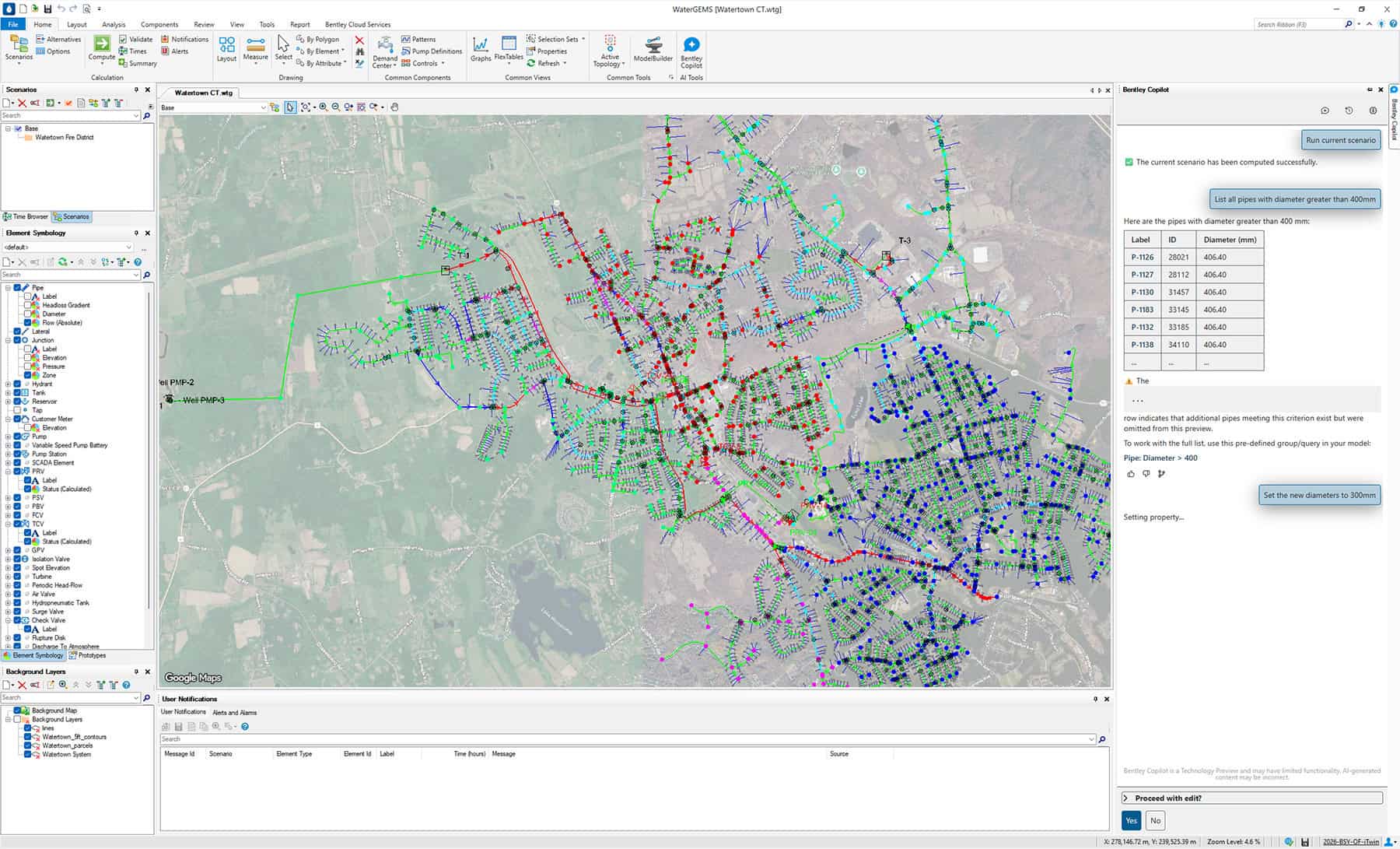
Hydraulic models have been the cornerstone of our work. Tools like OpenFlows Water or OpenFlows Sewer are indispensable in the engineering world, and for good reason. They give us the power to design robust, efficient water systems from the ground up. With them, we can confidently size our infrastructure, perform capital planning for future generations, and run countless what-if scenarios to ensure our networks are resilient. This highlights the importance of evolving from static hydraulic models to digital twin technology.
Hydraulic models are the definitive tool for answering critical design questions, and they form the blueprint we rely on to build, expand, and optimize our infrastructure. The success stories are powerful and diverse. In India, for example, ATLC Infraconsultants used OpenFlows Water to design a water supply for 300,000 people across difficult mountainous terrain. Their detailed modeling optimized the pipeline layout so effectively that it saved over INR 120 million and allowed them to deliver the final design 25 days ahead of schedule. Likewise, when DTK Hydronet designed a new system for one million villagers in Bankura, their use of hydraulic modeling cut design time by an astonishing 80% and reduced overall project costs by 16%.


These blueprints are also vital for managing existing systems. When faced with a severe drought in Brazil, Companhia Águas de Joinville (CAJ) used its hydraulic model to create a new contingency plan at near-zero cost, saving BRL 4.5 million and reducing water shortage complaints by 90% in a critical sector.

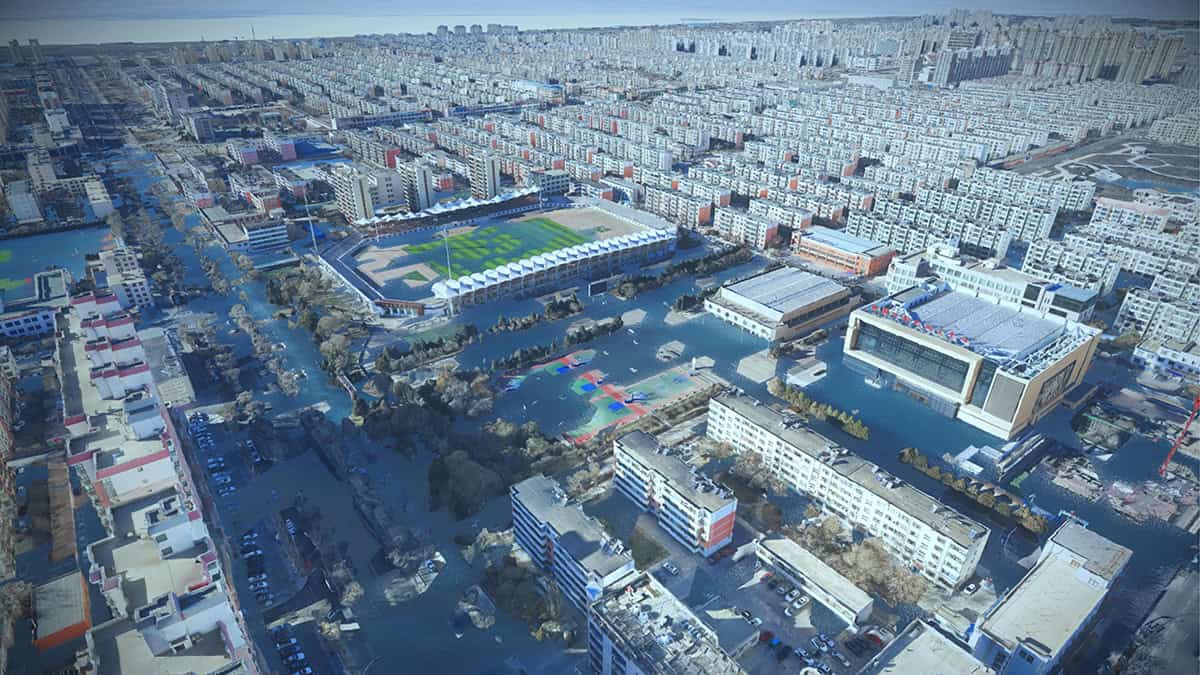
Also in Brazil, the family-owned firm Tecnologia em Saneamento Ambiental uses OpenFlows Sewer to design modern sewer systems for underserved communities, helping to reduce the discharge of raw sewage into rivers. By moving from disconnected spreadsheets to a connected model, they can now optimize their designs to significantly reduce both implementation and long-term operational costs for their clients. This same foundational approach enabled the utility EPM in Colombia to model 2,900 kilometers of its sewer network to increase flood resilience, saving over 17,000 work hours in the process.

Real-world benefits of hydraulic digital twins
This transformation isn’t theoretical. It delivers measurable results for utilities today.
Look at the case of Águas de Manaus (AEGEA) in Brazil. By implementing a digital twin solution, they gained the ability to accurately simulate and forecast system behavior. This operational foresight enabled them to optimize pump scheduling with incredible precision, leading to a reduction in energy consumption at a critical pump station. They also reduced repair times for incidents like pipe bursts and decreased the amount of nonrevenue water.
Similarly, DC Water in the United States embarked on a journey to create a comprehensive digital twin of their system. By connecting their model to live SCADA data, they empowered their operators with a complete, real-time view of the network. This view enables them to make faster, more informed decisions during main breaks, ensuring water quality and improving overall system resilience. For them, the digital twin is the key to creating a more reliable, efficient, and robust water service for their 670,000 residents and millions of annual visitors in the nation’s capital.
These examples prove that when your model comes alive, the impact is real and profound, translating directly into energy savings, enhanced reliability, and better service for the communities we serve.

AI and the future of hydraulic digital twins
The journey from a static hydraulic model to a living digital twin is already transformative. But what comes next? The future is not just connected, it’s intelligent. The next frontier is the integration of artificial intelligence and machine learning directly into these living models.
Imagine a digital twin that doesn’t just mirror your network but truly understands its unique behavior. Harness an intelligent system that learns from your historical and real-time data to identify subtle anomalies a human might miss, autonomously suggest pump schedule optimizations, or predict main breaks with even greater accuracy by recognizing complex pressure patterns. This is the evolution from prediction to prescription. The system will go beyond telling you what might happen and recommend the best possible action to take.
This convergence of a continuously calibrated model with AI is what will unlock true operational autonomy and usher in a new era of resilience and efficiency for water infrastructure.
The shift from static modeling to living, an intelligent digital twin is happening now. It represents the most significant leap forward for our industry in decades, empowering us to build more resilient, efficient, and sustainable water systems for the communities we serve.
What part of your operation do you believe would benefit most from a living digital twin?
Explore how Bentley enables real-time water system optimization with hydraulic digital twin solutions ❯