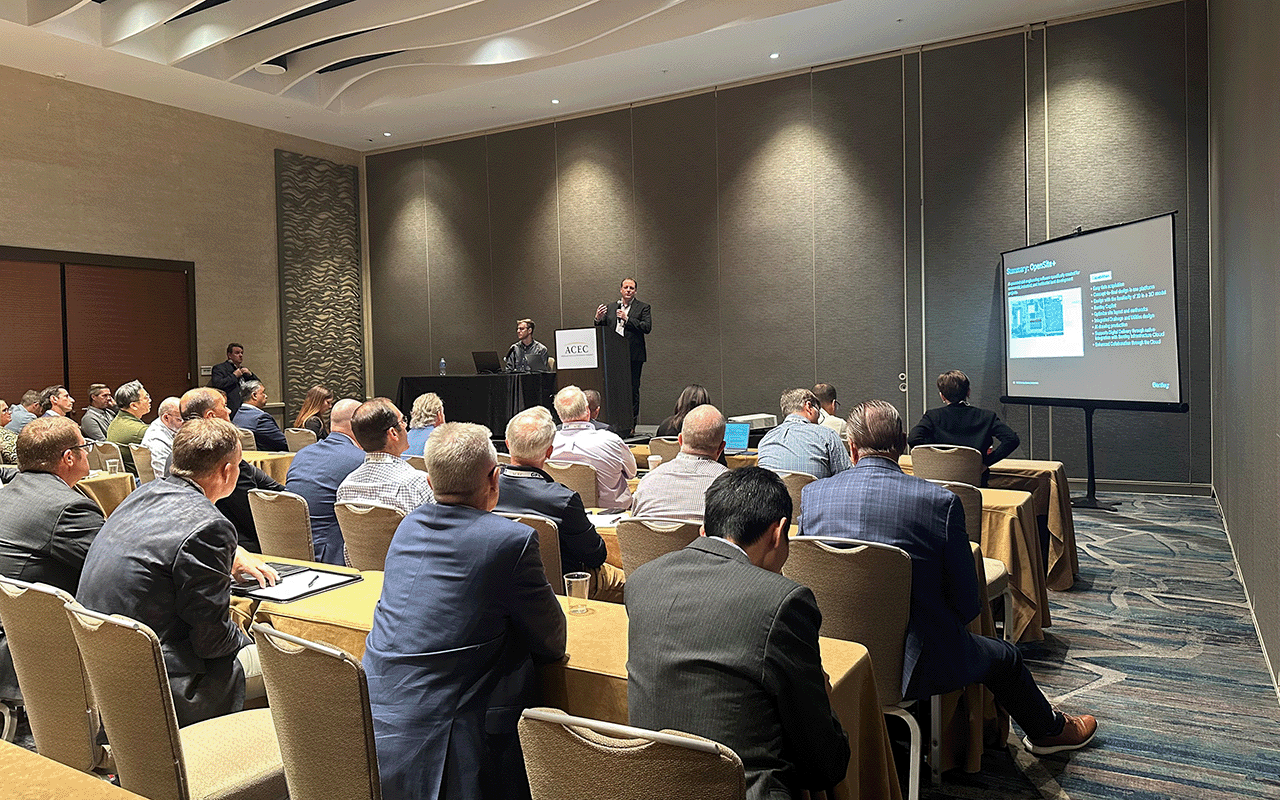
The ACEC Fall Conference is always a highlight for civil engineering professionals across the industry, and this year was no exception. It serves as a launchpad for the future of civil engineering with many conference sessions centered around innovation and efficiency. is always a highlight for civil engineering professionals across the industry, and this year was no exception. It serves as a launchpad for the future of civil engineering with many conference sessions centered around innovation and efficiency.
This year, Bentley Systems stood at the forefront, inspiring conference attendees with a vision of what’s possible when advanced technology and artificial intelligence are harnessed to reimagine how engineers solve infrastructure challenges.
After the conference, Bentley had the unique opportunity to sit down and carry this momentum in a special Engineering Influence podcast episode. In this conversation, Francois Valois, senior vice president, Open applications at Bentley and Pat McLarin, segment director, civil at Seequent, The Bentley Subsurface Company, dove deeper into three key takeaways that are shaping our industry today.
Combining geotechnical and civil data: Bentley and Seequent Integration
Bentley and Seequent bring together more than just technology. They combine expertise from both above and below ground to give engineers a complete visual of their projects. Bentley’s infrastructure software with Seequent’s geotechnical solutions helps project teams manage, model, and analyze subsurface data alongside their civil designs.
This addresses one of the industry’s biggest challenges: the uncertainty of ground conditions. By making geotechnical data accessible with familiar design tools, engineers are better equipped to anticipate unforeseen risks and conditions, adopt plans as new information unfolds, and ultimately, deliver more resilient infrastructure.
OpenSite+: Bentley’s first AI-powered civil site design solution
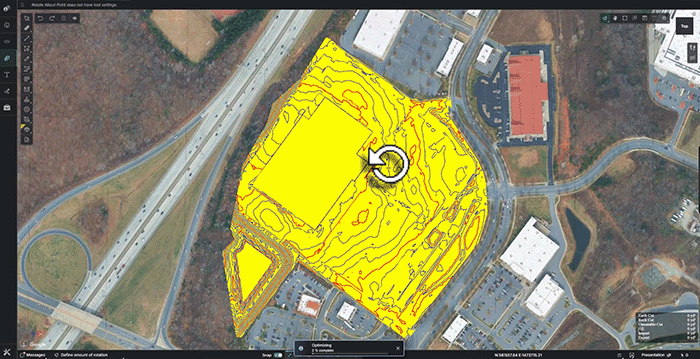
OpenSite+ marks a major milestone as Bentley’s first next-generation, AI-powered civil site solution. Now commercially available to select key accounts, the software brings together advanced automation and intelligence.
With features like automated drawing production, advanced grading optimization, and Bentley Copilot, engineers can streamline some of their most time-consuming aspects of site design. It allows teams to focus more on exploring alternatives and refining solutions, rather than repetitive drafting tasks.
It also reflects Bentley’s commitment to data privacy. User data is only used to train AI models with explicit agreement from user accounts. By making these advanced capabilities available to select users, OpenSite+ is helping site engineers to deliver better designs and prepare for the future of AI-powered civil site design.
Bringing AI and automation to OpenRoads, OpenRail, and other Open applications
The story doesn’t end with site design. Bentley is bringing the same spirit of integration, intelligence, and automation to more of the Open applications portfolio. These enhancements are aimed at empowering teams of all sizes to deliver better projects, break down silos, and really embrace the future of infrastructure.
Building on this vision, Bentley is introducing advanced AI capabilities into these applications. Bentley Copilot will be integrated into OpenRoads Designer and OpenRail Designer to help users model road and rail projects more efficiently. A new AI-driven labeling tool automatically organizes annotations on complex drawings with a single click, eliminating overlapping text and making designs easier to read, saving significant time during review and revision.
Driving the future of civil engineering with AI, data, and collaboration
This year’s fall ACEC Fall Conference made one thing clear: the future of civil engineering will be defined by innovation, collaboration, and artificial intelligence. And Bentley is leading that charge by bringing AI-powered capabilities, integrated workflows, and connected data to every stage of infrastructure project delivery. From uniting above and below ground insights with Seequent technology, to introducing next-generation solutions like OpenSite+ and expanding AI across other Open applications like OpenRoads and OpenRail, Bentley is helping engineers work smarter and deliver better outcomes.
As infrastructure challenges grow more complex, Bentley remains committed to empowering infrastructure professionals with tools that help break silos, accelerate design, and unlock a new level of productivity.
Keep the momentum
Couldn’t make it to ACEC? Catch the full insights from Bentley and Seequent! Watch the Engineering Influence podcast for an insider’s perspective on how partnerships, innovation, and AI are shaping the future of infrastructure.