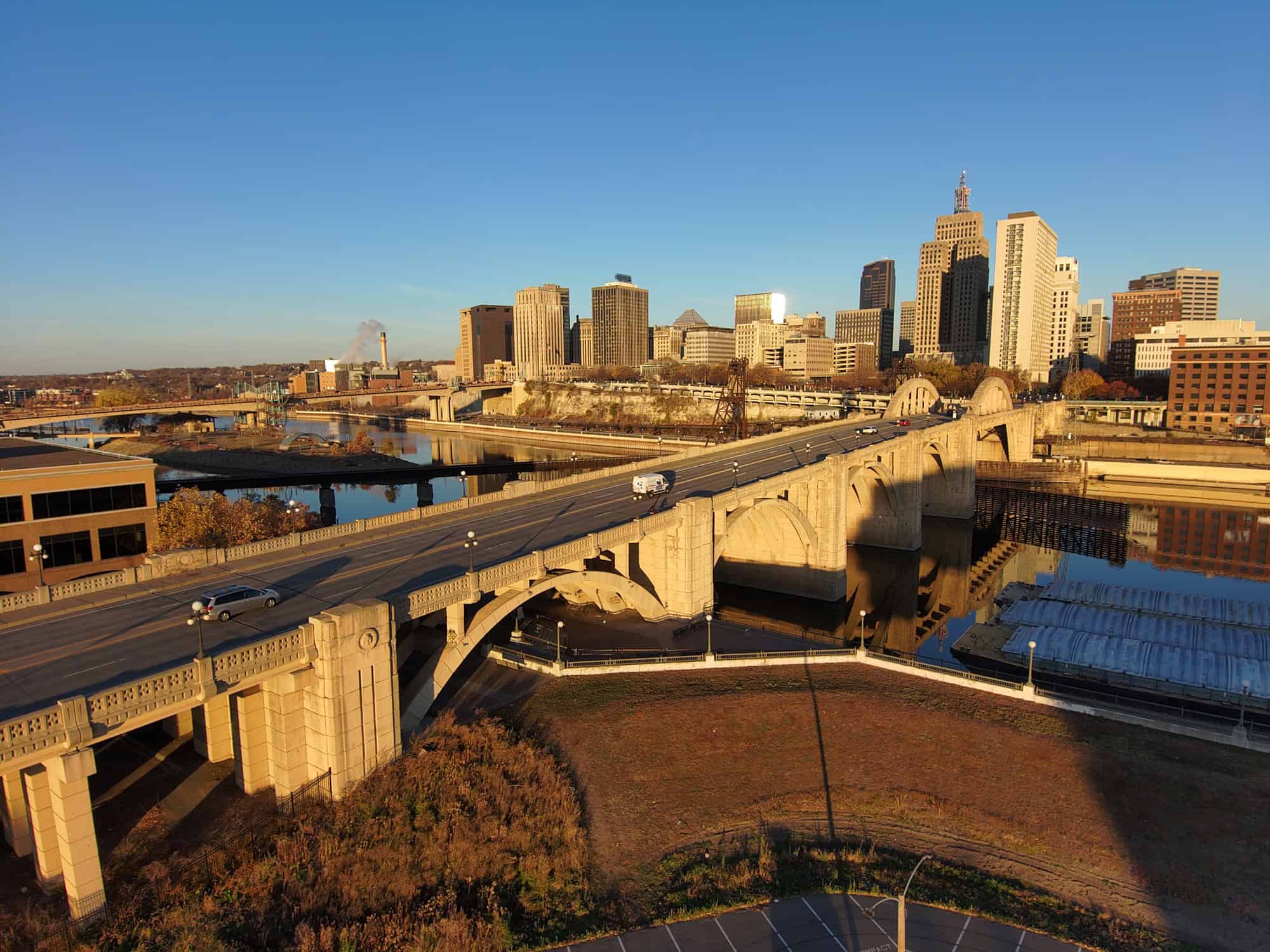
When engineers from Collins Engineers arrived to inspect the landmark Robert Street Bridge in St. Paul, Minnesota, they already knew where to spot the problems because the century-old bridge had first been inspected by artificial intelligence (AI).
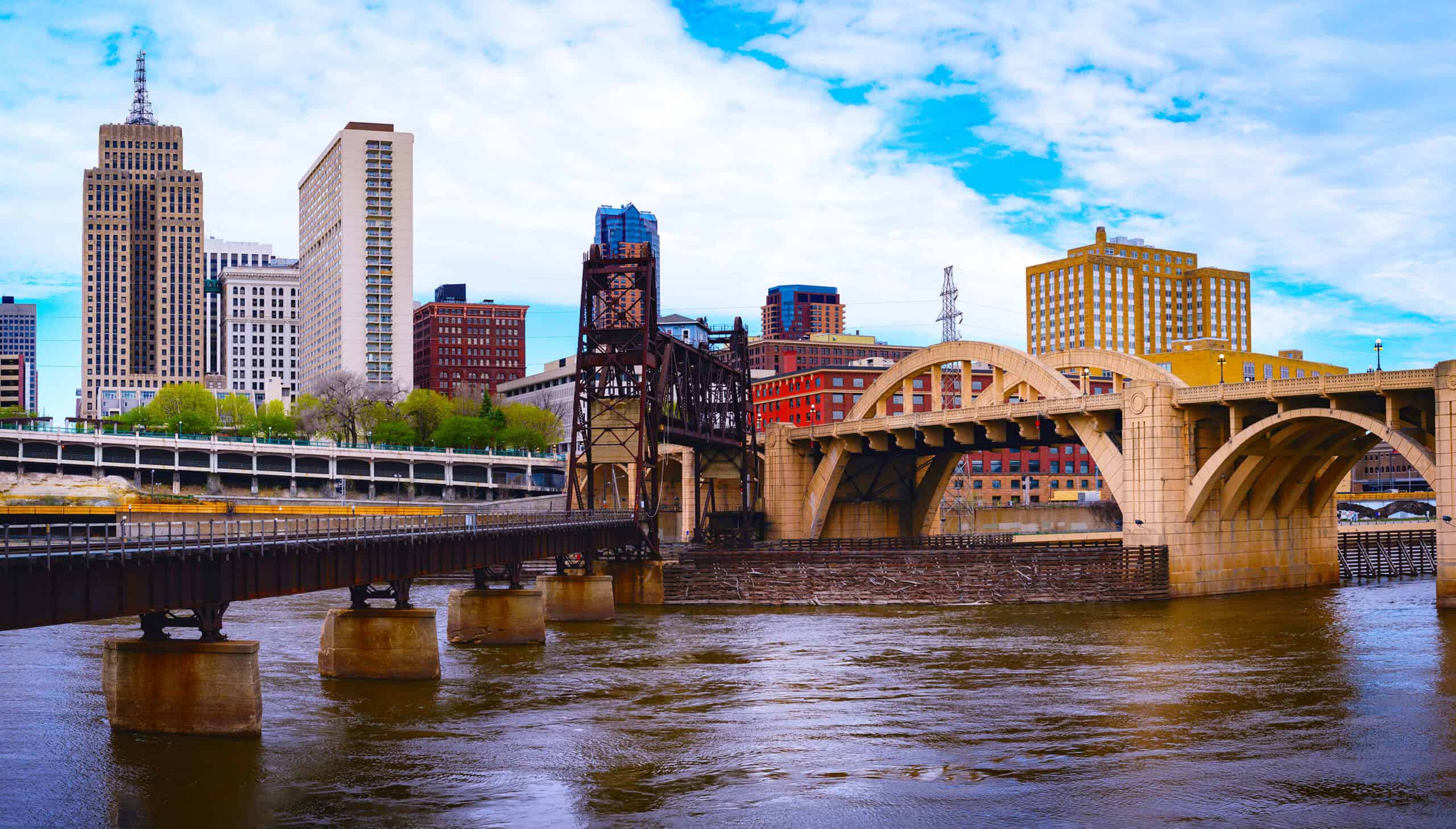
A thorough bridge inspection typically involves workers dangling from ropes alongside the bridge, taking notes and pictures. The slow, laborious process requires rigorous safety planning and can cause major traffic disruptions. Such an inspection would be no easy task at the Robert Street Bridge, which stretches 1,429 feet across the Mississippi River in a series of concrete arches and carries thousands of commuters into downtown St. Paul.
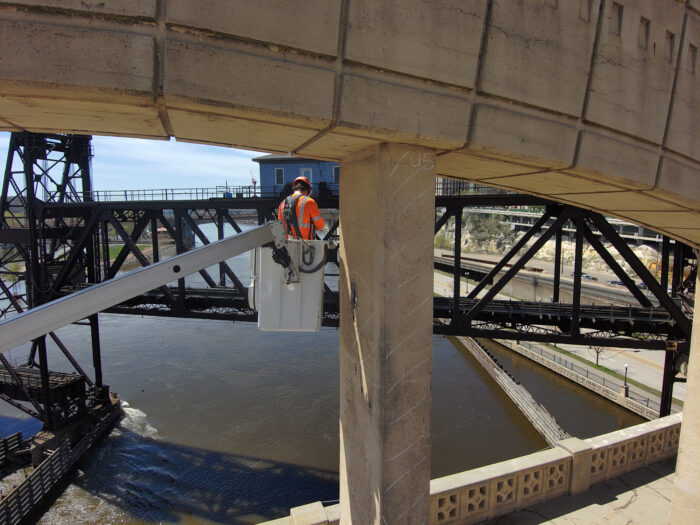
Traditional bridge inspections typically requires conduct assessments from a bucket lift or dangling from ropes.Collins Engineers had a different idea. Instead of bridge climbers, the firm dispatched drones that flew the length of the bridge and captured more than 57,000 images of its surface. Collins then used software from Bentley Systems, the infrastructure engineering software company, to process the images, create a photorealistic 3D model of the bridge, and upload it to the cloud for AI analysis. The AI automatically identified, measured, and catalogued concrete cracks, spalls (the chipping and flaking of concrete surfaces), and other defects across the entire structure.
By the time engineers arrived on site, they had already loaded the AI’s findings onto their tablets. Their job was no longer to find defects but to confirm them. “The ability to use artificial intelligence to automatically find, quantify, and communicate concrete crack information is the largest leap forward in bridge inspection since formal bridge inspections started in the United States in 1971,” said Barritt Lovelace, vice president of Emerging Technologies at Collins Engineers.
A Bridge Worth Saving
The Robert Street Bridge, which opened in 1926, is both a historic piece of American infrastructure and one of St. Paul’s most beloved landmarks. Named after Louis Robert, a riverboat captain and businessman who was among the earliest settlers of St. Paul, the bridge was built in the bold Moderne style with Art Deco flourishes. (One of the laborers who worked on its construction was Warren Burger, who later became the 15thĀ chief justice of the U.S. Supreme Court.
The bridge is also a feat of engineering ingenuity. The designers had to position its pillars between several railway lines and factories while keeping the river navigable beneath the bridge’s signature rainbow arch. Today, itās listed on the National Register of Historic Places.
But the bridge’s age has started to show. A few years ago, the Minnesota Department of Transportation contracted Collins Engineers, along with engineering and consulting firm Michael Baker International, to inspect the bridge ahead of a major rehabilitation. The goal was to ensure that it could serve local residents for another 50 years.
When Traditional Methods Fall Short
Traditional manual inspection requires crews to document defects by hand, often in close proximity to active traffic. Inspectors hand-measure cracks and spalls, and rely on pencil-drawn sketches, notes, and photographs when making critical assessments. The process is inherently subjective and difficult to scale, especially for a structure as complex as the Robert Street Bridge, with its eight main arch spans, nine approach spans, and hundreds of feet of reinforced concrete surface. Ā
“The main challenge of this project was the difficulty in efficiently and accurately collecting detailed inspection information for such a large structure with so many defects and deficiencies,” Lovelace said. “Using traditional inspection data collection methods would be very tedious and expensive, so our team had to find innovative ways to not only be more efficient, but also to provide a higher quality deliverable for the Minnesota DOT.”Ā
The Digital Twin as Foundation
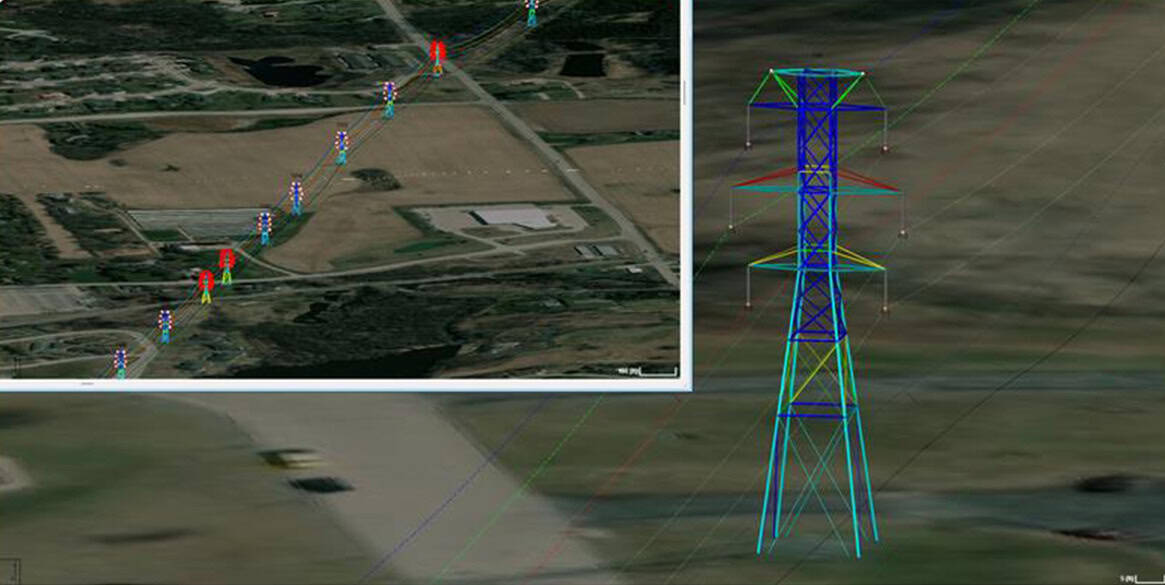
Collins Engineers decided to start with data. Using Bentley’s iTwin Capture platform, the Collins teams used drone images to build a precise 3D model of the bridge. It was photorealistic, georeferenced, and detailed enough for engineers to use in place of a site visit.
That was just the beginning. Recording the exact location and appearance of every bridge feature turns the model into a living record, updated with each inspection cycle. Engineers and asset managers can consult the model long after the original project team has moved on. Decisions made by Collins today will be visible to the engineers maintaining the bridge in 2075.
Collins Engineers used Bentleyās iTwin Capture platform and AI to identify cracking in the bridge structure.AI Takes the Lead
The 3D model also enabled a second innovation: inspection powered by AI. Collins uploaded the model to Bentley’s iTwin Experience platform, hosted in the cloud, and connected it to AI to identify structural defects.Ā
The AI automatically located, measured, and documented cracks and spalls on the bridge, organizing findings by location, dimensions, and severity. “One of the largest breakthroughs of our team approach included the ability to pre-inspect the bridge by using the digital twin in the office prior to starting field work,” Lovelace said. “This method allows engineers to validate defects instead of recording detailed information in the field.”Ā
The team gathered about 70% of the project’s total inspection information before they set foot on the bridge. Once on site, inspectors used tablets to add notes directly to the model. “We’re still relying on our inspectors and their experience,” Lovelace said, “but we’ve changed from discovering a lot of these defects in the field to just verifying that they’re there and that the pre-inspection information and the artificial intelligence correctly identified the defects.”Ā
The approach also built in a new layer of accountability. Traditionally, the only way to verify an inspector’s work was to commission another independent inspection. With the model organizing and displaying all data, everyone on the projectādesign teams, construction teams, the clientācould check the inspection work from the start. “There’s less of a chance for error, so we’re lowering risk, not only for ourselves, but for our client as well,” Lovelace said.
Follow the money
By shifting the bulk of the inspection work to the office, Collins Engineers cut time spent on site by at least 20%. Fewer engineers in the field meant fewer roadway closures and less disruption for commuters. The approach also freed the team to focus on what came next: assessing the bridge’s load capacity and building a management plan for the rehabilitation. “Engineers should spend their time making decisions versus collecting data,” Lovelace said. Ā
AI has already reduced the cost by more than $90,000, but long-term, the potential savings are much larger. By sharing the precise 3D model with potential contractors, Collins Engineers expects to cut construction costs by roughly 20%. “I estimate that this information sharing will result in up to $15 million in savings for MnDOT and a 10% reduction in materials used during the construction process,” Lovelace said.
Beyond One Bridge
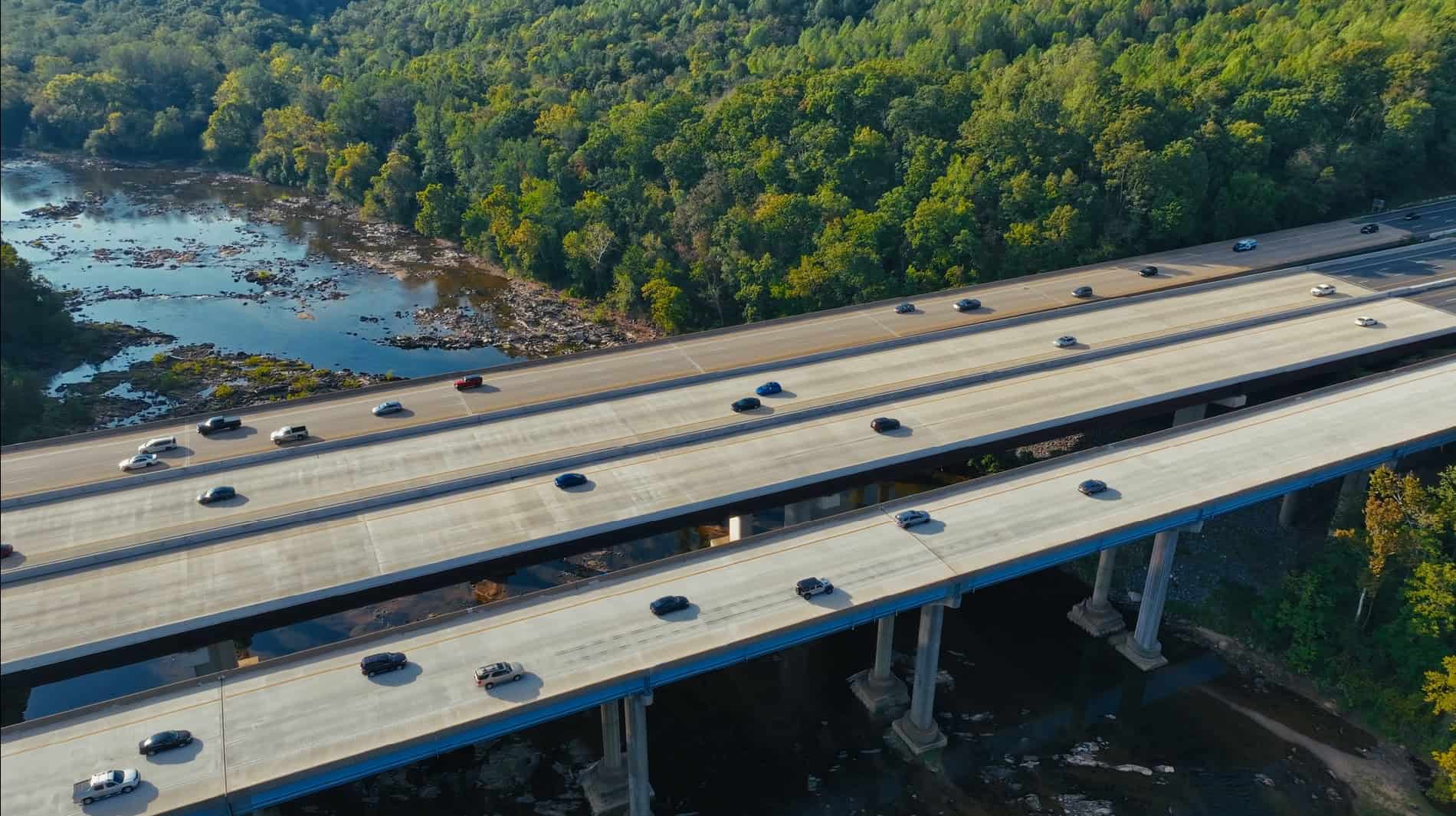
The AI-guided inspection process could be used elsewhere, including to address the inspection backlogs slowing rehabilitation planning across the country. The U.S. has 623,000 bridges, many of them aging. The American Society of Civil Engineers grades the nation’s bridge infrastructure a C in its 2025 Infrastructure Report Card, unchanged from 2021. Ā
“Not enough new engineers are entering the workforce to keep up with the rapidly growing demand for their skills, as a slew of American bridges and other infrastructure age past the 50-year mark,”Ā LovelaceĀ said. On future projects, he foresees experienced engineers conducting virtual site consultations without ever traveling to the bridge.Ā
The approach has already changed how Collins Engineers proposes its work. “Even in cases where the client isn’t specifically asking us to do this, we’re proposing it, because we know we can give them a better product at a reduced cost compared to traditional methods,” Lovelace said.Ā
Bentley’s iTwin Platform powers engineering-grade digital twins and AI inspection workflows for infrastructure assets worldwide.
FAQ:
Engineers are using AI to automatically identify, measure, and catalog structural defects like concrete cracks and spalls from 3D digital models. By processing thousands of drone images through platforms like Bentleyās iTwin, the AI performs a “pre-inspection” that allows humans to simply verify findings rather than discovering them manually in the field.
The project utilized Bentley Systemsā iTwin Capture to transform 57,000 drone images into a photorealistic 3D model. The team then used the iTwin Experience platform to host the model in the cloud and connect it to AI for automated defect detection.
Yes, with over 600,000 bridges in the U.S. and a shortage of new engineers, AI-guided workflows help bridge the gap by automating the tedious data collection process. This technology allows experienced engineers to conduct virtual site inspections and prioritize repairs more efficiently across aging infrastructure.