
The call came before construction began, before cranes and iron workers arrived, before a single cubic yard of concrete was poured. Fabricators reviewing a digital model of the soon-to-be-rebuilt Black Hawk Bridge over the Mississippi River had spotted a problem: Buried deep in the truss connections, the access holes cut into the steel were too small to fit a torque wrench. Workers would need to reach through the openings to tighten the high-strength bolts fastening the bridge’s steel beams to their gusset plates—the heavy junction pieces where multiple trusses converge. Without enough clearance, iron workers would be contorting themselves and wrestling bolts some 100 feet above the river’s mighty current.
With the digital model, fabricators flagged the problem to engineers, who spent several days reworking the connection design, enlarging the access points, and running the revised specs back through the model until everything fit. Only then did any steel get cut, saving weeks of rework. There was so much money saved,” said Blaine Buenger, technology director at the Foth Companies, the engineering firm that built the 3D model. “It was all done before a single piece of steel was fabricated.”Buenger and Foth provided technology assistance to a team of four who spent the better part of two years building a complete 3D model of the 1,724-foot bridge—every pin and inch of rebar was digitally placed and catalogued. That model, built with software from Bentley Systems from design and engineering data, now sits at the center of what the Iowa Department of Transportation calls the state’s first full-scale digital delivery for bridge design: a test case for how the infrastructure industry might build smarter. So far, the model has shaved six weeks off the construction schedule and helped save USD 3.2 million.
The Swan Song of the Singing Bridge
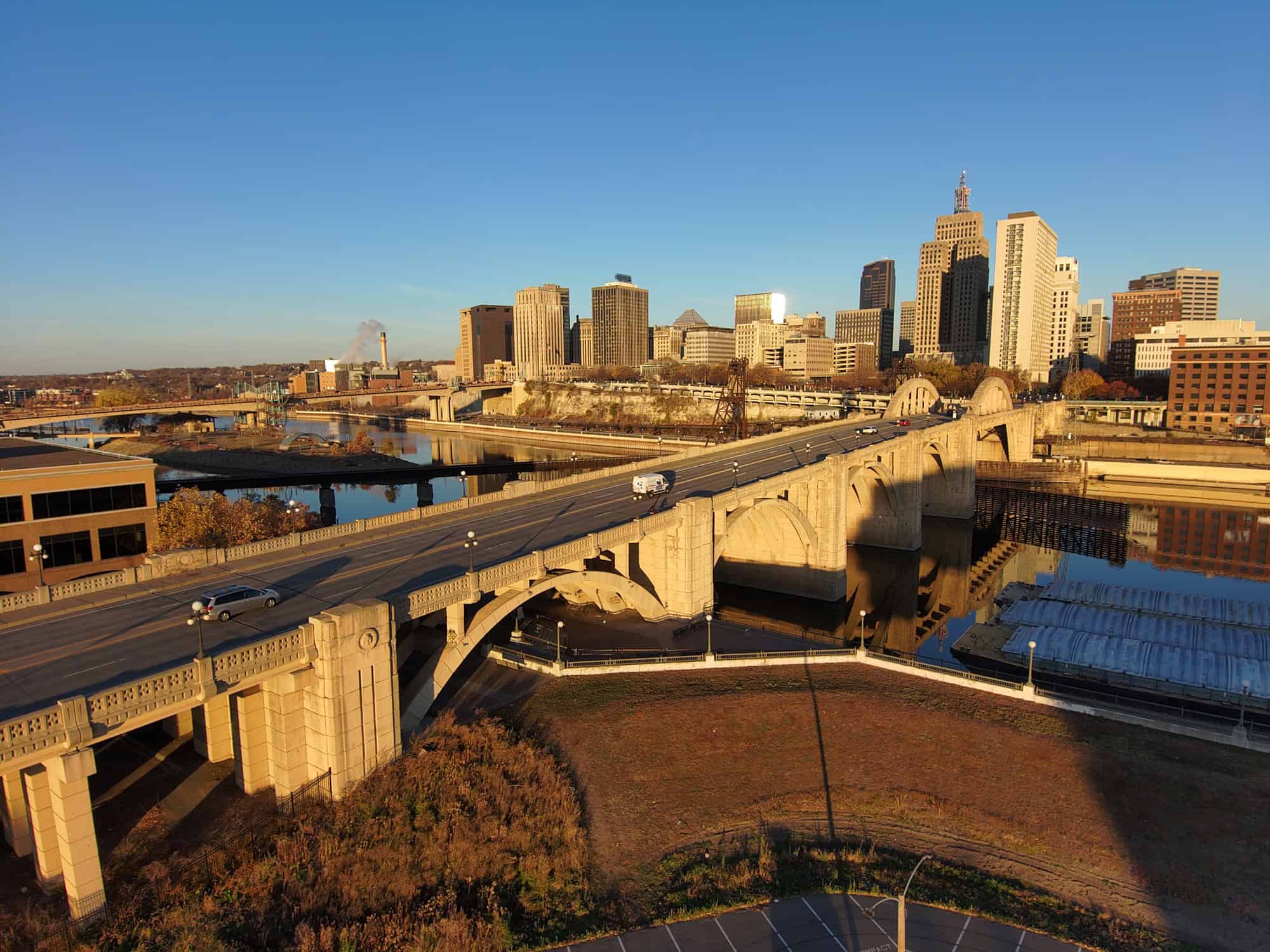
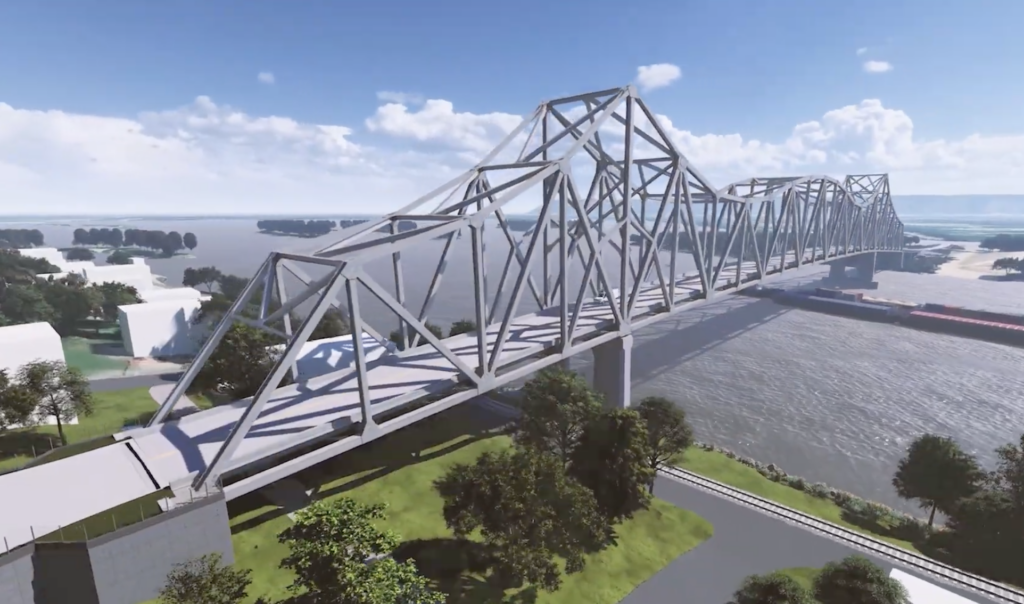
Building a new bridge is never an easy task. But the new Black Hawk Bridge presented its own unique challenges. Among them: Its aesthetic design mimics the original Black Hawk Bridge, which was an engineering landmark and a masterpiece of its time. Built in 1931 and named for Chief Black Hawk of the Sauk and Fox tribes, it connected Iowa Highway 9 to Wisconsin Highway 82 across a 1,700-foot stretch of river—the only Mississippi crossing within 30 miles. After it opened, the bridge fueled commerce across a wide area of the rural Midwest and boosted the economy of Lansing, Iowa, the town in the bridge’s shadow.
Locals called it the “singing bridge” for the hum that 2,200 daily vehicles made crossing its open steel deck. But the old bridge wasn’t built for the modern world. Its 21-foot-wide deck had no shoulders, and accidents could force a lengthy detour. In the winter, which can be brutal and long here along the Iowa-Wisconsin border, crews struggled to clear snow from the steel grates. Below them, the navigation channel was growing tight for modern barge traffic.
The existing bridge [had] what we call fracture-critical members,” said Clayton Burke, a district staff engineer at Iowa DOT. “If they were to crack, they would compromise the structure of the bridge.”
The old bridge’s final years were shaky in more ways than one. Monitoring equipment showed it shifting twice during nearby construction activity—enough for engineers to permanently close it in October 2024. A car ferry took over, running 16 hours a day to keep neighbors in Iowa and Wisconsin connected across a river that would otherwise mean a 60-mile round-trip detour. The community was ready for the next chapter.
A Place of Honor
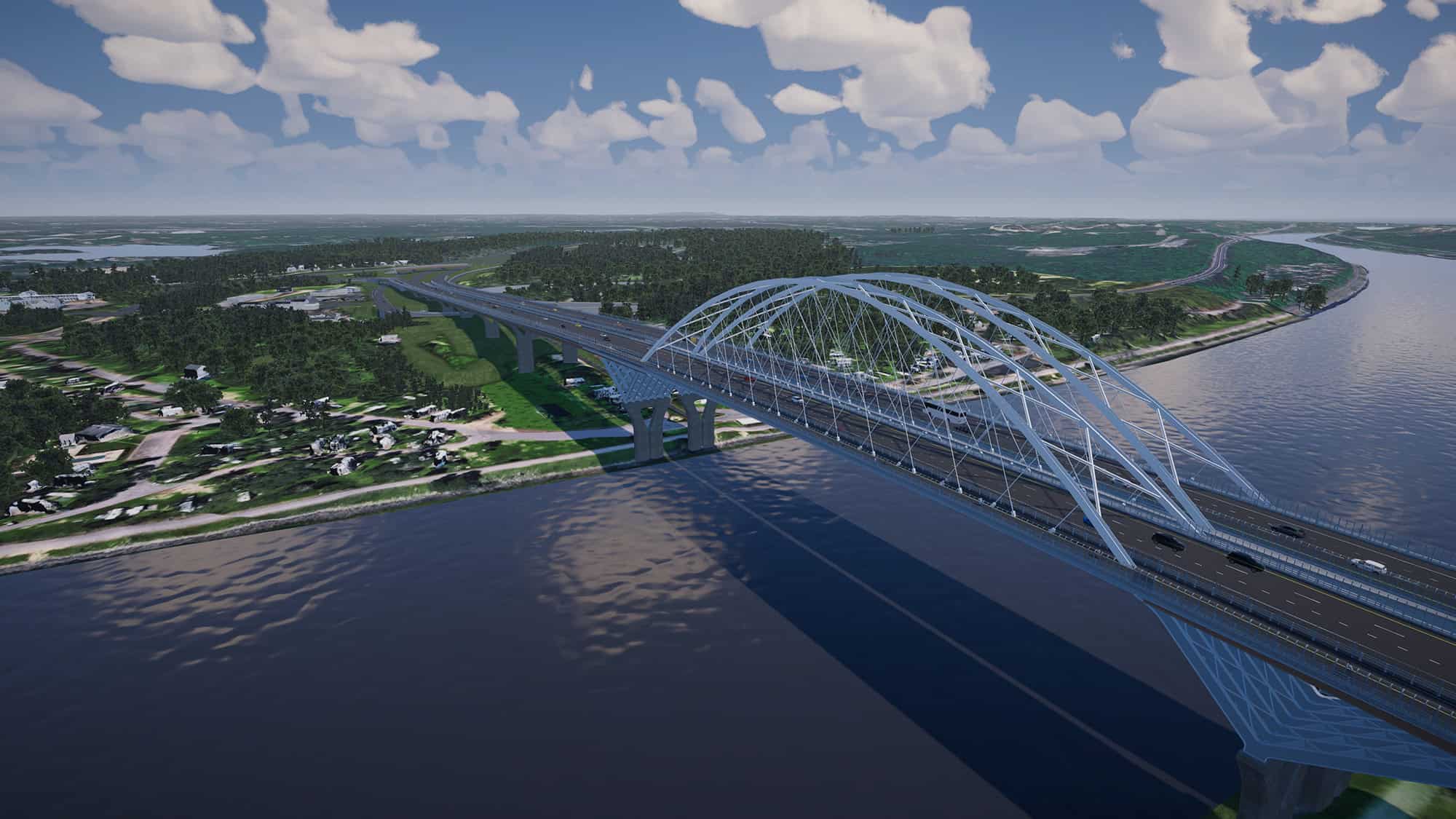
The new bridge’s design had to honor the old one—the Black Hawk Bridge is listed on the National Register of Historic Places—while nearly doubling its width. To navigate that challenge, and to manage the engineering complexity of a major river crossing, Iowa DOT partnered with designer Parsons Corporation, prime contractor Kraemer North America, and Foth, whose assignment was to produce a digital twin of the structure down to minute details.
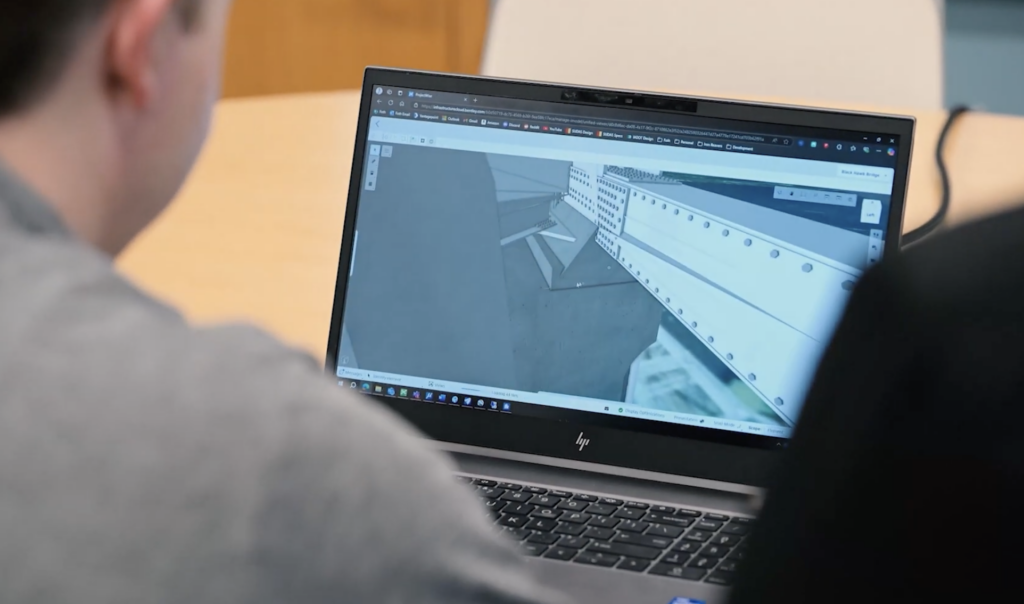
Buenger’s team at Foth used specialized Bentley software and imaging technology for each element of the bridge: One set of programs for the steel superstructure, another for the deck and supporting piers. They then brought everything together into a single cloud-based model that every stakeholder could access at once. (The project was a Year in Infrastructure finalist in 2025. Read the case study.)
Measure Twice, Build Once
Four engineers divided the work: two on the superstructure, two on the substructure, modeling half the bridge and mirroring it to the other side. The result combined 4,600 connection plates, 5,450 tons of structural steel, 28,700 shear studs, and 179,990 bolts. The components were individually modeled with its diameter, length, and specifications, hosted in the cloud and accessible to every project stakeholder.
“Every single bolt is detailed in that model—the diameter, the length, the size of the nuts,” said David Stanke, vice president at Kraemer North America. “It’s pretty amazing.”
Kraemer’s teams used the model to virtually sequence the entire assembly of the bridge before iron workers went anywhere near the river. The model let them plan at a desk ahead of time, and it was during a pre-construction review that the fabricators spotted the access hole problem.
The digital model’s reach has extended well beyond the job site. During regular coordination calls, Iowa and Wisconsin transportation officials, along with teams from Kraemer, Parsons, and subcontractors, can all navigate the same 3D structure in real time. “We can jump into a Teams meeting, view the model, navigate it together,” said Jim Hauber, chief structural engineer for Iowa DOT. “Without the model to communicate the details, it would have been a much bigger challenge.”
It also helped the community understand what was being built. Lansing is a small town where the bridge isn’t just infrastructure—it’s identity. Kyle Fitzgerald, a longtime resident, remembers his parents’ bed-and-breakfast and his grandparents’ house just below the old span. “This is the most magical stretch of the river for me,” he said. “This lives in my soul.” Iowa DOT held monthly public meetings using visualizations and fly-throughs generated from the model, walking residents through every stage of construction in 3D.
The Birds and the Bolts
When the new Black Hawk Bridge opens in fall 2027, it will be nearly double the width of its predecessor—40 feet across, with proper shoulders, a smooth concrete deck, and a widened navigation channel. Its foundations will reach 150 feet into the earth, anchored in bedrock far below the wood pilings of the 1931 structure.
Buenger is already thinking beyond opening day. The real return on a digital twin, he argues, isn’t what you save during construction—it’s what you gain for the next hundred years. He cites an unexpected example: Once maintenance workers got access to the model, they started asking where birds were likely to build nests in the bridge’s steel, and how to prevent it. “That’s something we as bridge engineers never would have thought of,” he said. “But they know it’s a maintenance issue.”
Iowa DOT is collecting lessons from the project to set standards for future work across the state. “Kramer told us they hope we see more of these 3D models in the future,” Buenger says. “This has been fantastic.”
“The ROI of any digital twin depends on how long it lives. Can we push it through construction? Awesome. Can we push it into operations and maintenance? Even better. That’s where you really get your money back.”
FAQ:
The model catalogues every pin, inch of rebar, and all 179,990 bolts, including their specific diameters and lengths. This granular detail allowed contractors to virtually sequence the entire assembly from a desk before iron workers ever reached the river. It’s a high-tech census of 5,450 tons of structural steel.
The 1931 structure featured “fracture-critical members” that could compromise the entire bridge if they cracked. Its narrow 21-foot deck also lacked shoulders for snow removal and was prone to accidents, eventually shifting so much that it was closed in 2024. Modern barge traffic had also outgrown the tight navigation channel below.
Using a 3D model allowed fabricators to catch critical design flaws, such as access holes too small for tools, before any steel was cut. This proactive approach saved $3.2 million and slashed six weeks off the construction schedule.