Once upon a time, there lived a scientist with a flair for the theatrical.
Blending education with entertainment, John Henry Pepper entranced audiences across Victorian England with demonstrations of scientific innovations. Then, one Christmas Eve, Pepper unveiled his most sensational act yet: an optical illusion using plate-glass and light projection that made a ghost “appear” on stage in front of stunned London theatergoers.
Pepper’s ghost, as the technique came to be known, has been used in performances ever since, including rap icon Tupac Shakur’s famous posthumous “hologram” at Coachella in 2012. And it made a key appearance in the life of Liana O’Cleirigh, a UX designer in London with Bentley Systems, the infrastructure engineering software company.
As a teenager in Dublin, O’Cleirigh ran a youth theater, cutting her director’s teeth on Mark Ravenhill’s play Scenes from Family Life. The play about the last two people on Earth featured characters who disappear and reappear—a perfect opportunity to deploy the 19th century special effect. “I just really enjoyed the thrill and the fun of it,” O’Cleirigh says. “That’s essentially the bare bones of XR—extended reality—using glass and optics to make something appear where it is not. I was really interested in the magic of it from a pretty young age.”
That merging of art and tech is a sweet spot for O’Cleirigh, who works with Bentley’s iLab. The innovation hub, operated by the company’s Emerging Technologies team, is where developers and designers experiment with the latest technology and explore how it can be applied in the infrastructure industry—including finding new ways for users to interact with Bentley’s advanced 3D visualizations, digital twins, and world models.
“ILab gave me the opportunity to explore how good XR could be for the built environment,” she says. “And we’ve got some really awesome tools at Bentley that I wouldn’t be able to play with anywhere else.”
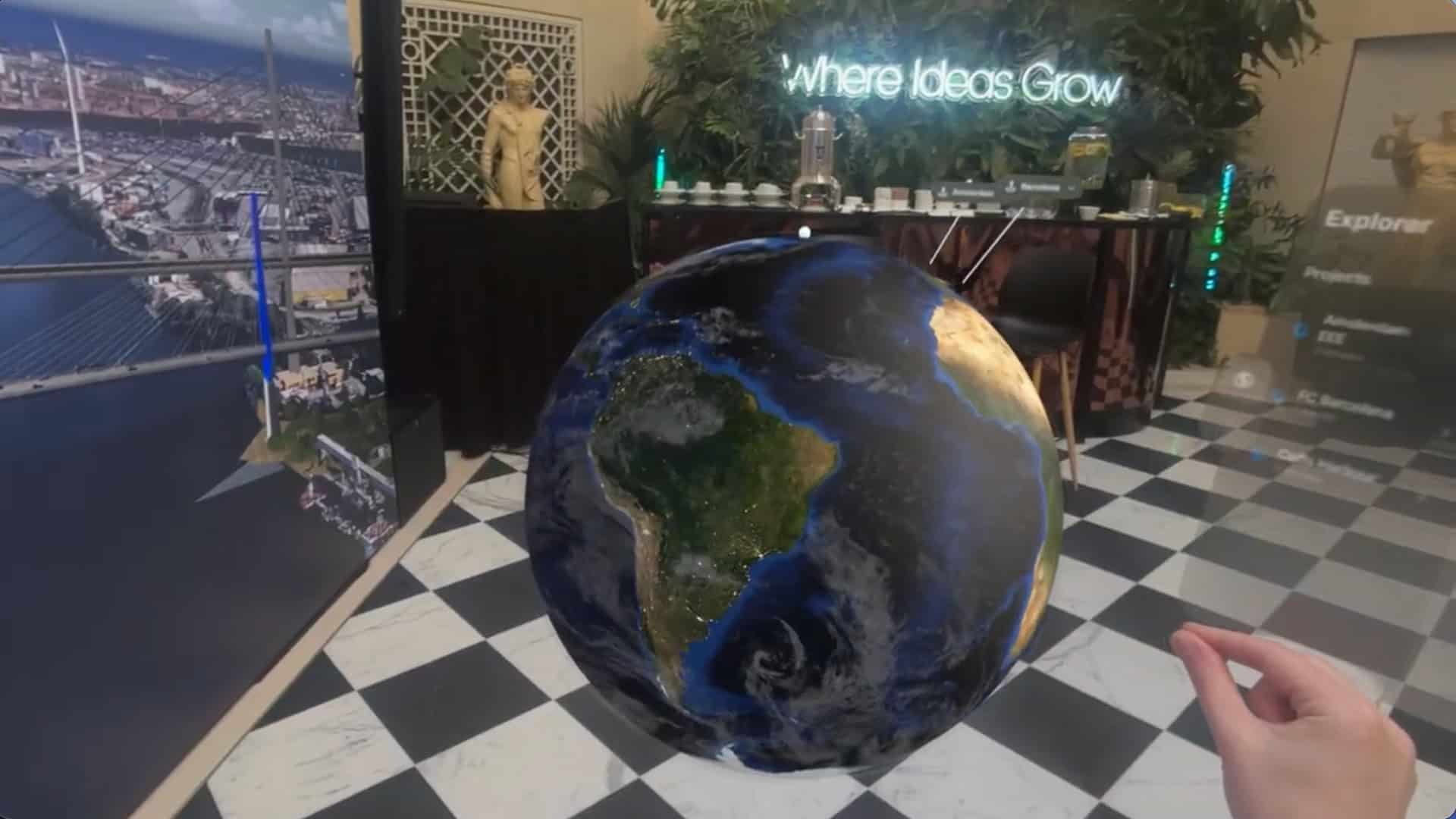
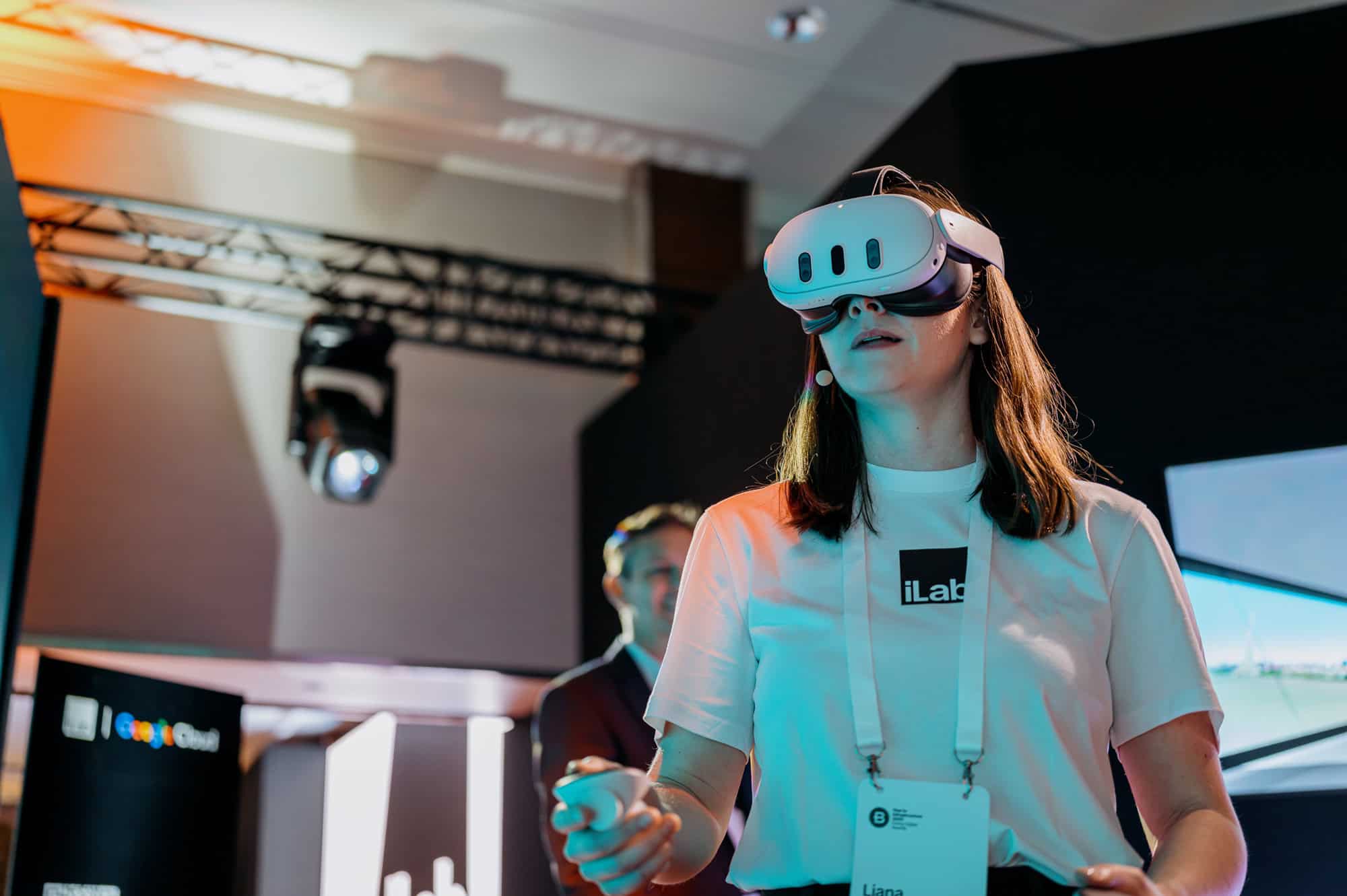
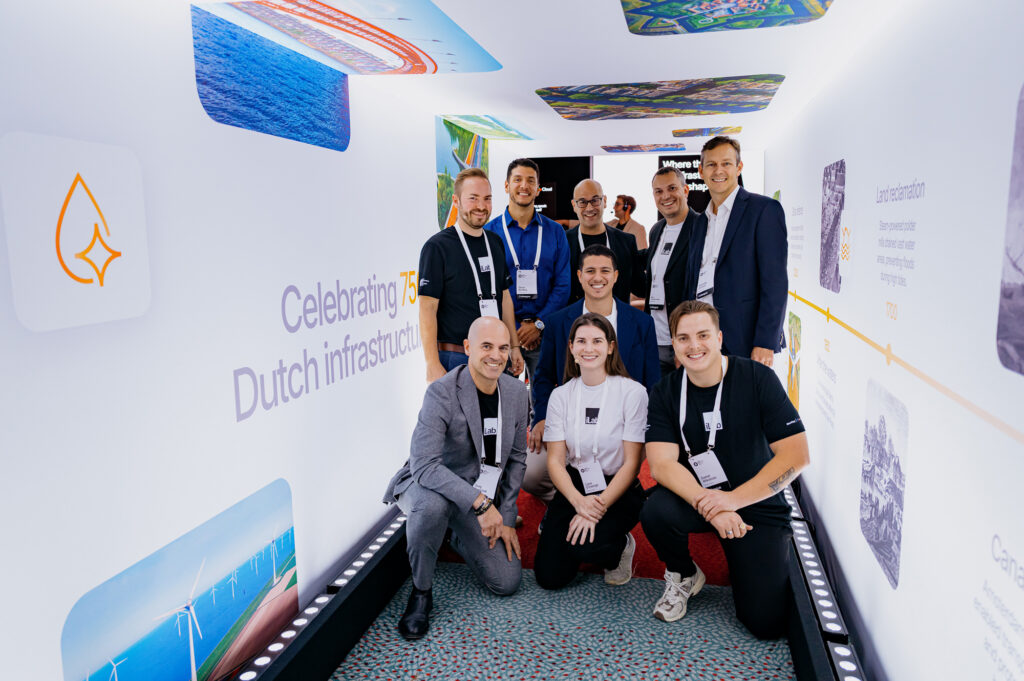
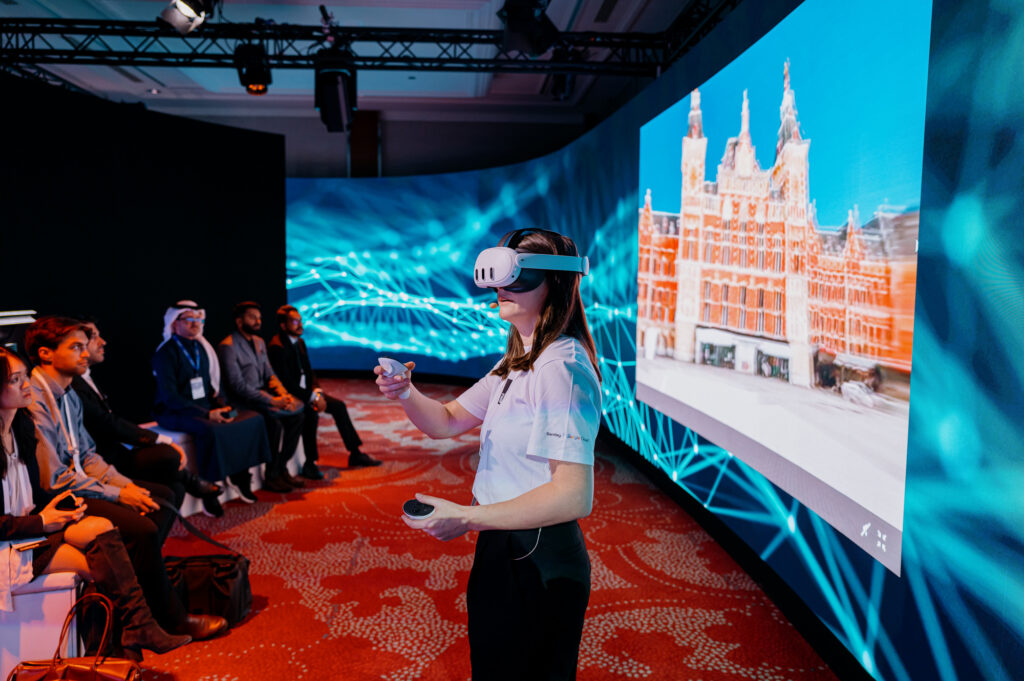
O’Cleirigh demonstrated the technology in Amsterdam last fall at Bentley’s flagship event, the Year in Infrastructure. Visitors donning a virtual reality headset could walk into a project—a bridge, a tunnel—and experience what it looks and feels like. The technology allows users to make design adjustments before any part of the project is built. (Check out the immersive experiences iLab showcased at YII in Amsterdam and Vancouver.)
Bridging Two Worlds
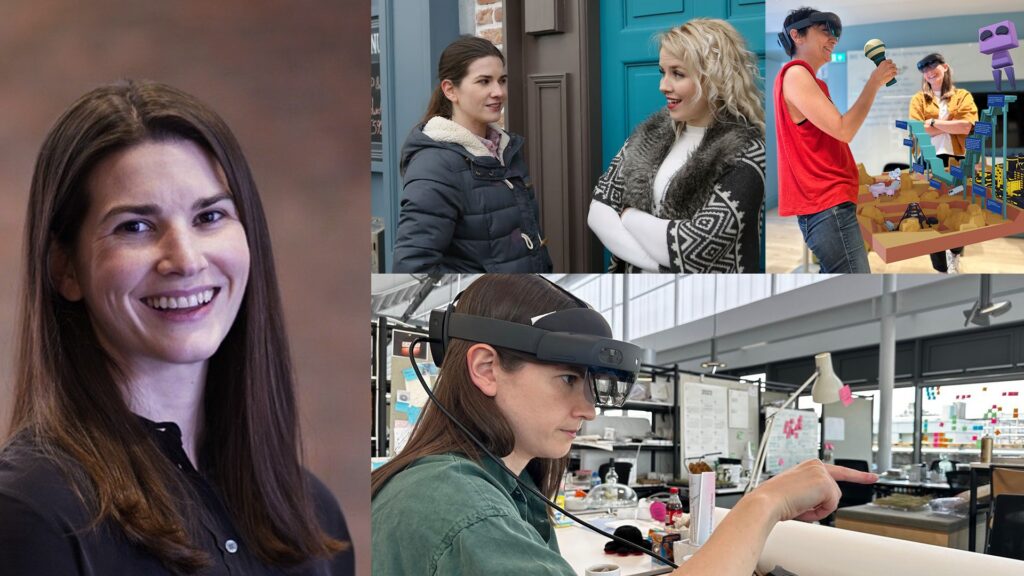
Although O’Cleirigh’s design spark was lit in that Dublin youth theater, it would still be some time before she moved fully into tech. Her love of theater first led her to a successful acting career, with roles in popular Irish TV shows. For over a decade, she played one of the lead characters in Fair City, a long-running drama set in Dublin; when her character was murdered, it made national news. “I used to be able to tell when episodes of mine were airing because more people were recognizing me on the street,” she says.
At one point, O’Cleirigh had a foot in both worlds, performing on TV while earning her undergraduate degree in Interaction Design in Dublin, followed by a master’s degree in Global Innovation Design at the Royal College of Art and Imperial College London. There, she created Narrative Realms, an award-winning augmented reality game prototype that allows writers to collaborate.
(Fun side note for Kurt Vonnegut fans: Narrative Realms drew on his “shapes of stories” framework, which he developed to help writers visualize and plot their narratives. O’Cleirigh says she has applied the theory in her current work, too. When she tells stories about how Bentley solutions solve customer problems, that’s essentially the classic “man in hole” arc. And in the built environment, she adds with a laugh, “sometimes there’s literally men in holes as well!”)
From eLab to iLab
After a stint with design and engineering firm Arup, where she created immersive interactions for its innovative eLab, O’Cleirigh joined Bentley’s iLab in 2024. With its focus on the built environment, she says, iLab has given her an ideal space to explore, especially with extended reality (XR).
“When you’re designing for the built environment, you have to design for human scale,” she says. “XR, becomes a really powerful tool for that—not just relative scale, like whether something is 10 or 100 meters, but scale relative to the human body: ‘This is up to my waist. This doorway is wider than I expected.’ It lets us use our interoception—our innate sense of how we fit into and move through a space.”
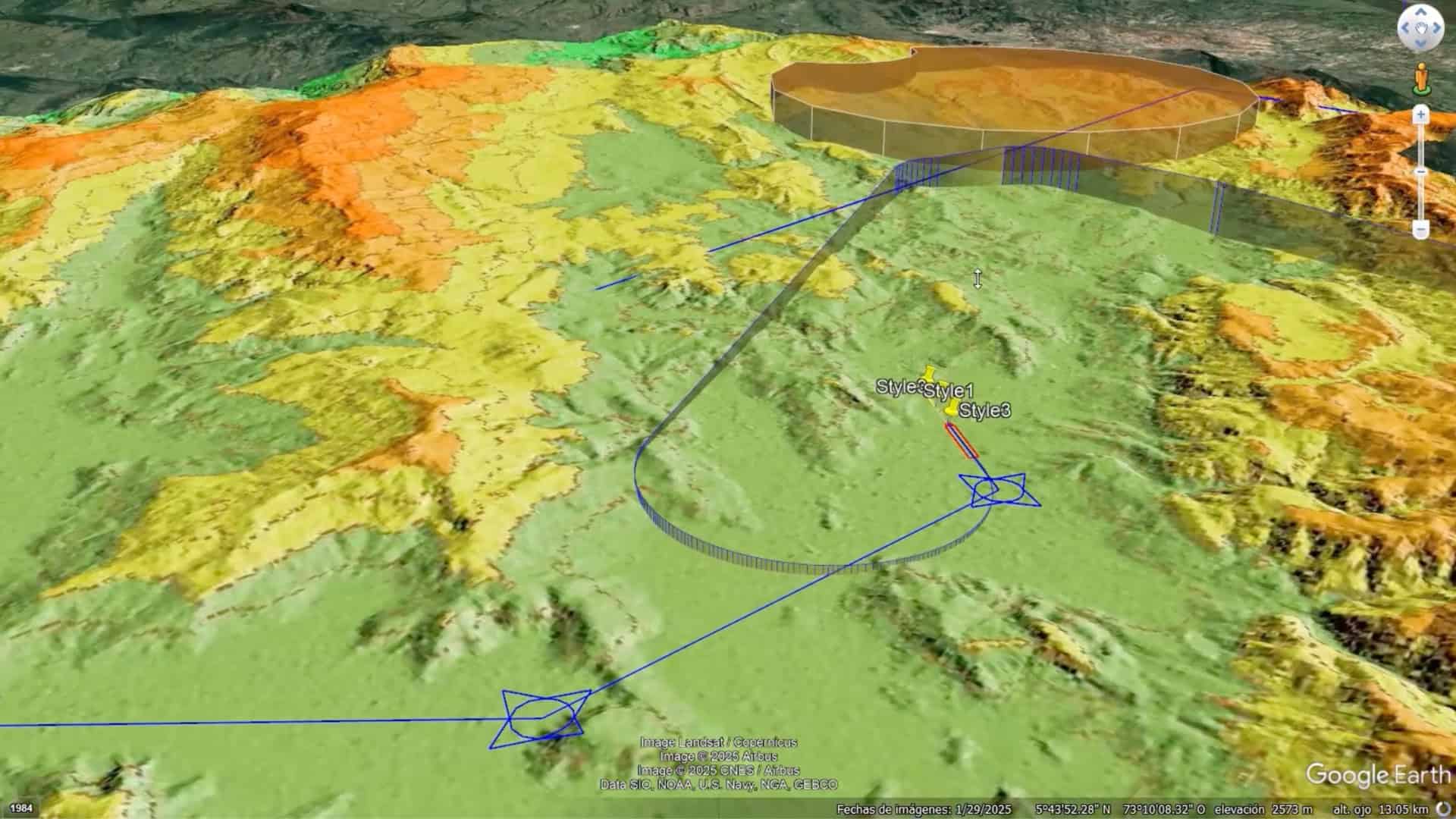
Bentley’s advanced visualizations—powered by its powerful software, video game technology, and Cesium geospatial technology—have clear applications for infrastructure, allowing teams to conduct virtual site visits and catch problems early, saving time and money. O’Cleirigh also points to another audience: the public. A “show, don’t tell” digital twin or 3D world model, she argues, is more likely to engage local communities and win over concerned residents.
“If you’re building a stadium in a residential area, people are going to worry that a permanent or temporary structure might block the light in their back garden for months—or forever. It’s very hard to accurately show them what that looks like,” O’Cleirigh says. But Bentley can place someone virtually in their own garden, set the sun to 11 a.m. on a December morning, and say: “This is exactly what it looks like. This is the sun path.”
Making a Splash With Splats
This interest in immersive, transportive storytelling is a through line in O’Cleirigh’s journey from the performing arts to UX design. A keen gamer, she is a longtime fan of the Zelda series and Dungeons and Dragons, and she creates her own games for friends. At Bentley, she says, “it’s still really fun to be immersed in something.”
Greg Demchak, Bentley’s vice president for emerging technologies and head of iLab, says O’Cleirigh is not only a talented designer but also unusually effective at live demonstrations—a combination that reflects how her background shapes her work. Her theater training makes her comfortable on camera and in front of crowds, he says. “She’s not just a UX person doing mock-ups in a corner—she gets out there, puts her work in front of people, and engages with them publicly. That’s a unique skill set.”
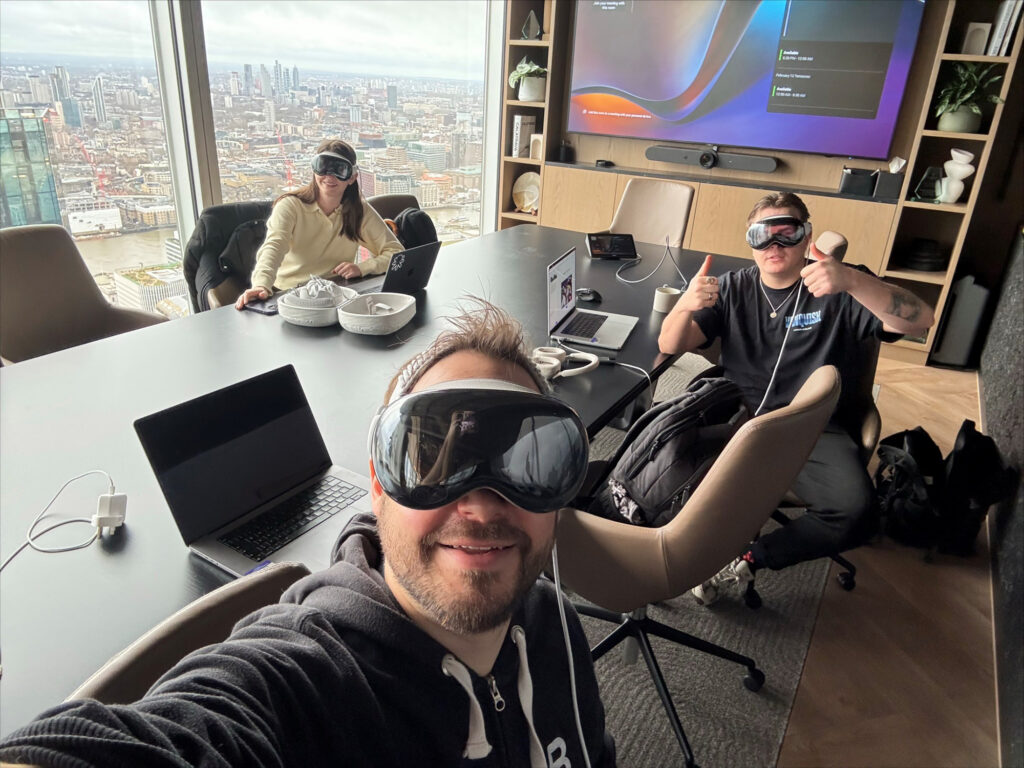
The project she is working on now illustrates the point: an Apple Vision Pro Gaussian splat viewer. Gaussian splats involve a cutting-edge technique that transforms ordinary photographs into strikingly realistic 3D scenes, capturing fine details—thin wires, glass reflections—that traditional methods often miss.
“We have Gaussian splats of the floodgates in New York built after Hurricane Sandy, and we can visit them in shockingly high definition in the Vision Pro,” O’Cleirigh says. “We can really transport people into those stories—they can move around, hear the narrative, and feel what it’s like to be waist-high in water.”
This month, O’Cleirigh will demo the project to architects and design technologists at the ATN summit in London, where Demchak is also scheduled to speak.
With International Women’s Day approaching, O’Cleirigh reflected on navigating what remains a male-dominated field. In her corner of it—emerging technologies—being a bit different, she says, can actually be an asset.
“There’s an amazing support network of women in technology right now, online and in person, that makes it a lot easier to navigate,” she says. “And the emerging tech space is younger, more creative, more exploratory—that lends itself very well to being an outsider. There are a lot of wonderful, quirky, curious people in that space.”
The space, she adds, is a thrilling one to inhabit. “The fact that I get to build a Vision Pro app for work is as exciting as it gets,” she says. “Gaussian splats, AI image- and video-generation, advances in XR—we’re seeing them come together in new ways. They’re still a little janky, but you can see where it’s all going. And it’s really, really exciting.”
Innovating. Demoing. Creating human-scale, photorealistic environments that feel like reality: Surely John Henry Pepper would have approved.
FAQ:
Liana O’Cleirigh applies stagecraft to UX design to create “human-scale” environments. Her storytelling background helps translate complex engineering data from platforms like Bentley iTwin into immersive, relatable experiences for both project stakeholders and the general public.
Extended Reality (XR) can be used to let stakeholders virtually tour projects before construction begins. This “show, don’t tell” approach catches design flaws early and builds community trust through realistic visualization. XR was recently used in the city of Pau, France.
Gaussian splatting is a cutting-edge technique that transforms standard photographs into hyper-realistic 3D scenes. Unlike traditional 3D models, these “splats” capture fine details like glass reflections and thin wires, providing a much higher level of realism for digital twins and virtual site visits.