In the complex world of infrastructure, where sustainable design and digital innovation intersect, stories of successful project delivery often hinge not just on the software used, but on the individuals who master it.
We recently spoke with Andrew Germain, an Associate Technical Director within the Rail division of Arcadis, in York, United Kingdom. He told us about his career and journey to where he is today.

A Digital Engineering Journey
A professional journey begins when an individual identifies a core pursuit. For Andrew the pursuit is rooted in professional growth and technical mastery. Andrew’s career path reflects a natural curiosity, stemming from his early interest in technical drawing and the iterative process of design. He likes knowing how things go together and how things work, driven by an inquisitive mind. Andrew migrated into the engineering field after college, having initially intended to pursue architecture. His exposure to MicroStation came early, in 1992, at a small specialist contractor.
Today, Andrew’s personal motivation is closely tied to the complexity of the work itself. He focuses on projects like railway stations and depots, alongside extensive framework projects covering lineside activities, including the renewal of overhead lines, wiring, and the support buildings that power the railway. He maintains a keen interest in the 3D elements of the job and the resolution of complex engineering problems.
However, the core desire that drives Andrew in his current role is focused less on the mechanics of the track and more on the mentorship of the people. He is motivated by making the team better, increasing their understanding and knowledge, and seeing them grow. Andrew finds satisfaction in developing people, having had success over the years with trainees and apprentices who have moved on to “greater things”.
Outside of work, Andrew channels his passion for engineering into “collecting cars”, owning 10 different ones over the past 12 years. He’s drawn to the performance and meticulous design associated with German automotive engineering. This interest extends to motorsport, which for him, represents the perfect blend of speed, design, and relentless pursuit of perfection. He’s very much into Formula One and follows the British Touring Car Championship, which is a UK-based motorsport featuring saloon cars racing around tracks, and strives to attend as many of these events as possible. He and his stepdaughter are avid supporters of these races, whether watching them in person at the Spa Grand Prix last year or on TV.

Arcadis delivers highly transformative projects with businesses, cities, and industries worldwide. With over 36,000 people active in more than 30 countries, Arcadis brings together experts—including architects, data analysts, designers, and engineers—to deliver intelligent solutions across infrastructure, transport, energy, water, and environment sectors. Their core mission, since their founding in 1888, has been improving quality of life. This goal drives their focus on solving pressing modern challenges, from climate change impacts to increasing urbanization and digital transformation.

The Arcadis Rail and Transit division recognizes that rail is essential for the shift toward sustainable, equitable, and efficient transportation. Facing urgent mobility issues driven by aging infrastructure, population growth, and decarbonization, Arcadis is reimagining the future of transport through intelligent solutions. They use digitalization—including digital twins, smart data capturing, and digital simulations—to help clients maximize asset performance and increase transit capacity. Arcadis supports the entire asset lifecycle, from planning and design to asset management, covering disciplines like track, civil engineering, and signalling.
Navigating Workflow Hurdles
Every project faces conflict, which often manifests as acute pressure and workflow hurdles. Arcadis, like any firm handling high-stakes infrastructure, frequently faces challenges related to delivery, especially when coordinating external teams and disciplines. Since Andrew operates in a supporting and directing role rather than a production role, the problems he faces often stem from external teams struggling to meet deadlines or efficiently manage the required workflow. This includes issues such as “pieces missing” and difficulties navigating the project process.
Andrew recalled an example involving a critical delivery timeline five years ago that created significant personal and professional tension. The firm was delivering a project at Christmas time, requiring immense effort because the client was implementing last-minute changes and alterations.
This situation created genuine frustration among the team. People were keen to see the project completed, but the timeline was inflexible. The work needed to be carried out over the Christmas period and had to be finished; there was no possibility of extending the deadline. The initial feelings were tension and upset about having to work late. Recognizing that the work needed doing and the client’s demands were fixed, the team ultimately pulled together to get things done.
Discovering an Essential Tool
When faced with obstacles, engineering teams sometimes use technology to overcome the pressures of delivery. For Andrew, the essential tool first appeared in 1992, in his initial job as a drawing office assistant. The office had CAD installed, MicroStation, and Andrew, having an inquisitive and experimental nature, took a keen interest. He was largely self-taught, learning alongside another colleague, and driven by “youthful curiosity” to take risks and “press all the buttons that no one else had pressed”.
This experimentation proved beneficial, demonstrating the software’s capacity to solve workflow inefficiencies. Using the software allowed the team to drastically cut production time. For instance, by using the patterning tool, drawings that previously took several weeks could be completed in days.
At first, Andrew worked with Bentley through a third-party reseller for buying software and getting support. The software was immediately recognized as the solution capable of streamlining project delivery.
Precision Through Digital Strategy
Once teams find reliable software, they need a clear implementation plan—otherwise, they risk wasting time and effort. The Arcadis strategy involved using MicroStation’s evolving feature set to handle specific, high-stakes infrastructure requirements.
MicroStation was already in use when Andrew arrived at a previous company. Once the team saw how useful it was, they added more workstations and built a cell library used by everyone.
Andrew’s career progressed and he moved into his role at Arcadis Rail and Transit. Specific features within MicroStation became essential strategic components that delivered significant time savings:
- Coordinate System Integration: Arcadis frequently switches between coordinate systems, predominantly working in Snake Grid but often receiving third-party information in OS. “It was always a bit of a pain to translate between the two but using the Geographic Coordinate System (GCS) in MicroStation, we can do it pretty much instantly.” Andrew also likes the Mapping Integration. This gives the ability to bring in background maps and display geospatial context behind design data.
- AccuDraw mastery: Another transformative tool was AccuDraw. Initially, Andrew and his team hadn’t understood its purpose and consequently didn’t use it. A MicroStation training course resulted in AccuDraw significantly changing the way they drew.
These specialized tools allow Arcadis to manage complex client data sources safely. Andrew noted they currently use MicroStation 2024, maintaining a slight lag behind the newest versions because the IT department meticulously check systems to ensure no client data is compromised. This measured implementation process ensures stability and confidence in their ongoing work.
Commitment to the Software
For successful workflow transformation, stakeholders must make a decisive choice among competing options. Andrew and Arcadis demonstrated this commitment to MicroStation through preference and continued usage.
Arcadis is a “multi-software company,” using most Bentley products alongside other CAD software. Andrew detailed a period where this commitment was tested. A very well-known CAD software was installed on work PCs due to its status as the “more popular and the more widely available software”. The team started using it and training in it.
However, the experience led to a clear call to revert. Andrew was frank about the rejection of the competing software: “I’ll be honest, I didn’t like it. So, we reverted back to MicroStation”.
This preference cemented his ongoing commitment to the platform. Despite the range of tools used across the company, Andrew maintains a boundary regarding his workflow: “my personal preference has always been MicroStation.” This steadfast commitment ensures workflow continuity and efficiency within his specialized domain.
Mitigating High-Stakes Risk
In critical infrastructure projects, communication must define what teams stand to lose if they fail to employ the right tools, as motivation is driven by the desire to avoid failure. For Arcadis, failure means costly errors, clashes, and delays.
Andrew identified the most significant risk MicroStation helps avoid relates to the physical delivery of projects in the three-dimensional space: clash detection. He sees MicroStation’s strong 3D capabilities as essential and very useful.
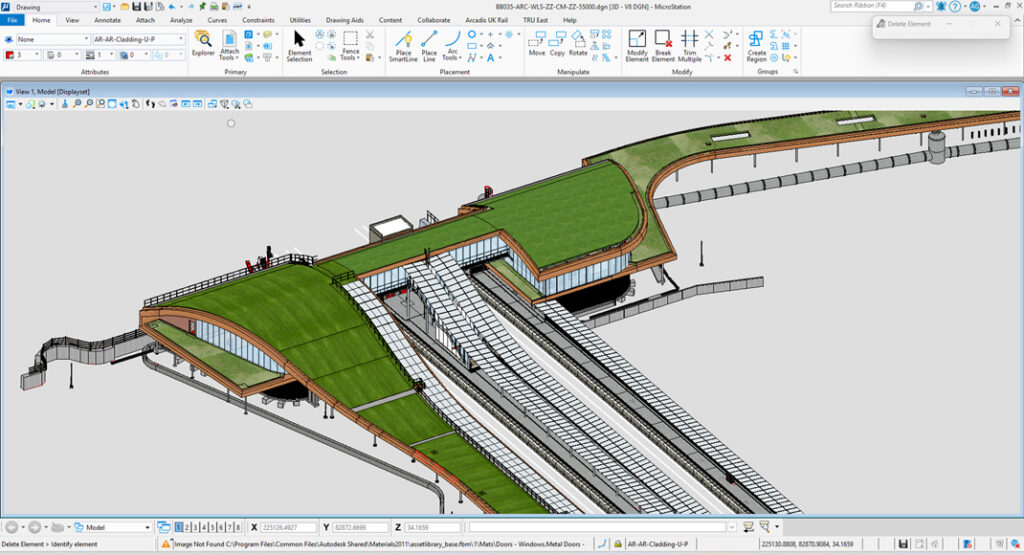
The crucial leap in failure avoidance occurred when the team moved beyond 2D drawing. While 2D offers a top-down view, it can conceal problems. By spinning around the models in 3D, Andrew notes, “you realise there are clashes”. This transition allowed the team to accurately see how elements interact. They proactively eliminated errors that would have been costly or impossible to fix once construction begins.
Furthermore, digital integration ensures continuous data integrity across platforms. Exporting MicroStation models directly into iTwin is a “significant benefit” for team members and is utilized extensively.
Cambridge South Infrastructure Enhancement Project

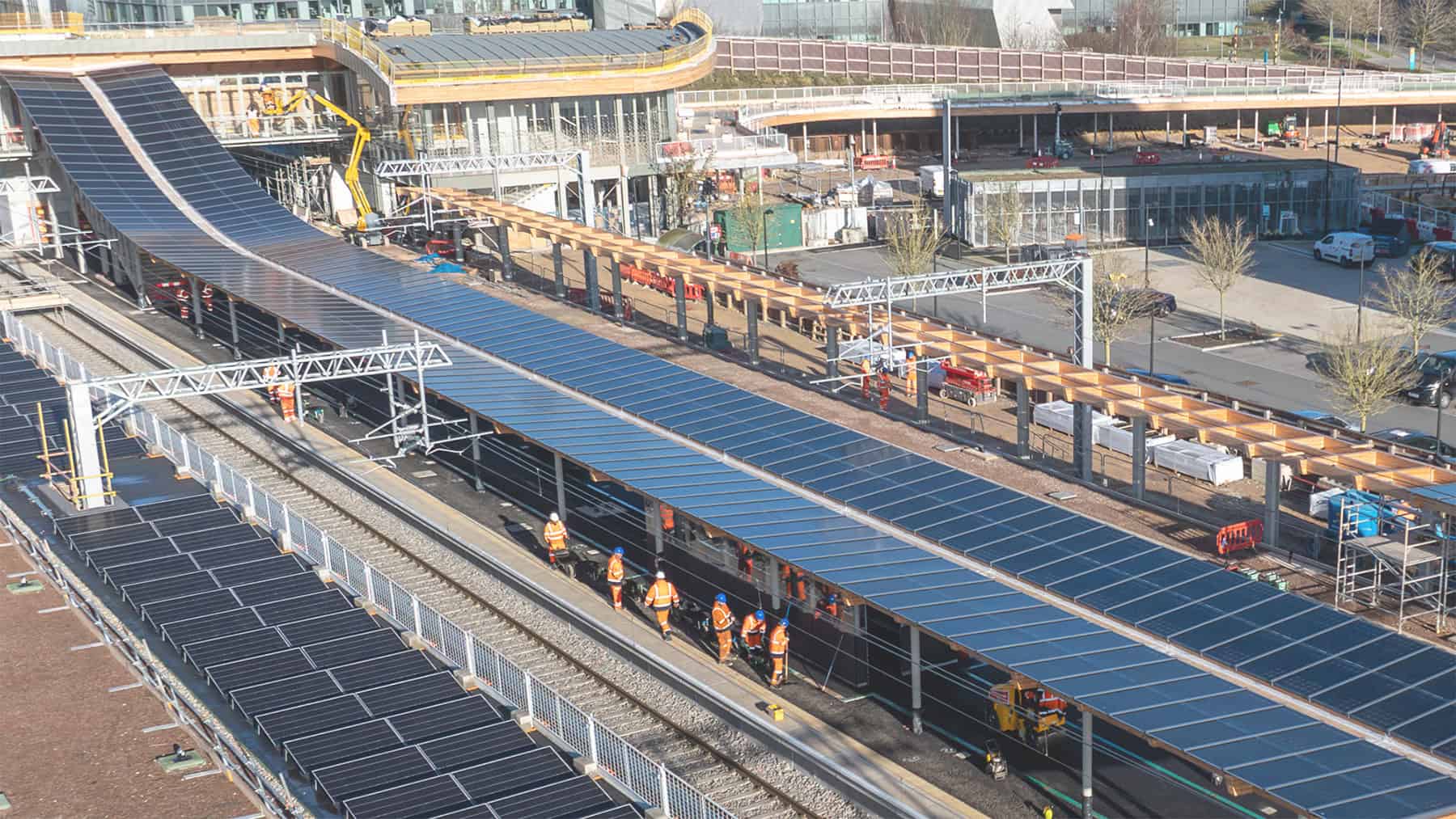
The Cambridge South Infrastructure Enhancement Project defines the new reality for Andrew Germain and the Arcadis team. They achieved clear results— Employer Information Requirements and BIM Execution Plan. Covering around three miles of rail upgrades and a new station, the project is set to open in early 2026. It will support 2.4 million commuters annually by 2043 and cut daily car trips by 1,175, improving quality of life.
MicroStation was the main tool used for modeling and drafting on the project. Its flexibility let design teams adjust the level of detail as needed. Starting with basic models and adding complexity for construction. Given the project covered over three miles, using the Snake Grid coordinate system in MicroStation was key to keeping all disciplines aligned without breaking the site into sections.
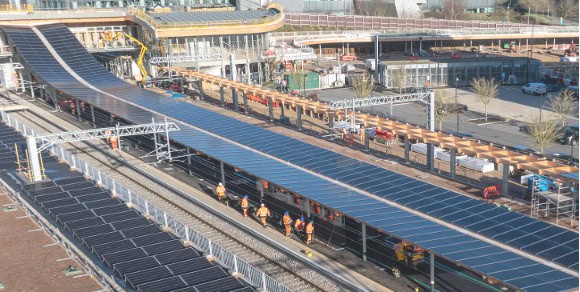
MicroStation delivered major savings on the project. The Animation tool transformed signal sighting by showing the train driver’s view. It removed the need for site visits and track closures in over 90% of cases—cutting costs and reducing staff risk. Monthly clash detection checks across updated discipline models helped identify and fix more than 26,000 clashes, keeping the project efficient and well-coordinated.
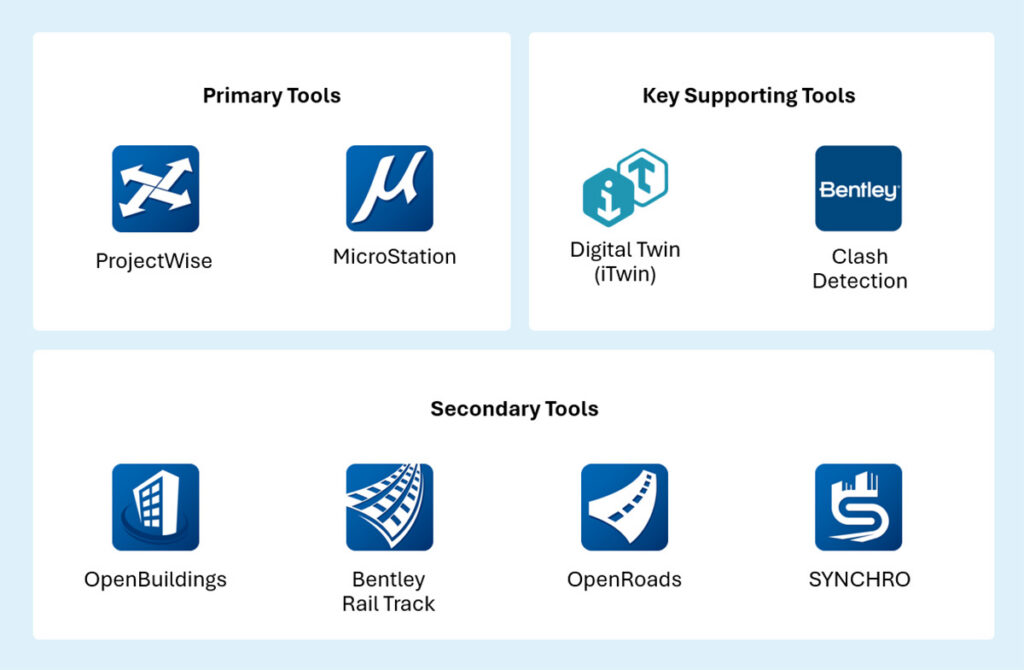
The Bentley software environment supported this success. ProjectWise served as the client-hosted Common Data Environment. It established a collaborative mentality and a single source of truth, managing file workflows and updates automatically. Specialized software provided focused results. OpenBuildings created the station, canopies, and footbridges using its rich library of assets and efficient scheduling tools. OpenRoads was used to model the trackside walkway, which, alongside traditional calculations, increased earthworks reuse from 60% to 100%. The Track team utilized Bentley Rail Track (the predecessor to OpenRail Designer) to develop horizontal and vertical rail designs and coordinate assets against the alignment. Contractor engagement was enhanced via SYNCHRO 4D planning. This allowed detailed simulation of complex construction activities, such as the culvert diversion, to optimize time and cost. Bentley iTwin allowed internal teams and clients alike to review models, extract measurements, and clarify Technical Queries quickly, even for those without MicroStation installed. These combined tools ensured a reduction in construction interface issues and increased engagement, defining the project’s successful completion.
As Andrew Germain continues to lead and mentor his team at Arcadis, his passion for growth—both technical and human—remains the driving force behind his work. With a deep appreciation for 3D design and problem-solving, he’s not only shaping rail infrastructure but also shaping the careers of those around him. Looking ahead, Andrew envisions a future where innovation and collaboration go hand in hand, and where his team continues to push boundaries in digital engineering. Outside the office, his love for motorsport continues to fuel his curiosity and energy, whether he’s trackside at the British Touring Car Championship or sharing the thrill of Formula One with his family. Driven by a mindset of continuous improvement, Andrew is always looking for the next opportunity to learn, lead, and make a lasting impact.