
Bridges are lifelines, and aging infrastructure poses a significant challenge. Bridges connect communities, enable commerce, and ensure critical services can reach those in need. When these lifelines falter, the impact is felt deeply, from school routes to emergency response times.
In 2022, Kentucky faced a daunting challenge. Following catastrophic floods, the state needed to assess over 1,000 bridges, many of which were structurally deficient or vulnerable to extreme weather. The traditional approach would have taken a decade and cost upwards of USD 7 million. It was clear: the “old way” wasn’t going to work. As Ben Shinabery, survey director for Qk4, shared in his virtual interview, “With a project this big, we couldn’t do things the old way. We had to figure out ways to find efficiencies in every step of the project.”
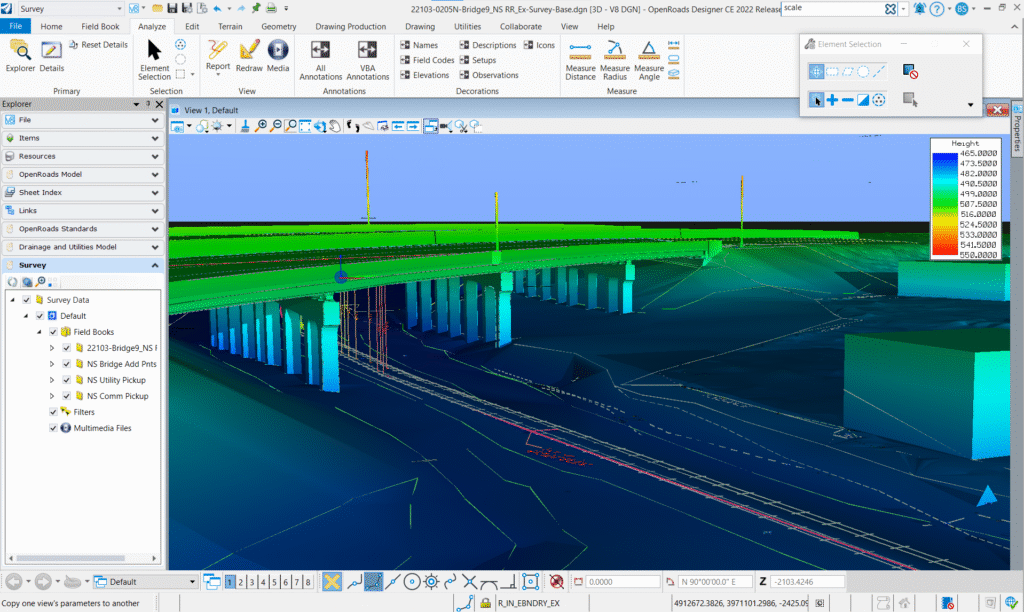
Intelligent coding transforms bridge surveys
Qk4, a leading infrastructure engineering firm, stepped in with a bold, technology-driven solution. Their mission: to dramatically accelerate bridge assessments while ensuring unparalleled accuracy and cost-efficiency. At the heart of their innovation was a concept they termed “intelligent coding,” which we now recognize as a powerful application of AI and machine learning (ML) in engineering.
What is Intelligent Coding?
Traditionally, bridge surveys could take two to three months per bridge for their survey team. Qk4 was challenged to cut that down to just two to three weeks. “At the beginning, we thought, ‘whoa, we need the time,'” recalls Shinabery. But by embracing advanced digital workflows, they not only met this aggressive target, but surpassed it, eventually completing standard bridge surveys in as little as two to three days for the field and CAD technicians.
This incredible leap in efficiency was made possible by AI-driven intelligent coding. Instead of simply collecting raw data points, Qk4’s field technicians were trained to embed intelligence directly into every survey shot. “Every survey shot that we take, we code in such a way that it carries the knowledge of what that point is and how that point is going to be used,” Shinabery explained. These AI-enhanced survey codes, linked to specific survey features within a 3D model, provided immediate context and attributes for each data point. This process eliminated tedious manual interpretation and translation later on, a common bottleneck in traditional workflows. This AI application transformed raw data into actionable insights, feeding directly into the digital twin for comprehensive analysis and decision-making in infrastructure engineering projects.

Building a digital twin for statewide bridge modernization
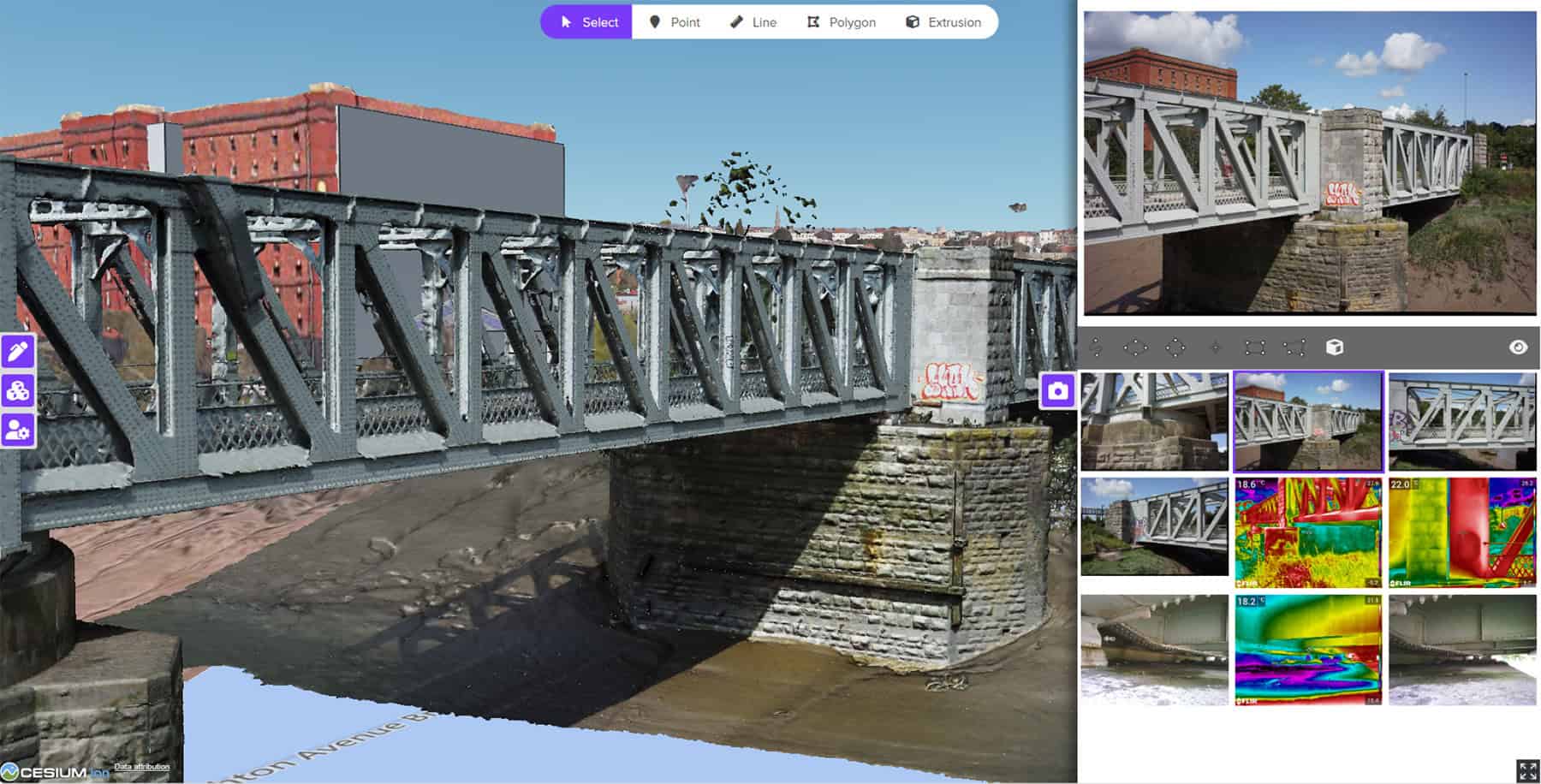
Using Bentley’s OpenRoads Designer, Qk4 combined these AI-enhanced intelligent code shots with drone point clouds and lidar scans. The result? A comprehensive 3D existing conditions model—a foundational digital twin that represented the entire bridge environment with incredible precision. This iTwin wasn’t just a static model; it was packed with embedded intelligence, ready for real-time collaboration.
“Bentley Systems’ technology gave us the opportunity to streamline the data handoff from survey directly to design engineers in every discipline,” said Shinabery. ProjectWise, the infrastructure project delivery software, became the central hub, allowing roadway engineers, bridge engineers, environmental teams, and others to access and reference the same intelligent data from anywhere. This collaborative environment ensured that “design engineers have all of the intelligence in one model to make decisions,” significantly reducing errors and rework that could cost millions of dollars on the back end for infrastructure projects. Watch the video on how AI and digital twins modernized Kentucky’s bridge program to see the workflow in action.
Results: 90% faster bridge surveys and 50% cost savings
The results of Qk4’s AI-driven approach were nothing short of transformative for Kentucky’s infrastructure:
- 90% reduction in bridge survey time: What once took months to complete was now accomplished in days.
- 50% reduction in costs: Saving the state over USD 3 million from an initial projection of USD 7 million.
- Enhanced accuracy and safety: AI-embedded data ensured higher quality models, leading to safer designs and construction.
- Accelerated project delivery: Bridges were brought back online in “quick succession,” drastically cutting down on detours and restoring vital access for Kentucky communities.
Kentucky’s success with the “Bridging Kentucky” program, driven by Qk4’s pioneering use of AI and digital twins, has now become a national model. The same efficient workflow methods have been integrated into the state’s ongoing Bridge Delivery Program, inspiring other departments of transportation to modernize their processes with innovative technology.
Qk4’s story, also available in this blog, demonstrates that AI isn’t just a futuristic concept; it’s a powerful, present-day tool that is actively rebuilding our infrastructure, enhancing safety, and improving the quality of life for millions. By combining human ingenuity with intelligent technology such as Bentley’s digital twin solutions, we are truly building a bridge to a smarter, more resilient future for infrastructure engineering.
Discover how Bentley Systems’ infrastructure AI solutions for design, construction, and operations can accelerate modernization and improve project delivery statewide.