Digital twins — virtual, real-time replicas of physical assets and systems — allow organizations to plan construction, simulate performance, monitor conditions as they change, and identify problems before they become failures. They can also accommodate AI and simplify engineering workflows.
The new certificate was developed jointly by LSU’s College of Engineering, LSU Online, Baton Rouge–based consultancy DigiTwin Global, and Bentley. Registration is now open.
“The engineers and business leaders of tomorrow need digital twin skills today,” said Vicki Colvin, dean of LSU’s College of Engineering. “Understanding how these systems are built, how they’re used, and when they’re worth the investment is no longer optional.”
The program consists of seven online courses taught through case studies, guided tutorials, and hands-on exercises. Participants learn how digital twins are created, how they integrate live data, how to assess risks and returns, and how to navigate legal and ethical considerations such as data governance and intellectual property.
Several courses include direct experience with commercial digital twin software platforms, including tools from Bentley, exposing learners to technologies already in use on large-scale infrastructure and industrial projects worldwide.
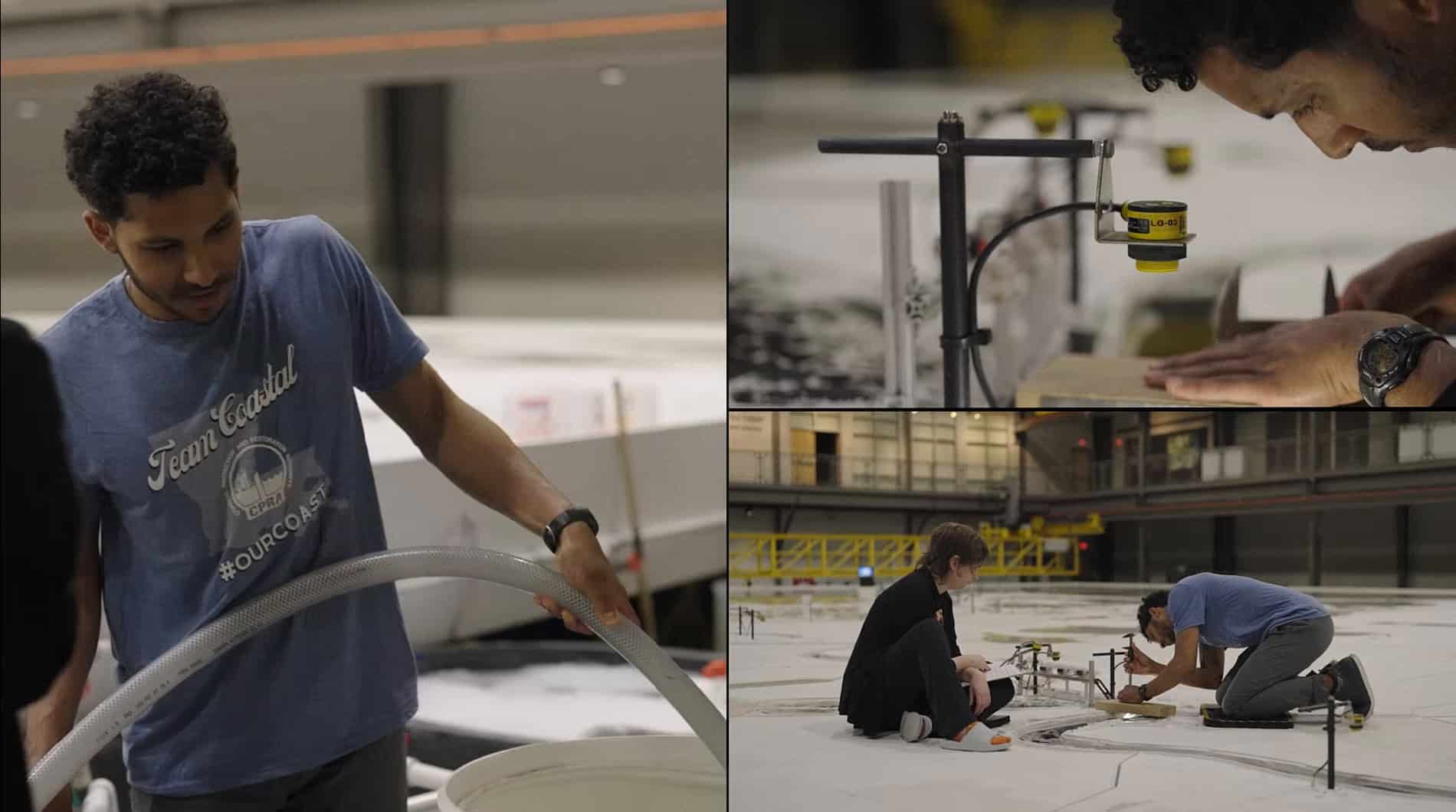 LSU students gather sensor data from a model of the Mississippi River which can be used with a digital twin to simulate and track flooding conditions.
The target audience is intentionally broad. The program is designed not only for engineers and technologists, but also for executives, project managers, and operations leaders who must make strategic and financial decisions about adopting digital twin technology. No coding experience is required.
“What’s missing in most programs is the connection between theory and execution,” said James Scott Fargason, who is on faculty with the Flores MBA Program in LSU’s E.J. Ourso College of Business. “This certificate brings both together — the academic foundations and the practical realities of deploying digital twins in the field.”
Joey Coco, an LSU alumnus and CEO of the engineering firm Forte & Tablada, said the technology is particularly well suited to Louisiana, where large-scale industrial assets, transportation networks, and coastal infrastructure demand continuous monitoring and modernization.
“Digital twins allow us to operate complex systems more intelligently,” Coco said. “This program prepares the workforce that will maintain and improve the infrastructure the country depends on.”
Forte & Tablada was one of the recipients of this year’s Founders Honors at Bentley’s Year in Infrastructure and Going Digital Awards for its digital twin of the 17th Street Canal Pump Station, a critical structure defending New Orleans from flooding.
LSU’s work has drawn broader attention, including through Bentley Systems’ Bentley Horizons podcast, which highlighted the university’s effort to build what it describes as America’s first comprehensive digital twin education pipeline.
The certificate may be only the beginning. LSU’s College of Engineering is exploring the development of a bachelor’s degree focused on digital twin technology, while DigiTwin Global plans to convene another digital twin symposium in February.