
This technology enables transportation agencies to prioritize maintenance, improve safety, and make data-driven and more efficient decisions. “Bentley’s goal is to give transportation agencies real-time visibility into the state of their roadways,” says Mark Pittman, Blyncsy’s founder and senior director of transportation AI at Bentley Systems. “By combining AI and machine learning analytics with dash cam imagery, we are helping Hawai‘i DOT move from reactive to proactive maintenance to reduce risk, lower costs, and save lives.”
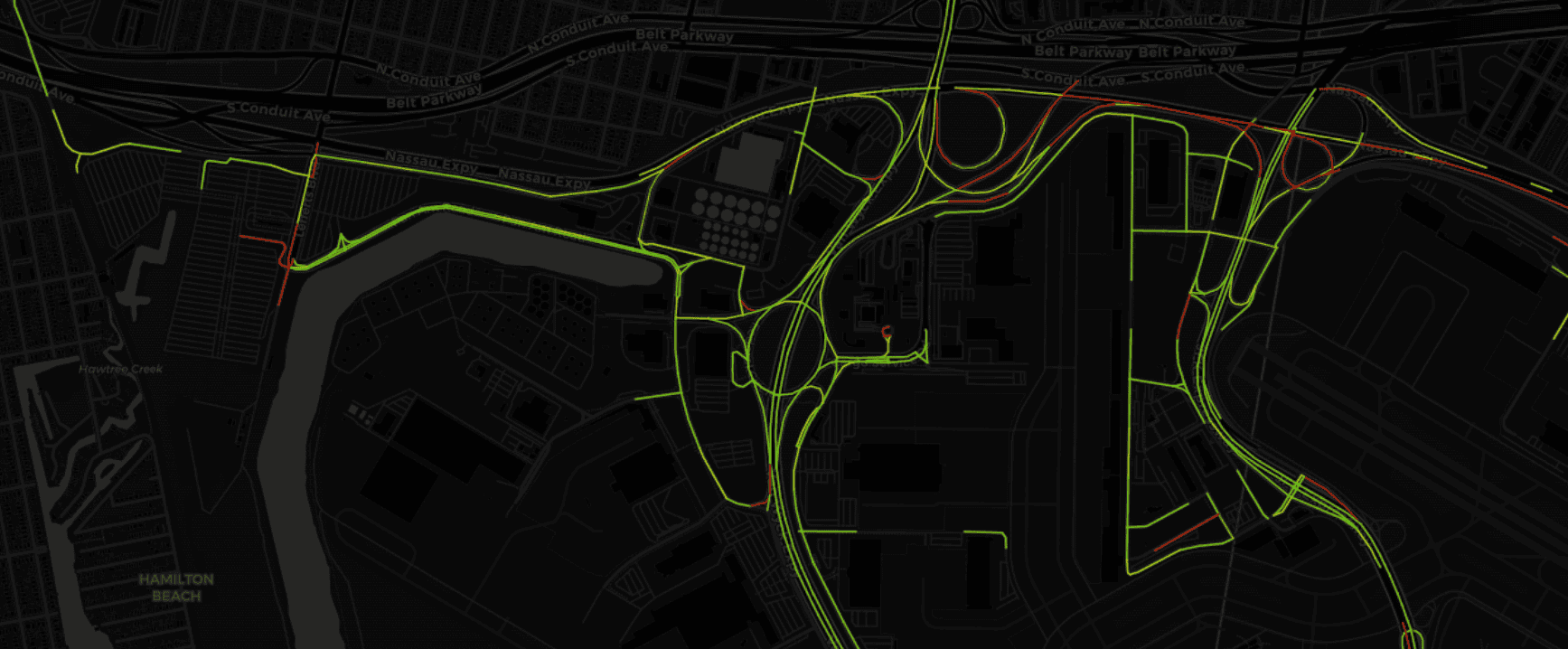 Blyncsy’s imagery map shows the detection of designated roads in every U.S. state and a sample reflectivity score for every capital city.
Pittman first conceived the idea behind Blyncsy more than a decade ago, after getting stuck in a traffic jam caused by a broken traffic light. The vast U.S. road network carries roughly 70% of the goods Americans consume, yet maintaining it often relies on guesswork and outdated inspection methods. Pittman wondered whether AI could help close those gaps. Bentley acquired Blyncsy in 2023 and has since emerged as an industry leader in AI-powered roadway insights for state and local transportation agencies. Before Blyncsy, Pittman says, transportation agencies often spent months collecting detailed 360-degree imagery of roads and infrastructure—work that could cost up to $300 per mile and take five months to process. Blyncsy has sharply reduced both. “We’ve been able to take that same information to market at half the cost and deliver it in 98% less time,” Pittman says.
HDOT reports that 898 drivers have signed up on the island of O‘ahu, 69 on Hawai‘i Island, 33 on Maui, 14 on Kaua‘i, and one on Moloka‘i as of early January. To provide a comprehensive overview of the state’s 982 miles of roadways and 744 bridges, HDOT says it is seeking an additional 321 participants on Hawai‘i Island, 211 on Maui, and 101 on Kaua‘i.
The Hawai‘i program marked the second major announcement for Bentley’s Asset Analytics business in 2026. Earlier in January, Bentley said it had made two acquisitions—of Talon Aerolytics and the technology and technical expertise of Pointivo—to strengthen its Asset Analytics portfolio. The acquisitions “significantly strengthen Bentley’s Asset Analytics portfolio and leadership in the burgeoning Asset Analytics market,” said James Lee, Bentley’s chief operating officer. “They also add to our technical and business momentum, and help infrastructure owners and operators improve the performance and resilience of their assets.”