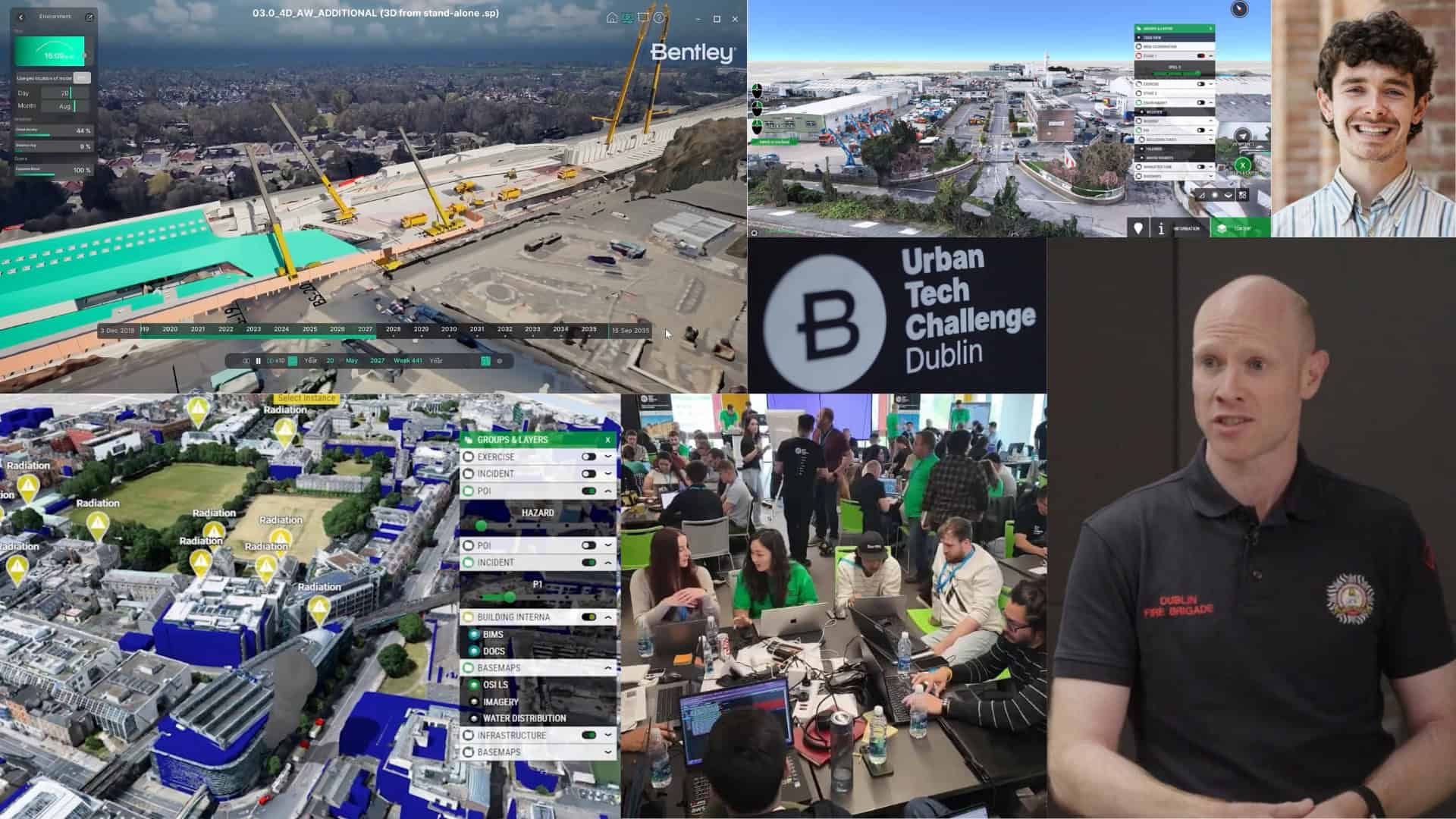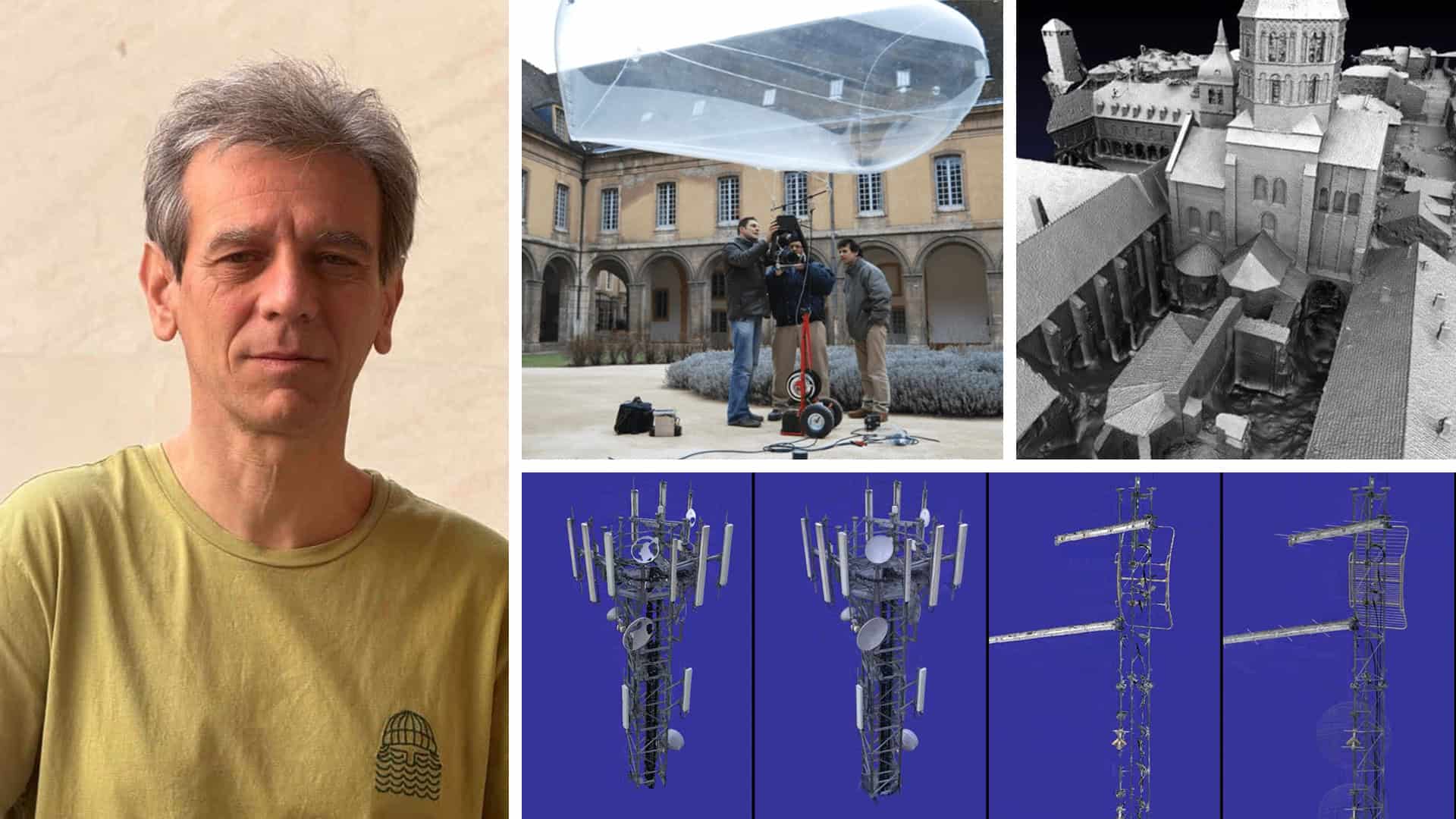
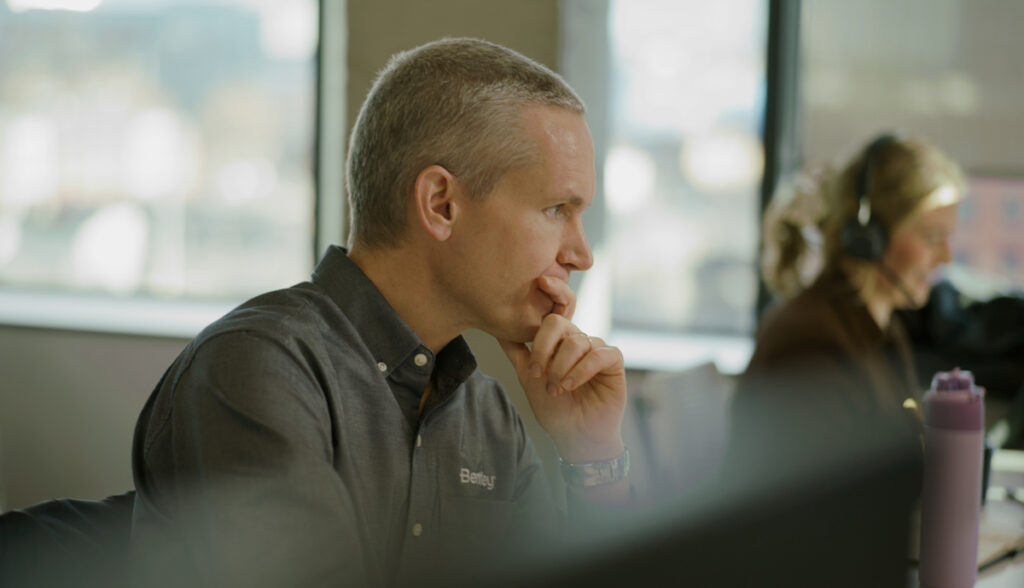
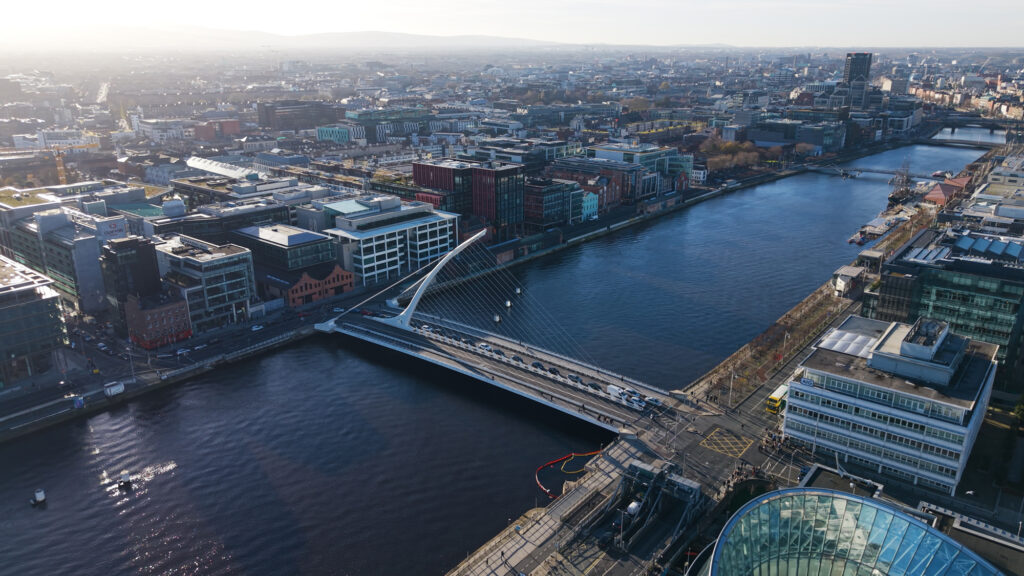
On a brisk November morning, Julien Moutte walked through Dublin Docklands with a small camera crew in tow for a film being produced for Bentley Systems by BBC StoryWorks Commercial Productions. Over the last two decades, the area has been transformed into a major tech hub in Ireland, and Moutte was telling a story about how cities can use data, digital models, and artificial intelligence (AI) to become smarter and more resilient. “Technology and infrastructure can have a massive impact on the world, but you always do that for the benefit of the citizens,” Moutte said.
Moutte, who serves as Bentley’s chief technology officer, is one of the central voices in the new film, which is part of a digital content series presented by the International Project Finance Association (IPFA), a global organization focused on the future of urban infrastructure.
Bentley’s film explores how Dublin is using digital technology to confront challenges familiar to cities around the world: flooding, fire risk, congestion, climate pressures, and data overload. What sets the Irish capital apart is its approach, and Smart Dublin is at the center of the effort. It’s an initiative created by the city’s four local authorities to bring together civic leaders, citizens, universities, startups, and industry to prepare the city for the future.
Bentley has been one of its closest partners, working alongside Dublin City Council (DCC), Dublin City University, the Dublin Fire Brigade, and dozens of technology teams to pilot solutions that tackle real urban problems. “Dublin is big enough yet small enough to be able to try and test different solutions,” said Nicola Graham, Smart City program manager at DCC, who joined Moutte on his walk. “We see ourselves as a place to innovate.”
A smart city built on collaboration
Rather than procure technology and fit it into existing systems, Dublin has flipped the model. City officials and engineers co-design projects from the start, developing solutions around public needs.
That approach comes through in the film, which follows pilot programs along the River Liffey, inside the fire brigade’s command center, and across the city’s wealth of open data. Flood sensors monitor rising waters. Digital twins analyze high-risk areas so firefighters can plan responses before emergencies strike. Urban planners use real-time models to test how design decisions ripple across traffic, energy use, and public safety.
“Cities are alive,” Moutte says in the film. “They breathe; they evolve. The challenge is keeping up—using technology not to replace people, but to make life better for them.”
A Global Testbed
Dublin’s appeal lies in its scale, mindset, and access to tech talent. It’s a major European city with a host of infrastructure challenges, but small enough to move quickly. That combination has turned the city into what one Bentley engineer calls “the world’s smartest sandbox.”
Over the past several years, Bentley has worked with Smart Dublin on initiatives including the Urban Tech Challenge. Organizers including Google, Dublin City University, Dublin City Council, Smart Dublin, and Bentley invited participants to rethink urban planning, mobility, flood resilience, emergency services, and other critical city infrastructure—and to do it with the latest digital technology. That included 3D geospatial tools, digital twins, open data, and AI, including generative AI. Teams with the best ideas were invited to present their solutions at Bentley’s 2025 Year in Infrastructure and Going Digital Awards.
“One of the most rewarding parts of my job is seeing how people innovate and how they collaborate,” said Luke Antoniou, senior editor at Smart Cities World and one of the Urban Tech Challenge judges. “That’s what’s happening here. You’ve got teams from all sorts of backgrounds: students, urban planners, technologists, and academics. That mix is essential.”
These solutions can be scalable. Flood risk modeling, fire response planning, and more efficient transportation are problems every city recognizes. Dublin’s bet is that by testing solutions in real conditions—and learning from successes and setbacks—other cities can move faster.
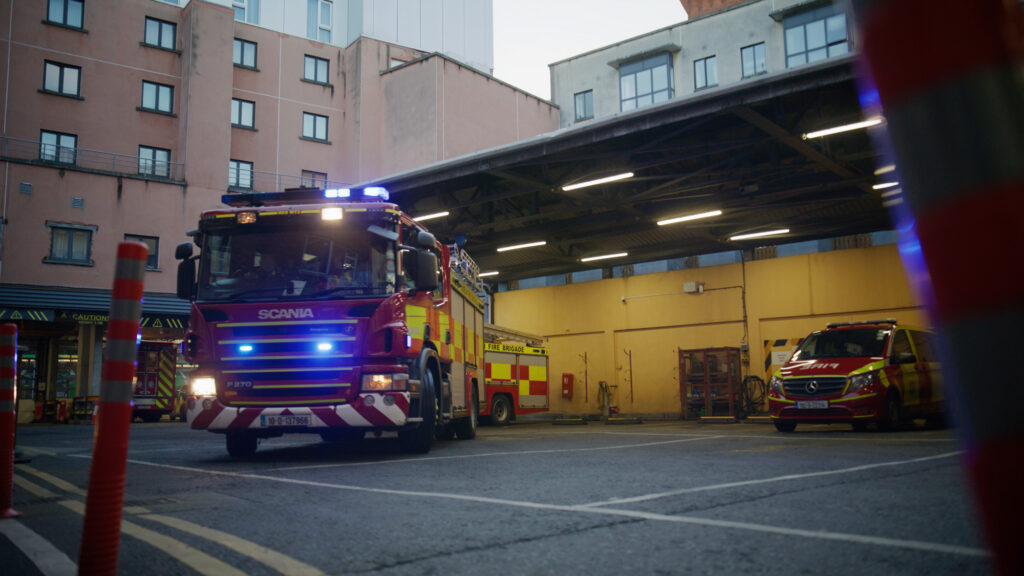
That philosophy is on display in Bentley’s collaboration with the Dublin Fire Brigade. In a project dubbed the Digital Twin for Emergency Management, fire officers envisioned ways of using digital twins for pre-incident planning. They successfully detailed digital twins that combined building layouts, hazard data, hydrant locations, historic incident records, and even census data. During emergencies, crews will be able to access that same intelligence on tablets and in mobile command units, replacing binders and paper diagrams. “Clarity matters,” says Greg O’Dwyer, Chief Fire Officer at the Dublin Fire Brigade. “When seconds count, knowing what you’re walking into can change outcomes.”
Technology As Infrastructure
What ties these efforts together is not a single application, but a connected digital foundation. Bentley’s platforms integrate engineering models, geospatial data, and live sensor feeds into systems that allow city officials to see patterns, test scenarios, and act earlier.
In practice, that means flood prediction models that blend rainfall data with river flows. It means fire risk maps that evolve as neighborhoods change. It means urban planning tools that allow development proposals to be visualized before concrete is poured.
AI is an accelerator, helping identify risks, forecast outcomes, and prioritize resources.
For Dublin, the payoff is practical: fewer blind spots, faster response, and decisions grounded in evidence rather than instinct.
For Moutte and for Bentley, the partnership has become a proving ground for how digital twins, open data, and AI can work together in the real world.
And for cities watching from afar, Dublin offers something increasingly rare: proof that technology, when shaped by public purpose, can move the needle where it matters most—on the streets, in neighborhoods, and in everyday life.
Want to read more? Check out our profile on Julien Moutte, where he discusses his life story, his love for computers… and sourdough bread.