In the early 1990s, I was part of a team of about 30 engineers working in Washington, D.C., on its power loop—a 500-kilovolt transmission line looping around our nation’s capital through Virginia and Maryland. We spent six months on that project, spotting structures and sagging wires by hand and running calculations on paper. I know every mile of it. I also know that I could now do the same project alone, in a day. That’s not a boast. It’s a measure of how dramatically the tools and technology have changed. I share this story with colleagues at conferences, but it raises an important question for everyone: If we can design a major transmission line in a day, why does it still take more than 10 years to build one?
The answer is permitting, which involves navigating a maze of agencies, hearings, and competing interests that can hold a project, even if it’s ready to break ground, hostage for a decade. Clearing that bottleneck is about to matter enormously.
We are becoming an electrified society. Starting this year, New York has banned gas furnaces and ranges in most new buildings. Electric stoves and heat pumps are taking their place. Electric vehicles are spreading. And now, AI data centers, which consume vastly more power than ordinary ones, are multiplying across the country. Goldman Sachs projects that data center demand will grow to 92 gigawatts by 2027—nearly three times New York City’s peak summer power demand. AI alone will drive a 165% increase in electricity demand by 2030, Goldman estimates. The strain on the grid is severe enough that on March 4, the leading AI companies — Amazon, Google, Meta, Microsoft, OpenAI, Oracle, and xAI — traveled to Washington, D.C., to sign the Ratepayer Protection Pledge, agreeing to fund the grid infrastructure their data centers need and negotiate separate electricity rates, rather than passing those costs to American households.
Getting power from where it is generated to where it is needed will require more wire, more structures, and more miles of rights-of-way than anything we have built in a generation. The good news is that the engineering tools and technology needed to quickly do this exist today. The better news is that those same tools can also help cut through the permitting tangle that has stalled projects we must start building.

Speeding Up The Slow Part
Permitting is where projects get stuck. Regulators and agencies need options — maps, routes, visual and environmental impact studies, cost comparisons. And here’s the part no one openly talks about: The best outcomes come when you let the agencies and the community pick the route. People support what they help choose.
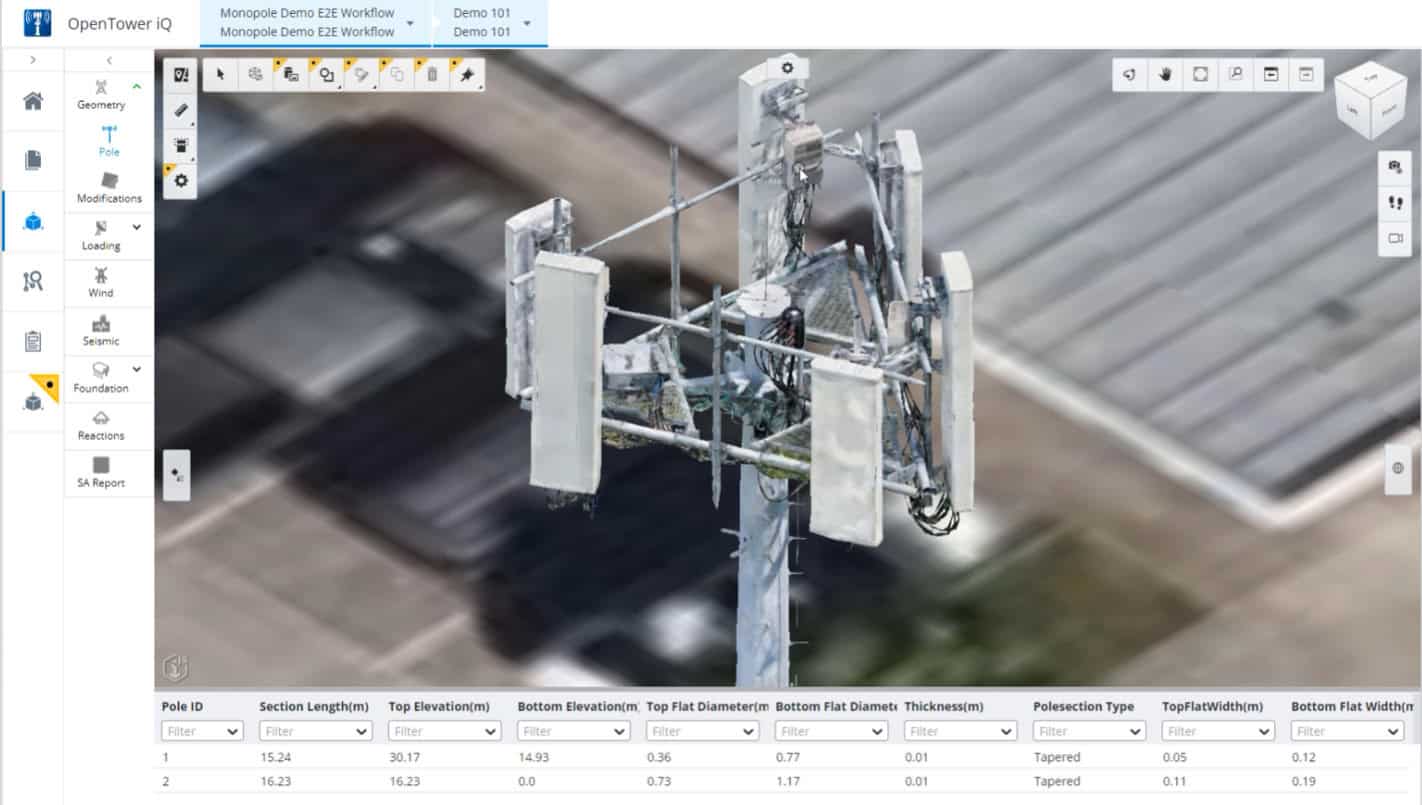
Technology makes that possible. Software runs the engineering calculations; pulls in satellite imagery and terrain data for the project site, along with safety codes and regulations; factors in local weather, including extreme conditions; and applies the physics. A hundred-mile line that once consumed months of drafting and manual calculation can be outlined in a day. Much of the underlying data is publicly available, and the industry is better for it: Open standards mean that engineering software, geospatial data, and weather models built by different organizations can talk to each other. A project team can walk into a permitting hearing with 10 fully designed alternatives with price tags attached, instead of a single take-it-or-leave-it proposal. That changes everything.
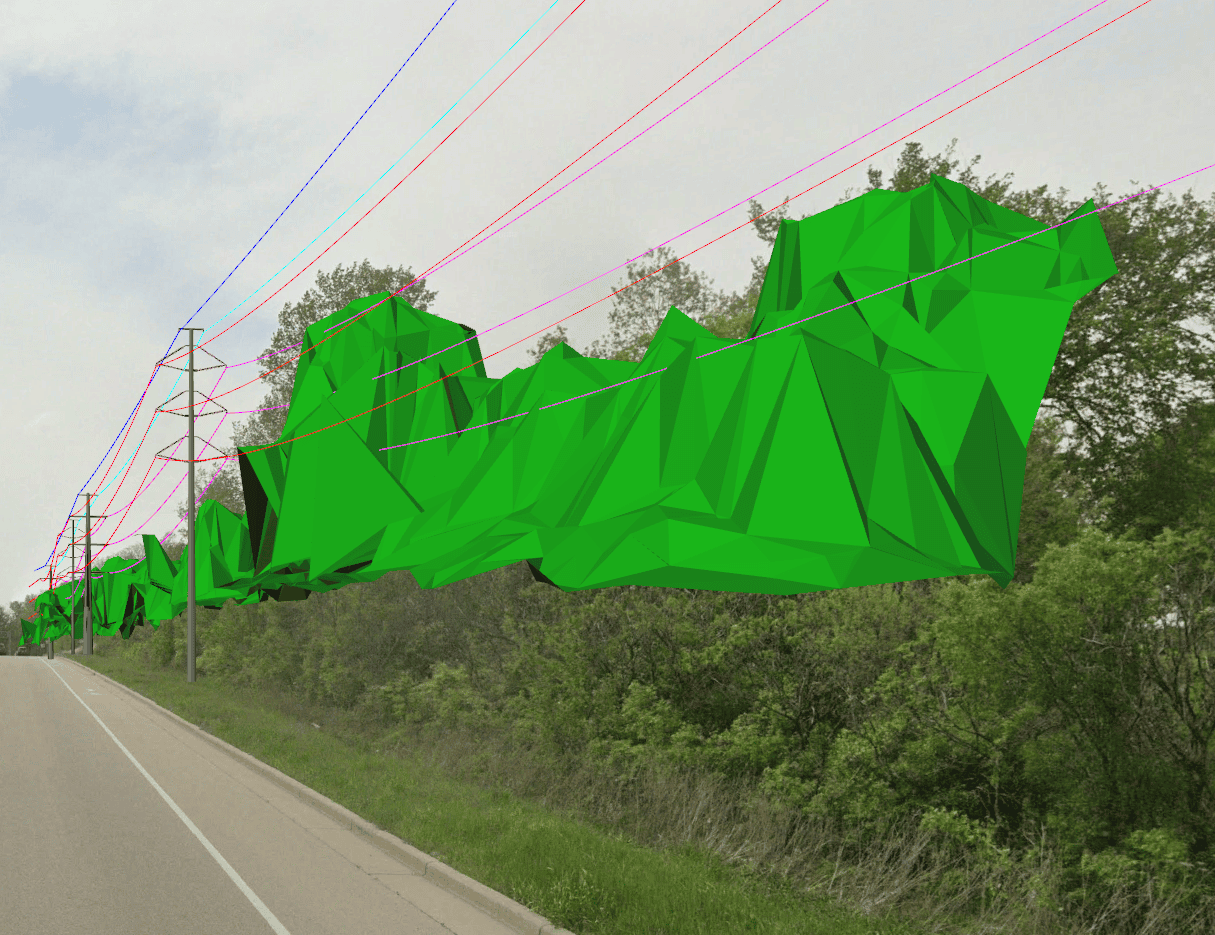
These visualization tools have gotten far more powerful than most people realize. Our software now includes augmented reality, for example. Instead of asking homeowners concerned about their view to imagine a 150-foot tower beyond their backyard, you can take them outside, hold up a phone, and show them exactly what the finished line will look like: how tall, how far away, how many towers will actually be visible from their window. More often than not, the reality is far less intrusive than what they imagined. This is one way technology can help turn a skeptic into a stakeholder.

Building to Code — From Farmland to River Crossings
Once permitting clears, the software guides everything else.
Designing a power line is not just stringing wire between poles. Every crossing carries its own requirements. The wire over a farmer’s field needs to clear the tallest thing it might encounter — say, a large hay and forage harvester cutting down corn. Cross an interstate highway and that clearance can double, because trucks are taller and more people are at risk. Cross a navigable river and clearances can be extraordinary: Over the Houston Ship Channel, wires must sit more than 190 feet above the water with towers over 300 feet tall — nearly one third of the Eiffel Tower — on each side to let large ships pass safely under them. The National Electrical Safety Code runs more than a hundred pages just on clearances, covering everything from railroads to swimming pools to grain bins. Our software knows all of them. Code compliance isn’t something you check at the end of the design process. It’s built into every step.
This equally applies to the most ambitious lines being planned today. The extra-high-voltage lines being approved across Texas, the Midwest, and the mid-Atlantic are carrying 765 kilovolts, far more than most of what’s currently in service. The lines require taller towers, heavier wires, and more tension; the engineering principles are the same, and the software scales with them. We can calculate electrical effects such as electromagnetic field (EMF) radiation, lightning protection, and audible noise, which is the hum a high-voltage line produces. We can also show what changes in wire configuration will bring the project within the required levels, before a single tower goes up.
Our software enables innovation. It can be used to build the latest high-voltage direct current (HVDC) lines, which are the right choice for moving power across long distances. An alternating current (AC) line — which typically carries high-voltage electricity around the world — can lose 10% or more of its power over 500 miles. An HVDC line loses less than 2%. But we’re losing time. The Grain Belt Express, a long-proposed HVDC line that would carry renewable wind energy from western Kansas to Indiana to connect PJM to provide power for the Northeast, has been stuck in permitting for more than a decade. The design tools are there, and the line has been designed. What’s missing is the will to cut through the permitting process and actually build it.
A Win for Everyone
I’ve spent my career around power lines, and I find them elegant. But I also know that’s not a universal view. Over the decades, I’ve watched too many projects get tangled in objections that, on close examination, aren’t really about environmental impact or other issues. They’re about unfamiliarity and not being part of the conversation.
The big picture perspective often gets lost in these disputes. For example, power line rights-of-way are genuinely green spaces. Wildlife corridors follow rights-of-way. Where a line crosses a wetland, you don’t put a structure in the water — you span over it with less than four structure footprints per mile, preserving the majority of the land from all other impacts. In Fort Collins, Colorado, a city park runs beneath a transmission line.
There is also a deeper equity argument here. Right now, if you charge an electric car in New York City, there’s a good chance the electricity came from a plant burning fossil fuels. If your apartment has a heat pump, same story. And yet, power lines are among the most efficient ways to transport energy. The renewable energy that could run those cars and heat those homes with wind power from the Great Plains exists. High-voltage transmission is how you close that gap. It is how you make the promise of clean energy real rather than theoretical.
The demand for more electricity isn’t going to disappear. By 2030, we will need vastly more electricity than we use today, and we will need to move more of it across existing power lines and greater distances than our current grid was ever designed to handle. We have the tools to design and upgrade these lines faster than ever before, show communities exactly what they’ll get, and design-build to industry standards that can withstand the storms of the next century rather than those of the last.
The engineering is not the hard part. The question now is whether we choose to build and serve our society.
Otto Lynch has spent more than 37 years in the power line industry and serves on the committee that writes the National Electrical Safety Code, in addition to many other overhead power line standards. He leads Power Line Systems (PLS) at Bentley Systems, whose software is used in the design of an estimated 95% of new transmission lines worldwide.
FAQ:
With the shift to electric vehicles and the massive energy needs of AI data centers, demand is expected to spike 165% by 2030. We must use advanced software to rapidly build high-capacity lines that can transport renewable energy across the country to meet this unprecedented demand.
Tools like Augmented Reality (AR) allow residents to see exactly how a tower will look from their property using a smartphone. By providing transparent visualizations and allowing communities to help select the least intrusive routes, technology turns local opposition into informed buy-in.
The delay isn’t engineering; modern software can design a major line in a single day. The bottleneck is the permitting process, which involves years of regulatory hurdles. Digital tools accelerate this by instantly generating multiple design alternatives and impact studies to help agencies reach decisions faster.