In central Kentucky, the farming town of Burgin has a four-way stop and not much else. It’s the kind of place where everyone knows each other, where families help their neighbors solve whatever problems come their way.
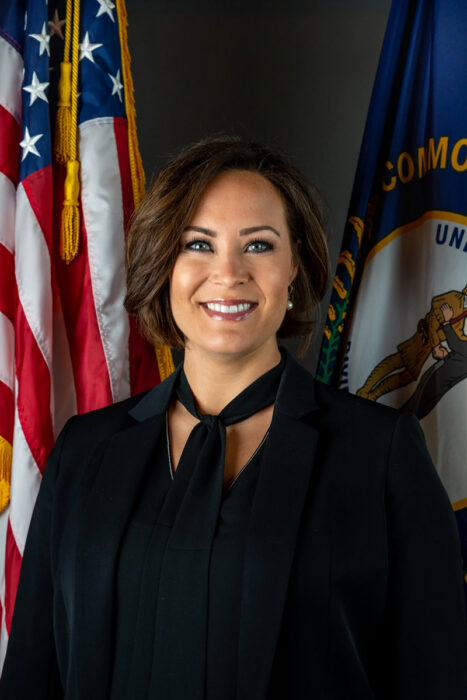 Kentucky Lt. Gov. Jacqueline Coleman
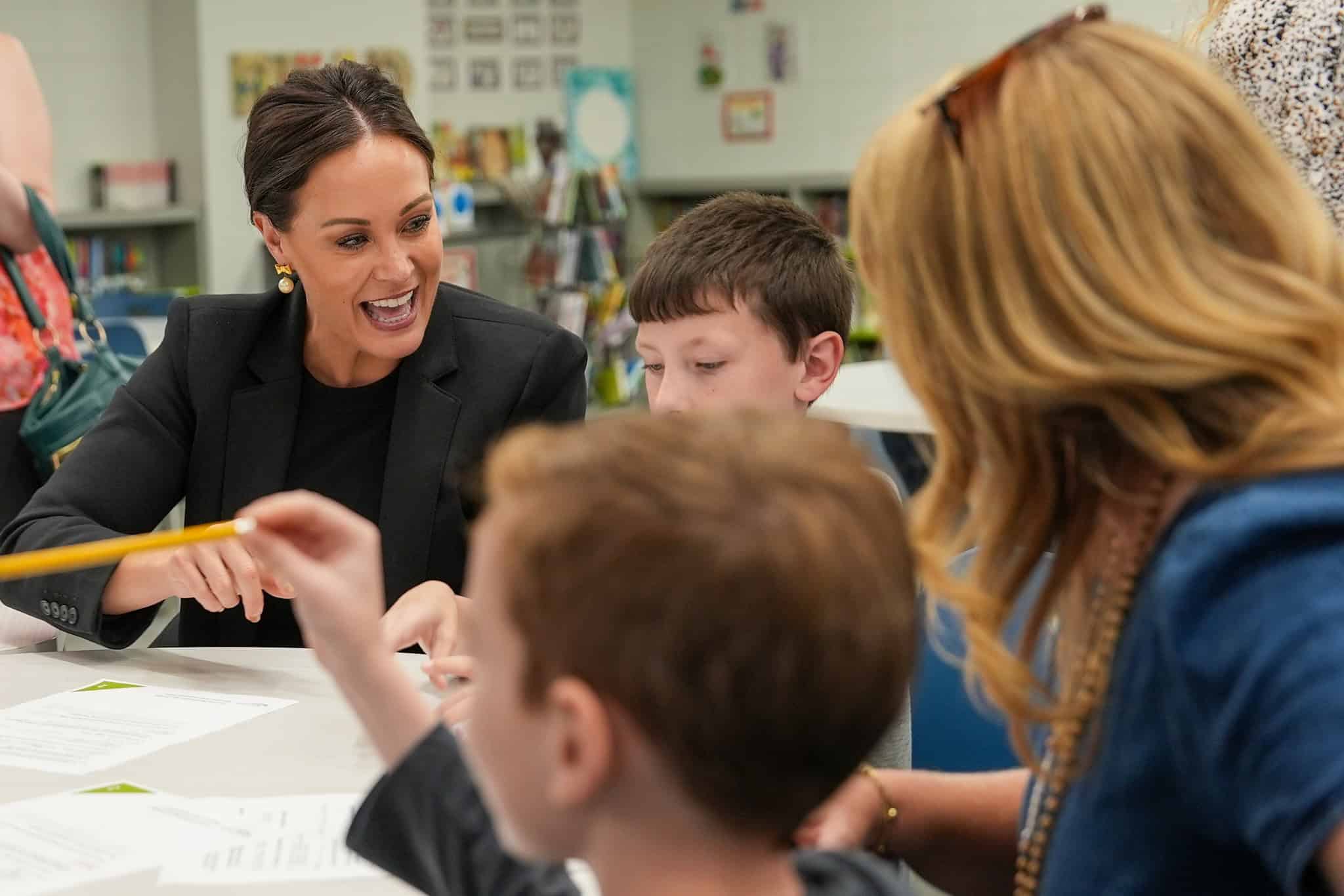
It’s also where Lt. Gov. Jacqueline Coleman grew up on a farm and where her family ran a small business for five generations. Before she entered politics, Coleman learned about community issues at the local diner and from her students while teaching high school civics and coaching girls’ basketball in small towns across the commonwealth. Some of these schools were in areas where a washed-out bridge could mean kids couldn’t get to class, and a broadband dead zone meant they couldn’t log on from home. She can still see an infrastructure challenge through the eyes of a teacher scanning her classroom, counting who showed up and who couldn’t.
Now in her second term as Kentucky’s lieutenant governor, Coleman has become one of the state’s most visible champions for building infrastructure that doesn’t just patch what broke but anticipates what’s coming. She also talks about the need for more engineers.
It’s a philosophy forged in some hard lessons. In July 2022, up to 16 inches of rain drenched eastern Kentucky, sending torrents of water through the narrow Appalachian valleys where many residents live. More than 40 people died. Homes were carried downstream. Roads and bridges that often served as the sole connection between a family and the outside world were swept away by the muddy deluge.
Few people in the state knew it at the time, but Kentucky had a leg up on recovery. Several years earlier, the state had launched Bridging Kentucky, one of the nation’s most ambitious infrastructure programs, setting out to repair or replace 1,000 aging structures across the state’s 120 counties. The program’s engineering teams had already adopted advanced technology—drones, 3D laser scanning, and digital twin software—to survey and model the state’s bridges, down to the rivet.
So, when the floodwaters receded in 2022, those teams were able to mobilize fast. The civil engineering firm Qk4 used solutions from Bentley Systems, the infrastructure engineering software company, to create digital replicas of more than 50 damaged bridges, cutting what used to take months of survey work down to hours. With the digital models materializing in the cloud, the engineering firm Stantec and others used them to remotely plan repairs and work around the clock. Survey time fell by roughly 90%, costs by nearly half, and new bridges were built to last 75 years—wider, stronger, and designed to fit a school bus and an ambulance where the old ones couldn’t.
Kellner: You grew up on a farm in a rural part of Kentucky and spent your career teaching in small towns. How does that shape how you see infrastructure?
Coleman: There are degrees of rural. Burgin is one of the most rural places, and I only ever taught in rural, low-income high schools. All of the challenges we face are personal to me. It might be a faraway place to some people. It might look like a town you’ve never seen. It may be a line on a spreadsheet or a statistic. But for me, it’s a family. I’ve seen first-hand how a washed-out bridge can keep a student out of school for a week, or how a flooded road from a failed drainage system can cut off an entire community. Education is the lens through which I see all of the challenges we face. In order for our infrastructure to improve, we have to have more and better engineers—and that becomes a workforce issue that is also an education issue. It all comes back to that for me.
Kellner: The Bridging Kentucky program set out to fix 1,000 bridges. What did that effort reveal?
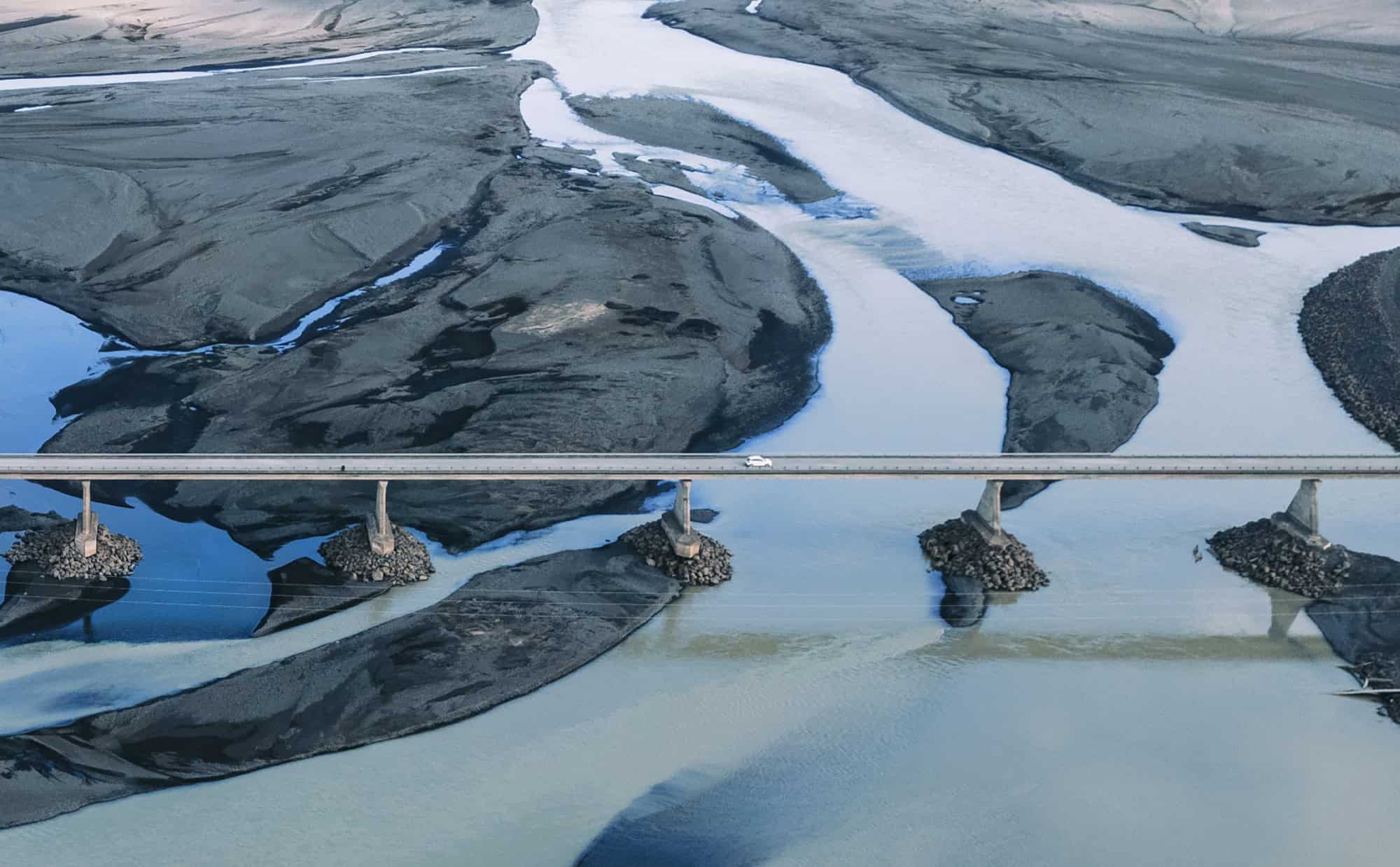
Coleman: What really came out of the eastern Kentucky story was people not realizing how many bridges there are. In a lot of ways, a bridge is an extension of a driveway that gets you over a small stream that runs through the mountain. It may not be something the general public uses, but it may be the bridge to get to your home. Don’t think [the Golden Gate Bridge] in San Francisco—think small bridges in rural communities. But we’ve been able to mobilize new technology, from drones to laser technology. One of the things that has been most helpful is the digital twin software, which has allowed us to survey, map, and get models of what these bridges look like, to [digitally] replicate them, and also to improve them.
 Coleman joined crews to assess the debris and damaged communities after a severe storm in Kentucky.
Kellner: During the flood recovery, engineers rebuilt bridges wider and stronger. They are able to carry a school bus and an ambulance, where the old ones couldn’t. That sounds like more than just replacing what was there.
Coleman: It’s got to be three things: strong, smart, and strategic. That story is the perfect example of bringing those three things to life in a place where they didn’t exist before. Instead of the typical bridge that maybe one car could get through, you figure a way to build it that makes it more effective for the people around it. That may seem like common sense, but the knee-jerk reaction with infrastructure is always, “How do we get it back to what it was?” Rather than, “How do we make it what people need right now versus what they needed 50 years ago when it was probably built?”
Kellner: Infrastructure is the kind of thing nobody notices until it breaks. How do you make the case for investing in it before that happens?
Coleman: The reason we have such a hard time creating new jobs and attracting industry to mountainous areas is because of access to roads, airports, broadband. If you want good jobs, if you want your schools to improve, if you want better access to technology, these are the fundamental investments you have to make in order to bring those things to you. Infrastructure is the foundation for economic growth.
Kellner: Do rural communities and cities have fundamentally different infrastructure problems?
Coleman: The issues that folks in rural communities and urban centers have are often not so different. They just look different. Both have challenges with broadband. Both have challenges with infrastructure. Both may struggle to recruit employers. But I think being a teacher—having felt like I was legislated at, that laws were created without input from my profession—has really shaped my perspective. It’s why I show up in communities. I’m not afraid to admit that I don’t know what I don’t know. The challenge that elected officials have is they feel like they have to come with the solution. But that means you’re leaving out the most critical piece of the puzzle: the people you’re trying to serve.
Kellner: Kentucky’s infrastructure efforts are featured in a new infrastructure resilience report from Duke University and Bentley. What’s the one piece of advice you’d give other leaders?
Coleman: Show up. Be in communities where there are challenges. See them with your own eyes. Sit down and have a conversation with people who deal with the challenge every day. Don’t talk at them; listen. You’ll be led to a different solution, maybe a different way of thinking. But certainly you’re going to create a responsive solution rather than one manufactured in a lab somewhere.
 Lt. Gov. Jacqueline Coleman and volunteers mobilize to distribute food, water, and supplies to impacted communities throughout Kentucky.
Kellner: Kentucky is building infrastructure now that will be here for decades. What do you hope people will say when they look back?
Coleman: I hope they feel two things. One, that we finally solved a challenge that had been plaguing them for a long time—by being proactive, not reactive. And two, that these are people-centered solutions. That when they look back one day, they can say, “My grandfather was in that meeting, and this is what he said, and this is why this looks this way now.” To let the community know that the job was done for them—not just to get to the next disaster, but to really improve their lives and create opportunities that didn’t exist before.