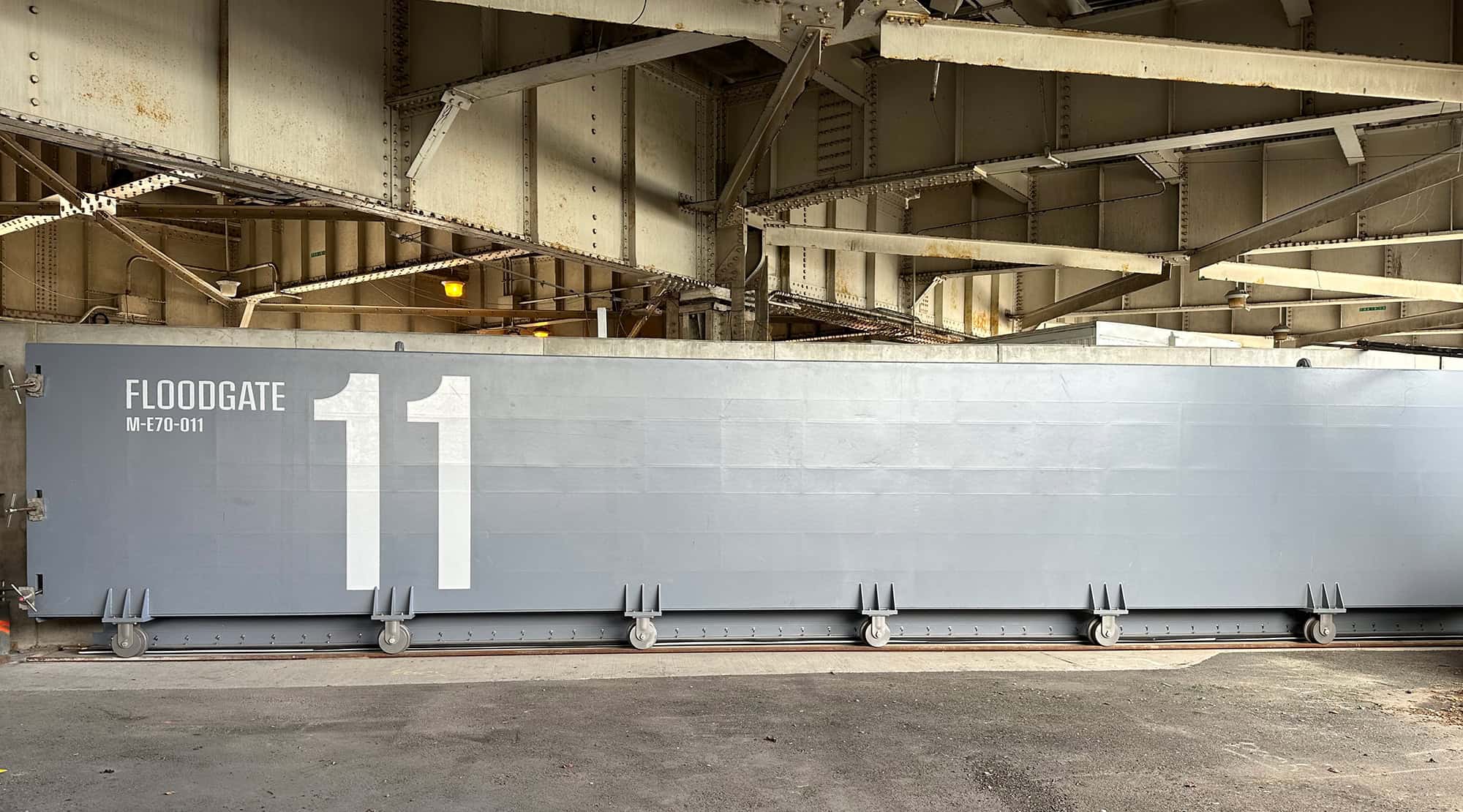
In March 2024, a huge container ship lost power as it navigated out of Baltimore Harbor. The 100,000-ton vessel veered off course and crashed into the Francis Scott Key Bridge. The collision claimed the lives of six construction workers who were performing maintenance on the bridge. It also shut down port operations and severed a vital traffic artery.
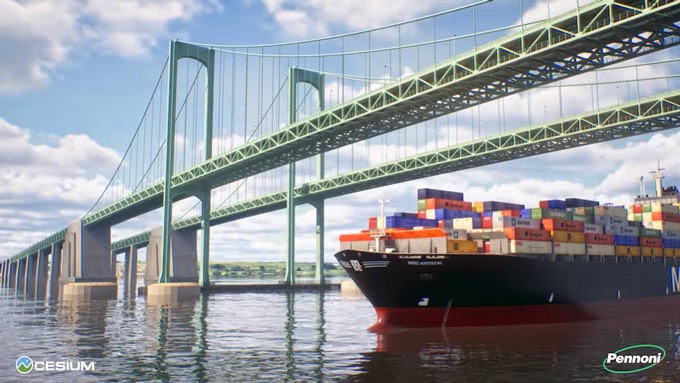
The tragedy highlighted the need for more resilient infrastructure, an issue that has been on the radar of government agencies and infrastructure operators across the country, includingthe Delaware River and Bay Authority (DRBA). Starting in 2023, DRBA began installing an advanced collision protection system for the Delaware Memorial Bridge. The work involves eight massive, stone-filled “dolphin” cylinders, each 80 feet across, designed to shield the bridge’s towers. The visionary project also includes a digital twin.
Digital twins are detailed virtual models of physical assets, such as bridges, water systems or even entire cities. The models unlock insights, improve collaboration and add other benefits across the lifespan of the asset — from planning and design to construction and asset operation. The digital twin of the Delaware Memorial Bridge work was created by the Philadelphia-based engineering consulting firm Pennoni. The model has allowed stakeholders to see details of the bridge’s safety features before construction is completed, which is scheduled for 2025.
Pennoni’s visualization harnesses the power of 3D Tiles, an Open Geospatial Consortium (OGC) community standard created by Cesium, the 3D geospatial company. The 3D Tiles standard has emerged as a transformative technology for the infrastructure sector and other fields. By ingesting and rendering vast amounts of 3D geospatial data, 3D Tiles enable high-fidelity and intuitive visualization of real-world environments, especially when combined with Google’s expansive geospatial data.
For example, Pennoni is using information from Google Maps, in the form of Google Photorealistic 3D Tiles, and the power of Cesium for Unreal, a plugin which taps the cutting-edge capabilities and renderings produced by the creation engine Unreal Engine. “Rather than waiting years for a project to be completed, and then capture and post photos, we can show visualizations immediately, in present day,” Joe Spadea, associate vice president at Pennoni, told Cesium’s blog.


 The Google partnership will give Bentley software users and developers the ability to combine their rich project engineering data with Google Maps, Google’s Photorealistic 3D Tiles, and its AI analytics and cloud services. Tom Kurke, Bentley’s head of ecosystem and ventures, said Bentley made key moves with the Cesium acquisition, Google partnership and commitment to open standards via the Open Geospatial Consortium. “As real-time data and advanced 3D visualization become critical to modern infrastructure, Bentley Systems is leading the charge in creating an open, interoperable ecosystem for the future of infrastructure tools,” Kurke said.